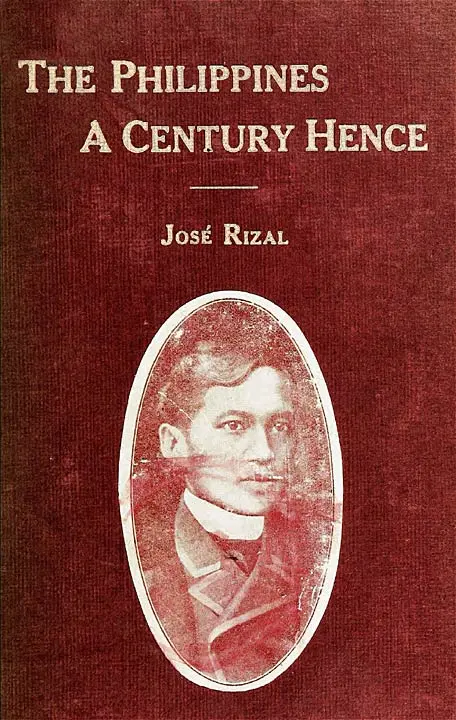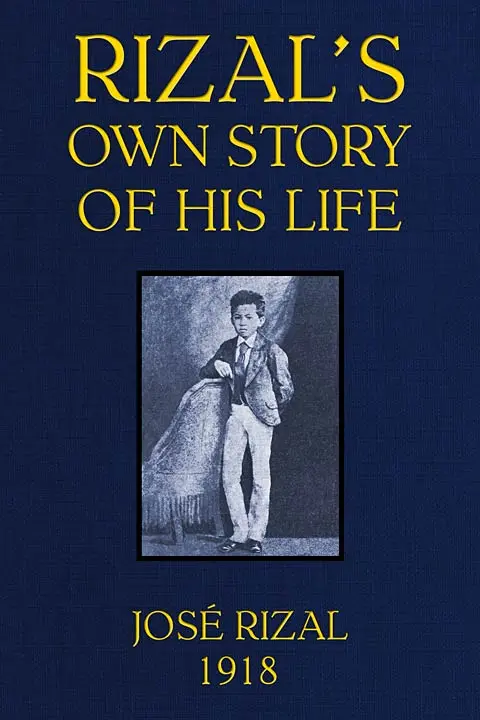
Rizal’s own story of his life
José Rizal
THE CLASSIC COLLECTION · 1900
"An Eagle Flight: A Filipino Novel Adapted from Noli Me Tangere" by José Rizal is a historical novel written in the late 19th century. This adaptation draws from Rizal's original work "Noli Me Tangere," addressing themes of colonialism, social injustice, and the struggle for identity in the Philippines. It features characters such as Crisóstomo Ibarra, who returns to his homeland after studying abroad and encounters the harsh realities of his society shaped by colonial rule. The opening of "An Eagle Flight" introduces us to Captain Tiago's lavish dinner party, which becomes the setting for a mixture of social and political dynamics among the guests, including the young returnee Crisóstomo Ibarra. As he navigates the complexities of reuniting with his culture and confronting the socio-political issues plaguing the Philippines, Ibarra's interactions with various characters reveal personal and national tensions. The atmosphere is charged with unspoken histories, as he learns of his father's unjust death in prison, setting the stage for Ibarra's personal quest for justice and reform.
Introduction adapted from the source catalogue; source summaries may be automatically generated.
Free to read · English · 69,277 words · No account needed
MAKE TIME FOR A GOOD BOOK
On by default. Untick to stop anonymous reading totals. Each page counts after 10 seconds in view. How this works.
Anonymous counting is on unless you have switched it off.
Satisfied with the defeat of their enemy, the Conservatives were not displeased to see another young man rise, the municipal head of a group of fifty or sixty families, known as a balangay.
He modestly excused himself for speaking. With delicate blandishments he referred to the "ideas so elegantly expressed by Captain Basilio," upon which the delighted captain made signs to show him how to gesture and to change position: then he unfolded his project: to have something absolutely new, and to spend the 3,500 pesos in such a way as to benefit their own province.
"That's it!" interrupted the young men; "that's what we want!"
What did they care about seeing the King of Bohemia cut off the heads of his daughters! They were neither kings nor barbarians, and if they did such things themselves, would be hung high on the field of Bagumbayan. He proposed that two native plays be given which dealt with the manners of the times. There were two he had in mind, works of their best writers. They demanded only native costumes, and could be played by amateurs of talent, of whom the province had no lack.
"A good idea!" some of the Conservatives began to murmur.
"I'll pay for the theatre!" cried Captain Basilio, with enthusiasm.
"Accepted! Accepted!" cried numerous voices. The young man went on:
"A part of the money taken at the theatre might be distributed in prizes: to the best pupil in the school, the best shepherd, the best fisherman. We might have boat races, and games, and fireworks, of course."
Almost all were agreed, though some talked about "innovations."
When silence was established, only the decision of the gobernadorcillo
was wanting.
The poor man passed his hand across his forehead, he fidgeted, he perspired; finally he stammered, lowering his eyes:
"I also; I approve; but, hem!"
The assembly listened in silence.
"But----" demanded Captain Basilio.
"I approve entirely," repeated the functionary, "that is to say, I do not approve; I say yes, but----"
He rubbed his eyes with the back of his hand.
"But," continued the unhappy man, coming to the point at last, "the curate wants something else."
"Is the curate to pay for the festival? Has he given even a
cuarto?" cried a penetrating voice.
Every one turned. It was Tasio. The lieutenant remained immovable, his eyes on the gobernadorcillo.
"And what does the curate want?" demanded Don Basilio.
"The curate wants six processions, three sermons, three solemn masses, and if any money is left, a comedy with songs between the acts."
"But we don't want it!" cried the young men and some of their elders.
Your reading position is saved on this browser. Take it to another device with a library code. Reading pages adapt to text, rather than matching a printed edition.
BEHIND THE BOOK
This eBook is for the use of anyone anywhere in the United States and most other parts of the world at no cost and with almost no restrictions whatsoever. You may copy it, give it away or re-use it under the terms of the Project Gutenberg License included with this eBook or online at www.gutenberg.org. If you are not located in the United States, you will have to check the laws of the country where you are located before using this eBook. Read the source licence.
The original source file, including credits and licence, is retained by this library. Request an original-format copy at no charge. Please include the book title and Project Gutenberg identifier #27594.
KEEP YOUR CURIOSITY GOING
Cécile Tormay

Moritz Busch
Coulson Kernahan
John L. Ransom

Maurice Baring
Frances Wright