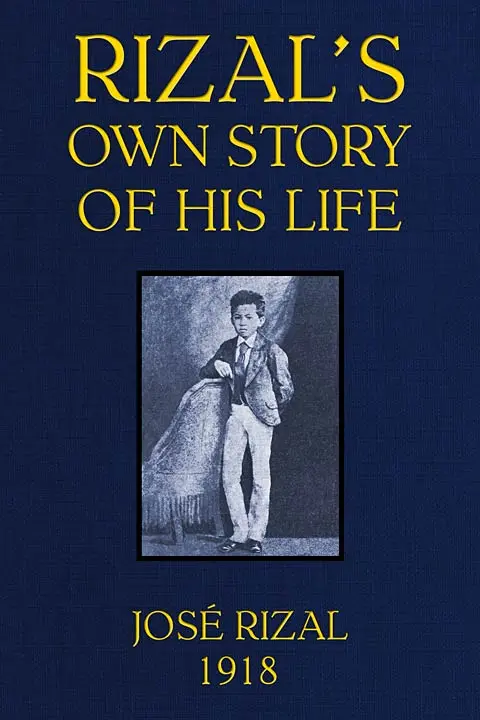
Rizal’s own story of his life
José Rizal
THE CLASSIC COLLECTION · 1900
"An Eagle Flight: A Filipino Novel Adapted from Noli Me Tangere" by José Rizal is a historical novel written in the late 19th century. This adaptation draws from Rizal's original work "Noli Me Tangere," addressing themes of colonialism, social injustice, and the struggle for identity in the Philippines. It features characters such as Crisóstomo Ibarra, who returns to his homeland after studying abroad and encounters the harsh realities of his society shaped by colonial rule. The opening of "An Eagle Flight" introduces us to Captain Tiago's lavish dinner party, which becomes the setting for a mixture of social and political dynamics among the guests, including the young returnee Crisóstomo Ibarra. As he navigates the complexities of reuniting with his culture and confronting the socio-political issues plaguing the Philippines, Ibarra's interactions with various characters reveal personal and national tensions. The atmosphere is charged with unspoken histories, as he learns of his father's unjust death in prison, setting the stage for Ibarra's personal quest for justice and reform.
Introduction adapted from the source catalogue; source summaries may be automatically generated.
Free to read · English · 69,277 words · No account needed
MAKE TIME FOR A GOOD BOOK
On by default. Untick to stop anonymous reading totals. Each page counts after 10 seconds in view. How this works.
Anonymous counting is on unless you have switched it off.
A little farther on, in the middle of the stream, was a sort of bath, well enclosed, its roof of leafy bamboo; palm leaves, flowers, and streamers decked its sides. From here, too, came girls' voices. Farther on was a bamboo bridge, and beyond that the men were bathing, while a multitude of servants were busy plucking fowls, washing rice, roasting pigs. In the clearing on the opposite bank a group of men and women had formed under a great canvas roof, attached in part to the branches of the ancient trees, in part to pickets. There chatted the curate, the alferez, the vicar, the gobernadorcillo, the lieutenant, all the chief men of the town, including the famous orator, Captain Basilio, father of Sinang and opponent of Don Rafael Ibarra in a lawsuit not yet ended.
"We dispute a point at law," Crisostomo had said in inviting him, "but to dispute is not to be enemies," and the famous orator had accepted the invitation.
Bottles of lemonade were opened and green cocoanut shells were broken, so that those who came from the baths might drink the fresh water; the girls were given wreaths of ylang-ylang and roses to perfume their unbound hair.
The lunch hour came. The curate, the alferez, the gobernadorcillo, some captains, and the lieutenant sat at a table with Ibarra. The mamas allowed no men at the table with the girls.
"Have you learned anything, senor alferez, about the criminal who attacked Brother Damaso?" said Brother Salvi.
"Of what criminal are you speaking?" asked the alferez, looking at the father over his glass of wine.
"What? Why, the one who attacked Brother Damaso on the highway day
before yesterday."
"Father Damaso has been attacked?" asked several voices.
"Yes; he is in bed yet. It is thought the maker of the assault is
Elias, the one who threw you into the swamp some time ago, senor
alferez."
The alferez reddened with shame, if it were not from emptying his
glass of wine.
"But I supposed you were informed," the curate went on; "I said to myself that the alferez of the Municipal Guard----"
The officer bit his lip.
At that moment a woman, pale, thin, miserably dressed, appeared, like a phantom, in the midst of the feast.
"Give the poor woman something to eat," said the ladies.
She kept on toward the table where the curate was seated. He turned, recognized her, and the knife fell from his hand.
"Give the woman something to eat," ordered Ibarra.
"The night is dark and the children are gone," murmured the poor woman. But at sight of the alferez she became frightened and ran, disappearing among the trees.
Your reading position is saved on this browser. Take it to another device with a library code. Reading pages adapt to text, rather than matching a printed edition.
BEHIND THE BOOK
This eBook is for the use of anyone anywhere in the United States and most other parts of the world at no cost and with almost no restrictions whatsoever. You may copy it, give it away or re-use it under the terms of the Project Gutenberg License included with this eBook or online at www.gutenberg.org. If you are not located in the United States, you will have to check the laws of the country where you are located before using this eBook. Read the source licence.
The original source file, including credits and licence, is retained by this library. Request an original-format copy at no charge. Please include the book title and Project Gutenberg identifier #27594.
KEEP YOUR CURIOSITY GOING
Cécile Tormay

Moritz Busch
Coulson Kernahan
John L. Ransom

Maurice Baring
Frances Wright