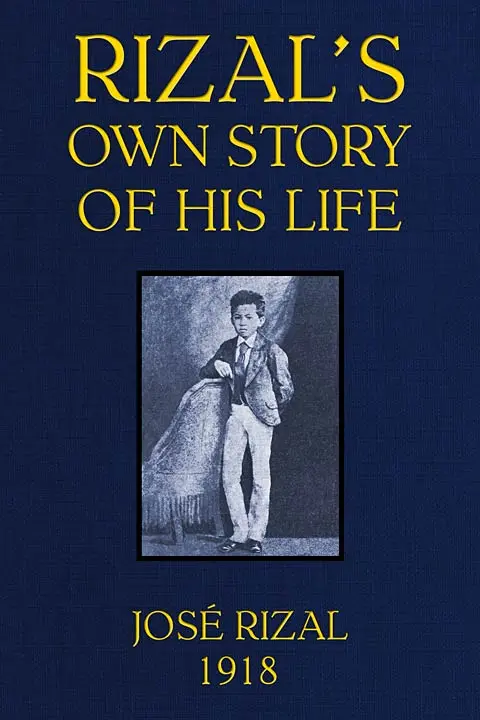
Rizal’s own story of his life
José Rizal
THE CLASSIC COLLECTION · 1900
"An Eagle Flight: A Filipino Novel Adapted from Noli Me Tangere" by José Rizal is a historical novel written in the late 19th century. This adaptation draws from Rizal's original work "Noli Me Tangere," addressing themes of colonialism, social injustice, and the struggle for identity in the Philippines. It features characters such as Crisóstomo Ibarra, who returns to his homeland after studying abroad and encounters the harsh realities of his society shaped by colonial rule. The opening of "An Eagle Flight" introduces us to Captain Tiago's lavish dinner party, which becomes the setting for a mixture of social and political dynamics among the guests, including the young returnee Crisóstomo Ibarra. As he navigates the complexities of reuniting with his culture and confronting the socio-political issues plaguing the Philippines, Ibarra's interactions with various characters reveal personal and national tensions. The atmosphere is charged with unspoken histories, as he learns of his father's unjust death in prison, setting the stage for Ibarra's personal quest for justice and reform.
Introduction adapted from the source catalogue; source summaries may be automatically generated.
Free to read · English · 69,277 words · No account needed
MAKE TIME FOR A GOOD BOOK
On by default. Untick to stop anonymous reading totals. Each page counts after 10 seconds in view. How this works.
Anonymous counting is on unless you have switched it off.
Maria Clara became pensive. But they had come to the first baklad, as the enclosures are called. The old sailor in charge attached the boats to the reeds, while his son prepared to mount with lines and nets.
"Wait a moment," cried Aunt Isabel, "the fish must come directly out
of the water into the pan."
"What, good Aunt Isabel!" said Albino reproachfully, "won't you give the poor things a moment in the air?"
Andeng, Maria's foster-sister, was a famous cook. She began to prepare rice water, the tomatoes, and the camias; the young men, perhaps to win her good graces, aided her, while the other girls arranged the melons, and cut paayap into cigarette-like strips.
To while away the time Iday took up the harp, the instrument most often played in this part of the islands. She played well, and was much applauded. Maria thanked her with a kiss.
"Sing, Victoria, sing the 'Marriage Song,'" demanded the ladies. This is a beautiful Tagal elegy of married life, but sad, painting its miseries rather than its joys. The men clamored for it too, and Victoria had a lovely voice; but she was hoarse. So Maria Clara was begged to sing.
"All my songs are sad," she said.
"Never mind," said her companions, and without more urging she took the harp and sang in a rich and vibrant voice, full of feeling.
The chant ceased, the harp became mute; yet no one applauded; they seemed listening still. The young girls felt their eyes fill with tears; Ibarra seemed disturbed; the helmsman, motionless, was gazing far away.
Suddenly there came a crash like thunder. The women cried out and stopped their ears. It was Albino, filling with all the force of his lungs the carabao's horn. There needed nothing more to bring back laughter, and dry tears.
"Do you wish to make us deaf, pagan?" cried Aunt Isabel.
"Senora," he replied, "I've heard of a poor trumpeter who, from
simply playing on his instrument, became the husband of a rich and
noble lady."
"So he did--the Trumpeter of Saeckingen!" laughed Ibarra.
"Well," said Albino, "we shall see if I am as happy!" and he began to blow again with still more force. There was a panic: the mamas attacked him hand and foot.
"Ouch! ouch!" he cried, rubbing his hurts; "the Philippines are far from the borders of the Rhine! For the same deed one is knighted, another put in the san-benito!"
At last Andeng announced the kettle ready for the fish.
Your reading position is saved on this browser. Take it to another device with a library code. Reading pages adapt to text, rather than matching a printed edition.
BEHIND THE BOOK
This eBook is for the use of anyone anywhere in the United States and most other parts of the world at no cost and with almost no restrictions whatsoever. You may copy it, give it away or re-use it under the terms of the Project Gutenberg License included with this eBook or online at www.gutenberg.org. If you are not located in the United States, you will have to check the laws of the country where you are located before using this eBook. Read the source licence.
The original source file, including credits and licence, is retained by this library. Request an original-format copy at no charge. Please include the book title and Project Gutenberg identifier #27594.
KEEP YOUR CURIOSITY GOING
Cécile Tormay

Moritz Busch
Coulson Kernahan
John L. Ransom

Maurice Baring
Frances Wright