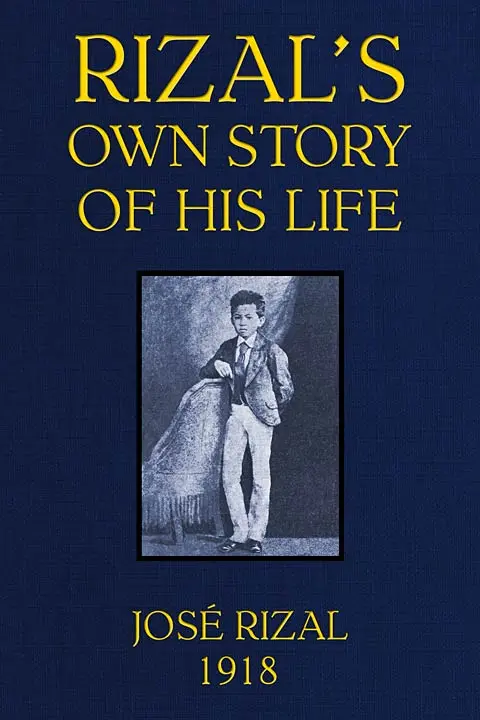
Rizal’s own story of his life
José Rizal
THE CLASSIC COLLECTION · 1900
"An Eagle Flight: A Filipino Novel Adapted from Noli Me Tangere" by José Rizal is a historical novel written in the late 19th century. This adaptation draws from Rizal's original work "Noli Me Tangere," addressing themes of colonialism, social injustice, and the struggle for identity in the Philippines. It features characters such as Crisóstomo Ibarra, who returns to his homeland after studying abroad and encounters the harsh realities of his society shaped by colonial rule. The opening of "An Eagle Flight" introduces us to Captain Tiago's lavish dinner party, which becomes the setting for a mixture of social and political dynamics among the guests, including the young returnee Crisóstomo Ibarra. As he navigates the complexities of reuniting with his culture and confronting the socio-political issues plaguing the Philippines, Ibarra's interactions with various characters reveal personal and national tensions. The atmosphere is charged with unspoken histories, as he learns of his father's unjust death in prison, setting the stage for Ibarra's personal quest for justice and reform.
Introduction adapted from the source catalogue; source summaries may be automatically generated.
Free to read · English · 69,277 words · No account needed
MAKE TIME FOR A GOOD BOOK
On by default. Untick to stop anonymous reading totals. Each page counts after 10 seconds in view. How this works.
Anonymous counting is on unless you have switched it off.
The soldiers spoke together apart.
"Very well," said one, "when we get to the pueblo, you may. March on
now, and quick!"
Poor Sisa thought she must die of shame. There was no one on the road, it is true; but the air? and the light? She covered her face, in her humiliation, and wept silently. She was indeed very miserable; every one, even her husband, had abandoned her; but until now she had always felt herself respected.
As they neared the pueblo, fear seized her. In her agony she looked on all sides, seeking some succor in nature--death in the river would be so sweet. But no! She thought of her children; here was a light in the darkness of her soul.
"Afterward," she said to herself,--"afterward, we will go to live in
the heart of the forest."
She dried her eyes, and turning to the guards:
"We are at the pueblo," she said. Her tone was indescribable; at once a complaint, an argument, and a prayer.
The soldiers took pity on her; they replied with a gesture. Sisa went rapidly forward, then forced herself to walk tranquilly.
A tolling of bells announced the end of the high mass. Sisa hastened, in the hope of avoiding the crowd from the church, but in vain. Two women she knew passed, looked at her questioningly; she bowed with an anguished smile, then, to avoid new mortifications, she fixed her eyes on the ground.
At sight of her people turned, whispered, followed with their eyes, and though her eyes were turned away, she divined, she felt, she saw it all. A woman who by her bare head, her dress, and her manners showed what she was, cried boldly to the soldiers:
"Where did you find her? Did you get the money?"
Sisa seemed to have taken a blow in the face. The ground gave way
under her feet.
"This way!" cried a guard.
Like an automaton whose mechanism is broken she turned quickly, and, seeing nothing, feeling nothing but instinct, tried to hide herself. A gate was before her; she would have entered but a voice still more imperious checked her. While she sought to find whence the voice came, she felt herself pushed along by the shoulders. She closed her eyes, took two steps, then her strength left her and she fell.
It was the barracks. In the yard were soldiers, women, pigs, and chickens. Some of the women were helping the men mend their clothes or clean their arms, and humming ribald songs.
"Where is the sergeant?" demanded one of the guards angrily. "Has
the alferez been informed?"
Your reading position is saved on this browser. Take it to another device with a library code. Reading pages adapt to text, rather than matching a printed edition.
BEHIND THE BOOK
This eBook is for the use of anyone anywhere in the United States and most other parts of the world at no cost and with almost no restrictions whatsoever. You may copy it, give it away or re-use it under the terms of the Project Gutenberg License included with this eBook or online at www.gutenberg.org. If you are not located in the United States, you will have to check the laws of the country where you are located before using this eBook. Read the source licence.
The original source file, including credits and licence, is retained by this library. Request an original-format copy at no charge. Please include the book title and Project Gutenberg identifier #27594.
KEEP YOUR CURIOSITY GOING
Cécile Tormay

Moritz Busch
Coulson Kernahan
John L. Ransom

Maurice Baring
Frances Wright