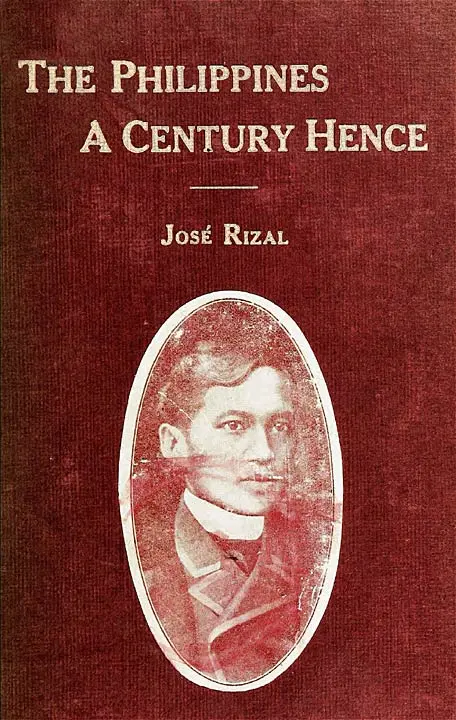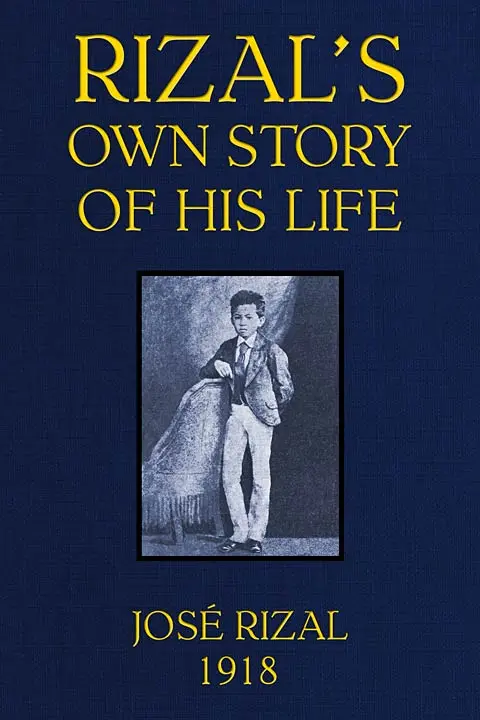
Rizal’s own story of his life
José Rizal
THE CLASSIC COLLECTION · 1900
"An Eagle Flight: A Filipino Novel Adapted from Noli Me Tangere" by José Rizal is a historical novel written in the late 19th century. This adaptation draws from Rizal's original work "Noli Me Tangere," addressing themes of colonialism, social injustice, and the struggle for identity in the Philippines. It features characters such as Crisóstomo Ibarra, who returns to his homeland after studying abroad and encounters the harsh realities of his society shaped by colonial rule. The opening of "An Eagle Flight" introduces us to Captain Tiago's lavish dinner party, which becomes the setting for a mixture of social and political dynamics among the guests, including the young returnee Crisóstomo Ibarra. As he navigates the complexities of reuniting with his culture and confronting the socio-political issues plaguing the Philippines, Ibarra's interactions with various characters reveal personal and national tensions. The atmosphere is charged with unspoken histories, as he learns of his father's unjust death in prison, setting the stage for Ibarra's personal quest for justice and reform.
Introduction adapted from the source catalogue; source summaries may be automatically generated.
Free to read · English · 69,277 words · No account needed
MAKE TIME FOR A GOOD BOOK
On by default. Untick to stop anonymous reading totals. Each page counts after 10 seconds in view. How this works.
Anonymous counting is on unless you have switched it off.
"The defence destroyed that testimony. According to the witness himself, none of them had any communication with Ibarra, except one named Jose, who was his enemy, as was proven, and who afterward committed suicide, probably from remorse. It was shown that the papers found on his body were forgeries, for the writing was like Ibarra's seven years ago, but not like his hand of to-day. For this it was supposed that the accusing letter served as a model."
"You tell us," said a Franciscan, "that Ibarra addressed this letter to a woman. How did it come into the hands of the attorney-general?"
The lieutenant did not reply. He looked a moment at Father Salvi, and moved off, twisting the point of his gray beard. The others continued to discuss the matter.
"Even women seem to have hated him," said one.
"He burned his house, thinking to save himself, but he counted without his hostess!" said another, laughing.
Meanwhile the old soldier approached Maria Clara. She had heard the whole conversation, sitting motionless, the flowers lying at her feet.
"You are a prudent young woman," he said in a low voice; "by giving over the letter, you assured yourself a peaceful future." And he moved on, leaving Maria with blank eyes and a face rigid. Fortunately Aunt Isabel passed. Maria had strength to take her by the dress.
"What is the matter?" cried the old lady, terrified at the face of her niece. "You are ill, my child. You are ready to faint. What is it?"
"My heart--it's the crowd--so much light--I must rest. Tell my father I've gone to rest," and steadying herself by her aunt's arm, she went to her room.
"You are cold! Do you want some tea?" asked Aunt Isabel at the door.
Maria shook her head. "Go back, dear aunt, I only need to rest," she said. She locked the door of her little room, and at the end of her strength, threw herself down before a statue, sobbing:
"Mother, mother, my mother!"
The moonlight came in through the window, and through the door leading to the balcony. The joyous music of the dance, peals of laughter and the hum of conversation, made their way to the chamber. Many times they knocked at her door--her father, her aunt, Dona Victorina, even Linares. Maria did not move or speak; now and then a hoarse sob escaped her.
Hours passed. After the feast had come the ball. Maria's candle had burned out, and she lay in the moonlight at the foot of the statue. She had not moved. Little by little the house became quiet. Aunt Isabel came to knock once again at the door.
Your reading position is saved on this browser. Take it to another device with a library code. Reading pages adapt to text, rather than matching a printed edition.
BEHIND THE BOOK
This eBook is for the use of anyone anywhere in the United States and most other parts of the world at no cost and with almost no restrictions whatsoever. You may copy it, give it away or re-use it under the terms of the Project Gutenberg License included with this eBook or online at www.gutenberg.org. If you are not located in the United States, you will have to check the laws of the country where you are located before using this eBook. Read the source licence.
The original source file, including credits and licence, is retained by this library. Request an original-format copy at no charge. Please include the book title and Project Gutenberg identifier #27594.
KEEP YOUR CURIOSITY GOING
Cécile Tormay

Moritz Busch
Coulson Kernahan
John L. Ransom

Maurice Baring
Frances Wright