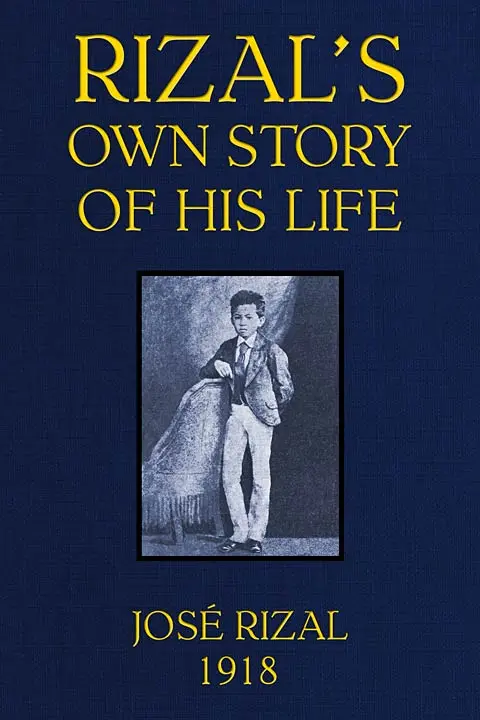
Rizal’s own story of his life
José Rizal
THE CLASSIC COLLECTION · 1900
"An Eagle Flight: A Filipino Novel Adapted from Noli Me Tangere" by José Rizal is a historical novel written in the late 19th century. This adaptation draws from Rizal's original work "Noli Me Tangere," addressing themes of colonialism, social injustice, and the struggle for identity in the Philippines. It features characters such as Crisóstomo Ibarra, who returns to his homeland after studying abroad and encounters the harsh realities of his society shaped by colonial rule. The opening of "An Eagle Flight" introduces us to Captain Tiago's lavish dinner party, which becomes the setting for a mixture of social and political dynamics among the guests, including the young returnee Crisóstomo Ibarra. As he navigates the complexities of reuniting with his culture and confronting the socio-political issues plaguing the Philippines, Ibarra's interactions with various characters reveal personal and national tensions. The atmosphere is charged with unspoken histories, as he learns of his father's unjust death in prison, setting the stage for Ibarra's personal quest for justice and reform.
Introduction adapted from the source catalogue; source summaries may be automatically generated.
Free to read · English · 69,277 words · No account needed
MAKE TIME FOR A GOOD BOOK
On by default. Untick to stop anonymous reading totals. Each page counts after 10 seconds in view. How this works.
Anonymous counting is on unless you have switched it off.
Maria Clara was yet pale, though she had almost recovered from her illness. She kissed Dona Victorina, smiling rather sadly.
"You have been saved, thanks to your connections!" said the doctora, with a significant look toward Linares.
"God has protected my father," said Maria, in a low voice.
"Yes, Clarita, but the time of miracles is past. We, the Spaniards say, trust not in the Virgin, and save yourself by running."
"It's--it's--the contrary, wife!"
"We must talk business," said Dona Victorina, glancing at Maria. Maria found a pretext for leaving, and went out, steadying herself by the furniture.
What was said in this conference was so sordid and mean, that we prefer not to report it. Suffice it to say that when they parted, they were all satisfied. Captain Tiago said a little after to Aunt Isabel:
"Have the caterer notified that we give a reception to-morrow. Maria must get ready for her marriage at once. When Senor Linares is our son-in-law, all the palaces will be open to us; and every one will die of envy."
And so, toward eight o'clock the next evening, the house of Captain Tiago was once more full. This time, however, he had invited only Spaniards, peninsular and Philippine, and Chinese. Yet many of our acquaintances were there. Father Sibyla and Father Salvi, among numerous Franciscans and Dominicans; the old lieutenant of the Municipal Guard, more sombre than ever; the alferez, recounting his victory for the thousandth time, looking over the heads of everybody, now that he is lieutenant with grade of commandant; Dr. Espadana, who looks upon him with respect and fear, and avoids his glance; Dona Victorina, who cannot see him without anger. Linares had not yet arrived; as a person of importance, he must arouse expectation. There are beings so simple, that an hour's waiting for a man suffices to make him great in their eyes.
Maria Clara was the object of interest to all the women, and the subject of unveiled comments. She had received these ceremoniously, without losing her air of sadness.
"Bah! the proud little thing!" said one.
"Rather pretty," said another, "but he might have chosen some one
with a more intelligent face."
"But the money, my dear! The good fellow is selling himself."
In another group some one was saying:
"To marry when one's first fiance is going to be hung!"
"That is what is called prudent; having a substitute at hand."
"Then, when one becomes a widow----"
Possibly some of these remarks reached the ears of Maria Clara. She grew paler, her hand trembled, her lips seemed to move.
Your reading position is saved on this browser. Take it to another device with a library code. Reading pages adapt to text, rather than matching a printed edition.
BEHIND THE BOOK
This eBook is for the use of anyone anywhere in the United States and most other parts of the world at no cost and with almost no restrictions whatsoever. You may copy it, give it away or re-use it under the terms of the Project Gutenberg License included with this eBook or online at www.gutenberg.org. If you are not located in the United States, you will have to check the laws of the country where you are located before using this eBook. Read the source licence.
The original source file, including credits and licence, is retained by this library. Request an original-format copy at no charge. Please include the book title and Project Gutenberg identifier #27594.
KEEP YOUR CURIOSITY GOING
Cécile Tormay

Moritz Busch
Coulson Kernahan
John L. Ransom

Maurice Baring
Frances Wright