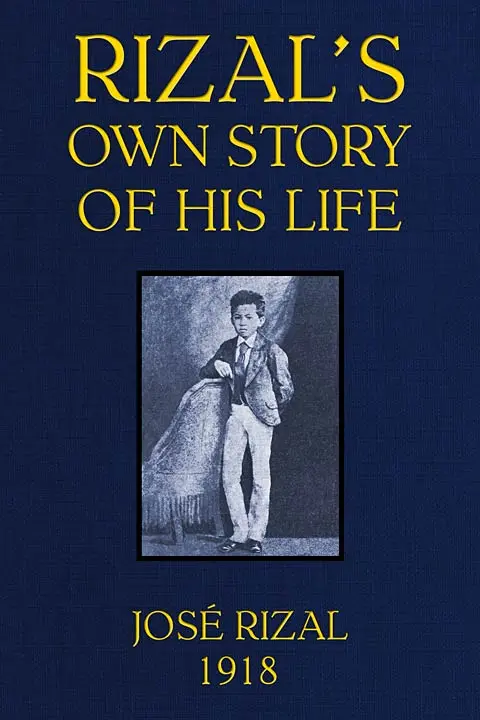
Rizal’s own story of his life
José Rizal
THE CLASSIC COLLECTION · 1900
"An Eagle Flight: A Filipino Novel Adapted from Noli Me Tangere" by José Rizal is a historical novel written in the late 19th century. This adaptation draws from Rizal's original work "Noli Me Tangere," addressing themes of colonialism, social injustice, and the struggle for identity in the Philippines. It features characters such as Crisóstomo Ibarra, who returns to his homeland after studying abroad and encounters the harsh realities of his society shaped by colonial rule. The opening of "An Eagle Flight" introduces us to Captain Tiago's lavish dinner party, which becomes the setting for a mixture of social and political dynamics among the guests, including the young returnee Crisóstomo Ibarra. As he navigates the complexities of reuniting with his culture and confronting the socio-political issues plaguing the Philippines, Ibarra's interactions with various characters reveal personal and national tensions. The atmosphere is charged with unspoken histories, as he learns of his father's unjust death in prison, setting the stage for Ibarra's personal quest for justice and reform.
Introduction adapted from the source catalogue; source summaries may be automatically generated.
Free to read · English · 69,277 words · No account needed
MAKE TIME FOR A GOOD BOOK
On by default. Untick to stop anonymous reading totals. Each page counts after 10 seconds in view. How this works.
Anonymous counting is on unless you have switched it off.
The curate, as if he had not heard this tirade, continued: "To finish the cure of your daughter, she should receive the communion to-morrow, Don Santiago. I think she does not need to confess, and yet, if she will once more, this evening----"
"I don't know," said Dona Victorina, profiting by the pause to continue her reflections, "I don't understand how men can marry such frights. One easily sees where that woman came from. She is dying of envy, that shows in her eyes. What does an alferez get?"
"So prepare Maria for confession," the curate continued, turning to
Aunt Isabel.
The good aunt left the group and went to her niece's room. Maria Clara was still in bed, and pale, very pale; beside her were her two friends.
Sinang was giving her her medicine.
"He has not written to you again?" asked Maria, softly.
"No."
"He gave you no message for me?"
"No; he only said he was going to make every effort to have the archbishop raise the ban of excommunication----"
The arrival of Aunt Isabel interrupted the conversation.
"The father says you are to prepare yourself for confession, my child," said she. "Sinang, leave her to examine her conscience. Shall I bring you the 'Anchor,' the 'Bouquet,' or the 'Straight Road to Heaven,' Maria?"
Maria Clara did not reply.
"Well, we mustn't fatigue you," said the good aunt consolingly; "I will read you the examination myself, and you will only have to remember your sins."
"Write him to think of me no more," murmured the sick girl in
Sinang's ear.
"What!"
But Aunt Isabel came back with her book, and Sinang had to go.
The good aunt drew her chair up to the light, settled her glasses on the tip of her nose, and opened a little book.
"Give good attention, my child: I will begin with the commandments of God; I shall go slowly, so that you may meditate: if you don't hear well, you must tell me, and I will repeat; you know I'm never weary of working for your good."
In a voice monotonous and nasal, she began to read. Maria Clara gazed vaguely into space. The first commandment finished, Aunt Isabel observed her listener over her glasses, and appeared satisfied with her sad and meditative air. She coughed piously, and after a long pause began the second. The good old woman read with unction. The terms of the second commandment finished, she again looked at her niece, who slowly turned away her head.
"Bah!" said Aunt Isabel within herself, "as to taking His holy name in vain, the poor thing has nothing to question: pass on to the third."
Your reading position is saved on this browser. Take it to another device with a library code. Reading pages adapt to text, rather than matching a printed edition.
BEHIND THE BOOK
This eBook is for the use of anyone anywhere in the United States and most other parts of the world at no cost and with almost no restrictions whatsoever. You may copy it, give it away or re-use it under the terms of the Project Gutenberg License included with this eBook or online at www.gutenberg.org. If you are not located in the United States, you will have to check the laws of the country where you are located before using this eBook. Read the source licence.
The original source file, including credits and licence, is retained by this library. Request an original-format copy at no charge. Please include the book title and Project Gutenberg identifier #27594.
KEEP YOUR CURIOSITY GOING
Cécile Tormay

Moritz Busch
Coulson Kernahan
John L. Ransom

Maurice Baring
Frances Wright