
Life of Edwin Forrest, the American Tragedian. Volume 2 (of 2)
William Rounseville Alger & Horatio, Jr. Alger
THE CLASSIC COLLECTION · 1895
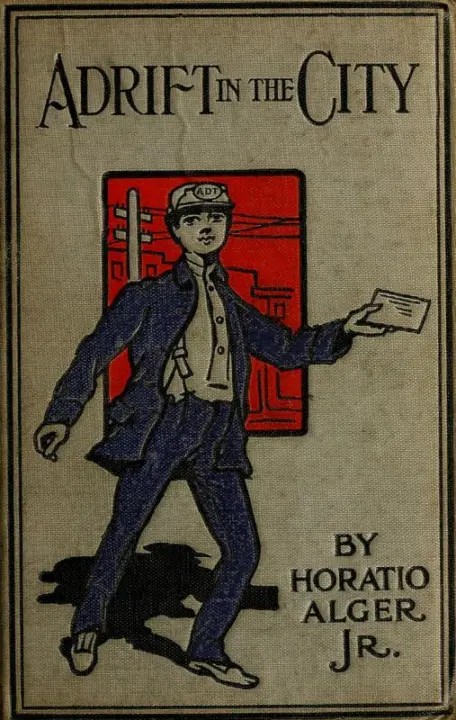
"Adrift in the City; or, Oliver Conrad's Plucky Fight" by Horatio Alger, Jr. is a novel written in the late 19th century. This coming-of-age story centers on young Oliver Conrad, who faces a challenging relationship with his step-brother Roland Kenyon and his cruel step-father, Mr. Kenyon. The narrative explores themes of resilience and the struggle for independence amidst familial tensions, as Oliver learns to assert himself against the bullying he experiences. The opening of the book introduces a confrontation between Oliver and Roland, establishing their antagonistic relationship marked by class and privilege disparities. Roland, feeling entitled, commands Oliver to fetch a ball, leading to a physical altercation that exemplifies the underlying tension between them. After defending himself successfully, Oliver is summoned before Mr. Kenyon, who unjustly accuses him of assaulting Roland. As Oliver stands firm in his principles and self-defense, the stage is set for a deeper exploration of his plight, hinting at future conflicts and Oliver's quest for autonomy against the backdrop of his step-father's deceitful motives.
Introduction adapted from the source catalogue; source summaries may be automatically generated.
Free to read · English · 51,164 words · No account needed
MAKE TIME FOR A GOOD BOOK
On by default. Untick to stop anonymous reading totals. Each page counts after 10 seconds in view. How this works.
Anonymous counting is on unless you have switched it off.
"No, Mis' Kenyon; you're as white as a lily; but I can't understand dat
laugh nohow."
Presently they reached the other shore, and Nancy securely fastened the
boat.
"How far is it to the depot, Nancy?" asked the runaway.
"Only 'bout a mile, Mis' Kenyon. Are you tired?"
"Oh, no; and if I were, I wouldn't mind, so long as I am escaping from that horrible asylum. I can't help thinking of that poor Cleopatra. I wish she might be as fortunate as I, but I am afraid she will be taken back."
"She an' you's different, Mis' Kenyon. She's crazy, an' you aint."
"Then you think I can be trusted out of the doctor's hands?"
"How came you there, anyway, Mis' Kenyon?" asked Nancy curiously.
"It is too long a story to tell, Nancy. It is enough to say that I was put there by a cruel enemy, and that since I have been confined I have met with a great loss."
"Did you lose your money, Mis' Kenyon?" asked Nancy sympathetically.
"It was worse than that, Nancy. My only boy is dead."
"Dat's awful; but brace up, Mis' Kenyon. De Lor' don't let it blow so hard on de sheep dat's lost his fleece."
"I feel that I have very little to live for, Nancy," continued Mrs. Kenyon, in a tone of depression.
"Don't you take it so much to heart, Mis' Kenyon. I've had three chil'en myself, an' I don't know where they is."
"How does that happen, Nancy?"
"When we was all slaves dey was sold away from me, down in Alabama, I reckon, and I never expec' to see any of 'em ag'in."
"That is very hard, Nancy," said Mrs. Kenyon, roused to sympathy.
"So it is, Mis' Kenyon," said Nancy, wiping her eyes; "but I hope to
see 'em in a better land."
Then Nancy, pausing in her rowing, began to sing in an untrained but rich voice a rude plantation hymn:
"We'se all a-goin',
We'se all a-goin',
We'se all a-goin',
To de Promised Land.
"We shall see our faders.
We shall see our moders,
We shall see our chil'en,
Dead an' gone before us,
In de Promised Land.
"Don't you cry, poor sinner,
Don't you cry, poor sinner,
We'se all a-goin
To de Promised Land."
"It makes me feel better to sing them words, Mis' Kenyon," said Nancy; "for it's all true. De Lord will care for us in de Promised Land."
"I am glad you have so much faith, Nancy," said her companion. "Your
words cheer me, in spite of myself. For the first time, I begin to
hope."
"Dat's right, Mis' Kenyon," said Nancy, heartily. "Dat's de way to
talk."
Your reading position is saved on this browser. Take it to another device with a library code. Reading pages adapt to text, rather than matching a printed edition.
William Rounseville Alger & Horatio, Jr. Alger

William Rounseville Alger & Horatio, Jr. Alger

Horatio, Jr. Alger

Horatio, Jr. Alger
BEHIND THE BOOK
This eBook is for the use of anyone anywhere in the United States and most other parts of the world at no cost and with almost no restrictions whatsoever. You may copy it, give it away or re-use it under the terms of the Project Gutenberg License included with this eBook or online at www.gutenberg.org. If you are not located in the United States, you will have to check the laws of the country where you are located before using this eBook. Read the source licence.
The original source file, including credits and licence, is retained by this library. Request an original-format copy at no charge. Please include the book title and Project Gutenberg identifier #56973.
KEEP YOUR CURIOSITY GOING
Coulson Kernahan

Maurice Baring
Frances Wright
Cécile Tormay

Frederic Jesup Stimson

W. H. P. (William Henry Pope) Jarvis