
Life of Edwin Forrest, the American Tragedian. Volume 2 (of 2)
William Rounseville Alger & Horatio, Jr. Alger
THE CLASSIC COLLECTION · 1895
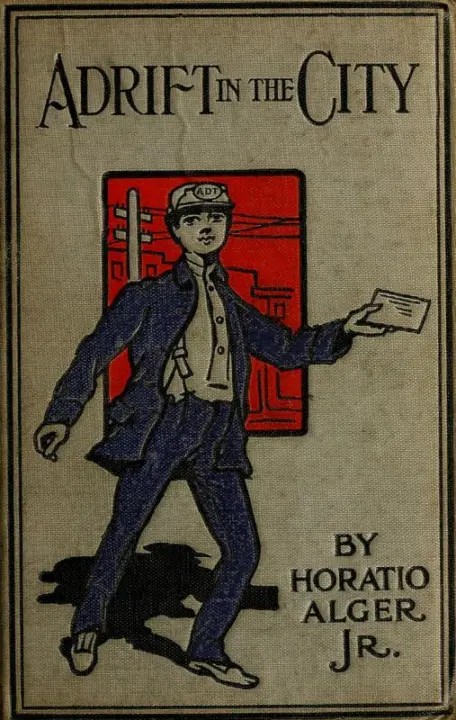
"Adrift in the City; or, Oliver Conrad's Plucky Fight" by Horatio Alger, Jr. is a novel written in the late 19th century. This coming-of-age story centers on young Oliver Conrad, who faces a challenging relationship with his step-brother Roland Kenyon and his cruel step-father, Mr. Kenyon. The narrative explores themes of resilience and the struggle for independence amidst familial tensions, as Oliver learns to assert himself against the bullying he experiences. The opening of the book introduces a confrontation between Oliver and Roland, establishing their antagonistic relationship marked by class and privilege disparities. Roland, feeling entitled, commands Oliver to fetch a ball, leading to a physical altercation that exemplifies the underlying tension between them. After defending himself successfully, Oliver is summoned before Mr. Kenyon, who unjustly accuses him of assaulting Roland. As Oliver stands firm in his principles and self-defense, the stage is set for a deeper exploration of his plight, hinting at future conflicts and Oliver's quest for autonomy against the backdrop of his step-father's deceitful motives.
Introduction adapted from the source catalogue; source summaries may be automatically generated.
Free to read · English · 51,164 words · No account needed
MAKE TIME FOR A GOOD BOOK
On by default. Untick to stop anonymous reading totals. Each page counts after 10 seconds in view. How this works.
Anonymous counting is on unless you have switched it off.
Several months passed, and Mrs. Kenyon remained in confinement. She was not badly treated, except in being vigilantly guarded, and prevented from making her escape. Dr. Fox always treated her with suavity, but she felt that though covered with velvet his hand was of iron, and that there was little to hope for from him. He never made any objection to her writing letters, but always insisted on their being handed to him.
It was not long before she began seriously to doubt whether the letters thus committed to him were really mailed, since no answers came. One day she asked him abruptly:
"Why is it, Dr. Fox, that I get no answers to my letters?"
"I suppose," he answered, "that your friends are afraid you may be excited, and your recovery retarded, by hearing from them."
"Has my--has Mr. Kenyon reported that I am insane?"
"Undoubtedly."
"False and treacherous!" she exclaimed bitterly. "Why was I ever mad
enough to marry him?"
Dr. Fox shrugged his shoulders.
"Really," he said, "I couldn't pretend to explain your motives, my dear madam. Women are enigmas."
"Are my letters regularly mailed, Dr. Fox?" asked Mrs. Kenyon
searchingly.
"How can you ask such a question? Do you not commit them to me?"
"So does Cleopatra," said Mrs. Kenyon, who had fallen into the habit of addressing her room-mate by the name she assumed. "Do you forward her letters to Mark Antony?"
"Does she doubt it?" asked the doctor, bowing to the mad queen.
"No, doctor," replied Cleopatra promptly. "I have the utmost faith in your loyalty, and it shall be rewarded. I have long intended to make you Lord High Baron of the Nile. Let this be the emblem."
In a dignified manner Cleopatra advanced toward Dr. Fox, and passed a bit of faded ribbon through his button-hole.
"Thanks, your Majesty," said the doctor. "Your confidence is not misplaced. I will keep this among my chief treasures."
Cleopatra looked pleased, and Mrs. Kenyon impatient and disgusted.
"He deceives me as he does her, without doubt. It is useless to
question him further."
From this time she sedulously watched for an opportunity to write a letter and commit it to other hands than the doctor's. But, that he might not suspect her design, she also wrote regularly, and placed the letters in his hands.
One day the opportunity came. A young man, related to Cleopatra, visited the institution. He understood very well the character of his aunt's aberration, but was surprised to be told that the quiet lady who bore her company was also crazy.
"What is the nature of her malady?" he enquired of the doctor. "Is she
ever violent?"
"Oh, no."
Your reading position is saved on this browser. Take it to another device with a library code. Reading pages adapt to text, rather than matching a printed edition.
William Rounseville Alger & Horatio, Jr. Alger

William Rounseville Alger & Horatio, Jr. Alger

Horatio, Jr. Alger

Horatio, Jr. Alger
BEHIND THE BOOK
This eBook is for the use of anyone anywhere in the United States and most other parts of the world at no cost and with almost no restrictions whatsoever. You may copy it, give it away or re-use it under the terms of the Project Gutenberg License included with this eBook or online at www.gutenberg.org. If you are not located in the United States, you will have to check the laws of the country where you are located before using this eBook. Read the source licence.
The original source file, including credits and licence, is retained by this library. Request an original-format copy at no charge. Please include the book title and Project Gutenberg identifier #56973.
KEEP YOUR CURIOSITY GOING
Coulson Kernahan

Maurice Baring
Frances Wright
Cécile Tormay

Frederic Jesup Stimson

W. H. P. (William Henry Pope) Jarvis