
Life of Edwin Forrest, the American Tragedian. Volume 2 (of 2)
William Rounseville Alger & Horatio, Jr. Alger
THE CLASSIC COLLECTION · 1895
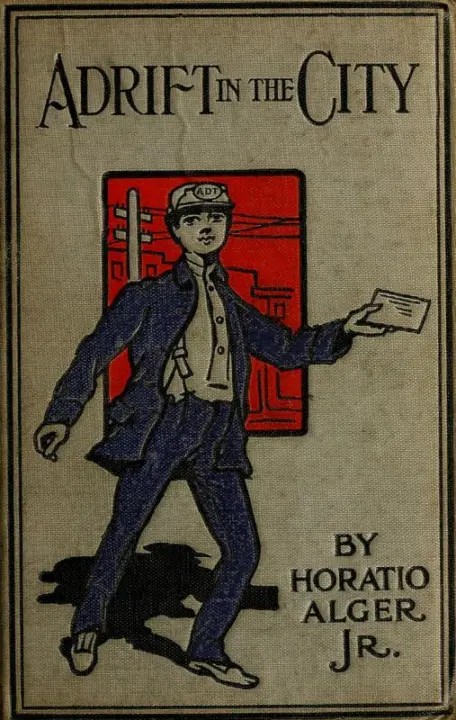
"Adrift in the City; or, Oliver Conrad's Plucky Fight" by Horatio Alger, Jr. is a novel written in the late 19th century. This coming-of-age story centers on young Oliver Conrad, who faces a challenging relationship with his step-brother Roland Kenyon and his cruel step-father, Mr. Kenyon. The narrative explores themes of resilience and the struggle for independence amidst familial tensions, as Oliver learns to assert himself against the bullying he experiences. The opening of the book introduces a confrontation between Oliver and Roland, establishing their antagonistic relationship marked by class and privilege disparities. Roland, feeling entitled, commands Oliver to fetch a ball, leading to a physical altercation that exemplifies the underlying tension between them. After defending himself successfully, Oliver is summoned before Mr. Kenyon, who unjustly accuses him of assaulting Roland. As Oliver stands firm in his principles and self-defense, the stage is set for a deeper exploration of his plight, hinting at future conflicts and Oliver's quest for autonomy against the backdrop of his step-father's deceitful motives.
Introduction adapted from the source catalogue; source summaries may be automatically generated.
Free to read · English · 51,164 words · No account needed
MAKE TIME FOR A GOOD BOOK
On by default. Untick to stop anonymous reading totals. Each page counts after 10 seconds in view. How this works.
Anonymous counting is on unless you have switched it off.
"Good-morning, Oliver," he said pleasantly, when our hero entered the
room.
"Good-morning, sir," returned Oliver in surprise.
"We missed you at supper last evening," continued the step-father.
"Yes, sir; I took supper at Dr. Dudley's," explained Oliver, not quite certain whether this would be considered satisfactory.
"Dr. Dudley is a very worthy man," said Mr. Kenyon. "His son is about
your age, is he not?"
"Yes, sir."
"He has a daughter, also--rather a pretty girl."
"I believe Roland thinks so," said Oliver, glancing at his
step-brother.
"Roland has taste, then," said Mr. Kenyon. "You two boys mustn't
quarrel about the young lady."
"I shan't quarrel," said Roland stiffly. "There are plenty other girls
in this world."
"You are a philosopher, I see," said his father.
Roland felt that this had gone far enough. Why should his father talk pleasantly to Oliver, who had defied his authority the day before? If this went on, Oliver would be encouraged in his insubordination. He felt that it was necessary to revive the subject.
"I expect my ball is lost," he said in an aggrieved tone.
"What ball?" asked his father.
"The ball I batted out into the road yesterday afternoon."
"Probably someone has picked it up," said Mr. Kenyon, proceeding to
open an egg.
Roland was provoked at his father's coolness and unconcern.
"If Oliver had picked it up for me it would not have been lost," he continued, with a scowl at our hero.
"If you had picked it up yourself, wouldn't it have answered the same
purpose?"
Roland stared at his father in anger and dismay. Could he really mean it? Had he been won over to Oliver's side? Oliver, too, was surprised. He began to entertain a much more favorable opinion of his step-father.
"Didn't you tell Oliver to pick it up yesterday afternoon?" demanded Roland, making a charge upon his father.
"Yes, I believe I did."
"Well, he didn't do it."
"He was wrong, then," said Mr. Kenyon mildly. "He should have respected
my authority."
"I'll go and look for it directly breakfast is over," said Oliver, quite won over by Mr. Kenyon's mildness.
"It wouldn't be any use," said Roland. "I've been looking for it myself this morning, and it isn't there."
"Of course, it wouldn't stay there all night," said Mr. Kenyon. "It has, no doubt, been picked up."
"Aint you going to punish Oliver for disobeying you?" burst out the
disappointed Roland.
Oliver turned to his step-father with interest to hear his answer.
"No, Roland. On second thought, I don't think it was his place to go for the ball. You should have gone after it yourself."
Your reading position is saved on this browser. Take it to another device with a library code. Reading pages adapt to text, rather than matching a printed edition.
William Rounseville Alger & Horatio, Jr. Alger

William Rounseville Alger & Horatio, Jr. Alger

Horatio, Jr. Alger

Horatio, Jr. Alger
BEHIND THE BOOK
This eBook is for the use of anyone anywhere in the United States and most other parts of the world at no cost and with almost no restrictions whatsoever. You may copy it, give it away or re-use it under the terms of the Project Gutenberg License included with this eBook or online at www.gutenberg.org. If you are not located in the United States, you will have to check the laws of the country where you are located before using this eBook. Read the source licence.
The original source file, including credits and licence, is retained by this library. Request an original-format copy at no charge. Please include the book title and Project Gutenberg identifier #56973.
KEEP YOUR CURIOSITY GOING
Coulson Kernahan

Maurice Baring
Frances Wright
Cécile Tormay

Frederic Jesup Stimson

W. H. P. (William Henry Pope) Jarvis