
Life of Edwin Forrest, the American Tragedian. Volume 2 (of 2)
William Rounseville Alger & Horatio, Jr. Alger
THE CLASSIC COLLECTION · 1895
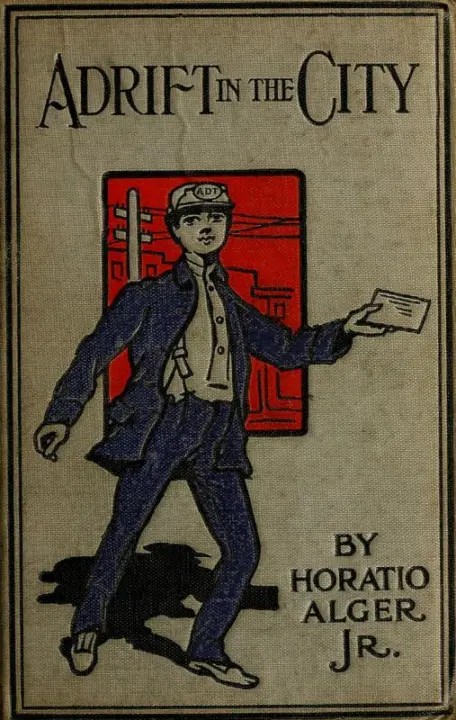
"Adrift in the City; or, Oliver Conrad's Plucky Fight" by Horatio Alger, Jr. is a novel written in the late 19th century. This coming-of-age story centers on young Oliver Conrad, who faces a challenging relationship with his step-brother Roland Kenyon and his cruel step-father, Mr. Kenyon. The narrative explores themes of resilience and the struggle for independence amidst familial tensions, as Oliver learns to assert himself against the bullying he experiences. The opening of the book introduces a confrontation between Oliver and Roland, establishing their antagonistic relationship marked by class and privilege disparities. Roland, feeling entitled, commands Oliver to fetch a ball, leading to a physical altercation that exemplifies the underlying tension between them. After defending himself successfully, Oliver is summoned before Mr. Kenyon, who unjustly accuses him of assaulting Roland. As Oliver stands firm in his principles and self-defense, the stage is set for a deeper exploration of his plight, hinting at future conflicts and Oliver's quest for autonomy against the backdrop of his step-father's deceitful motives.
Introduction adapted from the source catalogue; source summaries may be automatically generated.
Free to read · English · 51,164 words · No account needed
MAKE TIME FOR A GOOD BOOK
On by default. Untick to stop anonymous reading totals. Each page counts after 10 seconds in view. How this works.
Anonymous counting is on unless you have switched it off.
On the way to school Oliver overtook Frank Dudley.
"Well, Oliver, how's the weather at home?" asked Frank. "Cloudy, eh?"
"No; it's all clear and serene."
Frank looked astonished.
"Didn't Mr. Kenyon blow you up, then?" he asked.
"Not a bit of it. He gave me a five-dollar bill without my asking for
it."
"What's come over him?" asked Frank in amazement. "His mind isn't
getting affected, is it?"
Oliver laughed.
"Not that I know of," he said. "I don't wonder you ask. I never saw such a change come over a man since yesterday. Then he wanted Roland to flog me. Now he is like an indulgent parent."
"It's queer, decidedly. I hope, for your sake, it'll hold out."
"So do I. Roland doesn't seem to fancy it, though. He tried hard to revive the quarrel of yesterday, but without success."
"He's an amiable cub, that Roland."
"Do you speak thus of your future brother-in-law?"
"Carrie would sooner be an old maid a dozen times over than give any encouragement to such a fellow."
All of which was pleasant for Oliver to hear.
Mr. Kenyon was not through with his surprises.
Two weeks before, Roland had a new suit of clothes. Oliver's envy had been a little excited, because he needed new clothes more than his step-brother, but he was too proud to give expression to his dissatisfaction or to ask for a similar favor. On the way home from school, in company with Frank Dudley, Oliver met Mr. Kenyon.
"Are you just coming home from school, Oliver?" asked his step-father
pleasantly.
"Yes, sir."
"I have told Mr. Crimp, the tailor, to measure you for a new suit of clothes. You may as well call in now and be measured."
"Thank you, sir," said Oliver, in a tone of satisfaction.
What boy ever was indifferent to new clothes?
"Have you selected the cloth, sir?" he asked.
"No; you may make the selection yourself. You need not regard the price. It is best to get a good article."
Mr. Kenyon waved his hand, and smiling pleasantly, walked away.
"Look here, Oliver," said Frank, "I begin to think you have misrepresented Mr. Kenyon to me. Such a man as that tyrannical! Why, he looks as if butter wouldn't melt in his mouth."
"I don't know what to make of it myself, Frank. I never saw such a change in a man, If he'll keep on treating me like this I shall really begin to like him. Will you come to the tailor's with me?"
"Willingly. It'll be the next thing to ordering a suit for myself."
Your reading position is saved on this browser. Take it to another device with a library code. Reading pages adapt to text, rather than matching a printed edition.
William Rounseville Alger & Horatio, Jr. Alger

William Rounseville Alger & Horatio, Jr. Alger

Horatio, Jr. Alger

Horatio, Jr. Alger
BEHIND THE BOOK
This eBook is for the use of anyone anywhere in the United States and most other parts of the world at no cost and with almost no restrictions whatsoever. You may copy it, give it away or re-use it under the terms of the Project Gutenberg License included with this eBook or online at www.gutenberg.org. If you are not located in the United States, you will have to check the laws of the country where you are located before using this eBook. Read the source licence.
The original source file, including credits and licence, is retained by this library. Request an original-format copy at no charge. Please include the book title and Project Gutenberg identifier #56973.
KEEP YOUR CURIOSITY GOING
Coulson Kernahan

Maurice Baring
Frances Wright
Cécile Tormay

Frederic Jesup Stimson

W. H. P. (William Henry Pope) Jarvis