
Life of Edwin Forrest, the American Tragedian. Volume 2 (of 2)
William Rounseville Alger & Horatio, Jr. Alger
THE CLASSIC COLLECTION · 1895
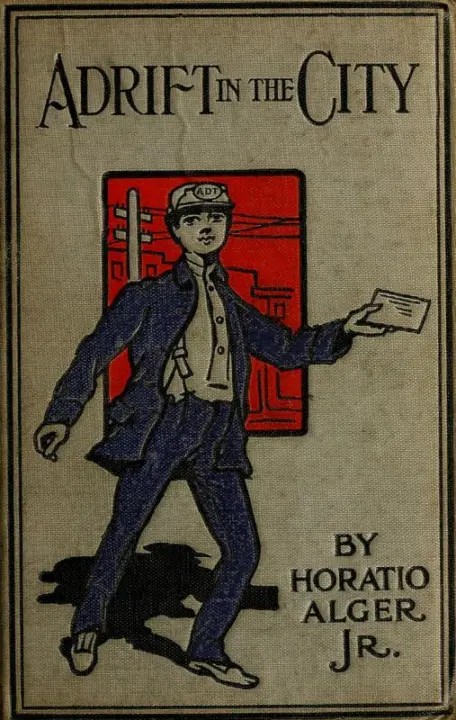
"Adrift in the City; or, Oliver Conrad's Plucky Fight" by Horatio Alger, Jr. is a novel written in the late 19th century. This coming-of-age story centers on young Oliver Conrad, who faces a challenging relationship with his step-brother Roland Kenyon and his cruel step-father, Mr. Kenyon. The narrative explores themes of resilience and the struggle for independence amidst familial tensions, as Oliver learns to assert himself against the bullying he experiences. The opening of the book introduces a confrontation between Oliver and Roland, establishing their antagonistic relationship marked by class and privilege disparities. Roland, feeling entitled, commands Oliver to fetch a ball, leading to a physical altercation that exemplifies the underlying tension between them. After defending himself successfully, Oliver is summoned before Mr. Kenyon, who unjustly accuses him of assaulting Roland. As Oliver stands firm in his principles and self-defense, the stage is set for a deeper exploration of his plight, hinting at future conflicts and Oliver's quest for autonomy against the backdrop of his step-father's deceitful motives.
Introduction adapted from the source catalogue; source summaries may be automatically generated.
Free to read · English · 51,164 words · No account needed
MAKE TIME FOR A GOOD BOOK
On by default. Untick to stop anonymous reading totals. Each page counts after 10 seconds in view. How this works.
Anonymous counting is on unless you have switched it off.
Frank Dudley's father was a successful physician. His mother was dead, and her place in the household was supplied by his father's sister, Miss Pauline Dudley, who, though an old maid, had a sunny temperament and kindly disposition. The doctor's house, though not as pretentious as Mr. Kenyon's, was unusually pleasant and attractive.
"Aunt Pauline," said Frank to his aunt, who was sitting on a rocking chair on the front piazza, "I have brought Oliver home to supper."
"I am very glad to see you, Oliver," said Miss Dudley. "I wish you
would come oftener."
"Thank you, Miss Dudley; I am always glad to come here. It is so pleasant and social compared with----"
He paused, thinking it not in good taste to refer unfavorably to his
own home.
"I understand," said Miss Dudley. "You must be lonely at home."
"I am," said Oliver briefly.
"Not much company, and that poor," whispered Frank.
Oliver nodded assent.
Here Carrie Dudley appeared and cordially welcomed Oliver.
"Carrie seems glad to see you, Oliver," said Frank; "but you must not feel too much elated. It's only on account of your relationship to Roland. She's perfectly infatuated with that boy."
Like most brothers, Frank liked to tease his sister.
"Roland!" repeated Carrie, tossing her head. "I hope I have better
taste than to like him."
"It's all put on, Oliver. You mustn't believe what she says."
"Didn't I see Roland walking with you yesterday?" asked Oliver, willing
to join in the teasing.
"Because I couldn't get rid of him," retorted Carrie.
"He thinks you are over head and ears in love with him," said Frank.
"I don't believe he thinks anything of the kind. If he does, he is very much mistaken; that is all I can say."
"Don't tease your sister any more, Frank," said Oliver. "I don't believe she admires Roland any more than I do."
"Thank you, Oliver. I am glad to have you on my side," said the young lady graciously. "I shouldn't mind if I never saw Roland Kenyon."
"Stop your quarrelling, young people, and walk in to supper," said Miss
Pauline.
"Where is your father to-night, Frank?" asked Oliver, as they ranged themselves round the neat supper table.
"He has been sent for to Claremont. He won't be back till late, probably. You will please look upon me as the head of the household while he is away."
"I will, most learned doctor."
The evening meal passed pleasantly. Oliver could not help contrasting it with the dull and formal supper he was accustomed to take at home, and his thoughts found utterance.
"I wish I had as pleasant a home as you, Frank."
Your reading position is saved on this browser. Take it to another device with a library code. Reading pages adapt to text, rather than matching a printed edition.
William Rounseville Alger & Horatio, Jr. Alger

William Rounseville Alger & Horatio, Jr. Alger

Horatio, Jr. Alger

Horatio, Jr. Alger
BEHIND THE BOOK
This eBook is for the use of anyone anywhere in the United States and most other parts of the world at no cost and with almost no restrictions whatsoever. You may copy it, give it away or re-use it under the terms of the Project Gutenberg License included with this eBook or online at www.gutenberg.org. If you are not located in the United States, you will have to check the laws of the country where you are located before using this eBook. Read the source licence.
The original source file, including credits and licence, is retained by this library. Request an original-format copy at no charge. Please include the book title and Project Gutenberg identifier #56973.
KEEP YOUR CURIOSITY GOING
Coulson Kernahan

Maurice Baring
Frances Wright
Cécile Tormay

Frederic Jesup Stimson

W. H. P. (William Henry Pope) Jarvis