
Life of Edwin Forrest, the American Tragedian. Volume 2 (of 2)
William Rounseville Alger & Horatio, Jr. Alger
THE CLASSIC COLLECTION · 1895
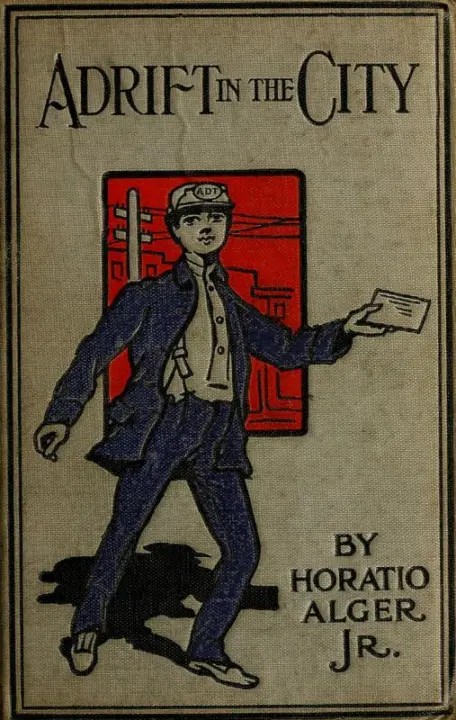
"Adrift in the City; or, Oliver Conrad's Plucky Fight" by Horatio Alger, Jr. is a novel written in the late 19th century. This coming-of-age story centers on young Oliver Conrad, who faces a challenging relationship with his step-brother Roland Kenyon and his cruel step-father, Mr. Kenyon. The narrative explores themes of resilience and the struggle for independence amidst familial tensions, as Oliver learns to assert himself against the bullying he experiences. The opening of the book introduces a confrontation between Oliver and Roland, establishing their antagonistic relationship marked by class and privilege disparities. Roland, feeling entitled, commands Oliver to fetch a ball, leading to a physical altercation that exemplifies the underlying tension between them. After defending himself successfully, Oliver is summoned before Mr. Kenyon, who unjustly accuses him of assaulting Roland. As Oliver stands firm in his principles and self-defense, the stage is set for a deeper exploration of his plight, hinting at future conflicts and Oliver's quest for autonomy against the backdrop of his step-father's deceitful motives.
Introduction adapted from the source catalogue; source summaries may be automatically generated.
Free to read · English · 51,164 words · No account needed
MAKE TIME FOR A GOOD BOOK
On by default. Untick to stop anonymous reading totals. Each page counts after 10 seconds in view. How this works.
Anonymous counting is on unless you have switched it off.
"Yes, your Majesty. I have no doubt he will answer it as soon as his duties in the field will permit."
"Where is he now?"
"I think he is heading an expedition somewhere in Asia Minor."
"Very well," nodded Cleopatra. "As soon as a letter comes, send it to
me."
"At once," said the doctor. "You must look after this lady, and cheer
her up."
"Yes, I will. What is your name?"
"My name used to be Conrad. You may call me that."
She shrank from wearing the name of the man who had confined her in
this terrible asylum.
"That isn't classical. I will call you Claudia--may I?"
"You may call me anything you like," said Mrs. Kenyon wearily.
"When will you send me the paper and ink?" she asked.
"They shall be sent up at once."
Ten minutes later, writing materials were brought. Anxious to do something which might lead to her release, she sat down and wrote letters to two gentlemen of influence with whom she was acquainted, giving the details of the plot which had been so successfully carried out against her liberty.
Cleopatra watched her curiously. Presently she said:
"Will you let me have a sheet of your paper? I wish to write a letter
to Mark Antony."
"Certainly," said Mrs. Kenyon, regarding her with pity and sympathy.
The other seated herself and wrote rapidly, in an elegant feminine hand, which surprised Mrs. Kenyon. She did not know that the poor lady had once been classical teacher in a prominent female seminary, and that it was a disappointment in love which had alienated her mind and reduced her to her present condition.
"Shall I read you the letter?" she enquired.
"If you like."
It was a very well written appeal to her imaginary correspondent to hasten to her and restore her to her throne.
"I thought," said Mrs. Kenyon cautiously, "that Mark Antony died many
centuries ago."
"Quite a mistake, I assure you. Who could have told you such nonsense, Claudia?" demanded Cleopatra sharply.
"You are quite sure, then?"
"Of course. You will begin to say next that Cleopatra is dead."
"I thought so."
"That is because I have remained here so long in concealment. The world supposes me dead, but the time will come when people will learn their mistake. Have you finished your letters?"
"Yes."
"When they send us our supper you can send them to the doctor."
"Will he be sure to post them?" asked Mrs. Kenyon, with a natural
suspicion.
"Of course. Doesn't he always send my letters to Mark Antony?"
This was not as satisfactory as it might have been.
"Have you ever received any answers?" asked Mrs. Kenyon.
Your reading position is saved on this browser. Take it to another device with a library code. Reading pages adapt to text, rather than matching a printed edition.
William Rounseville Alger & Horatio, Jr. Alger

William Rounseville Alger & Horatio, Jr. Alger

Horatio, Jr. Alger

Horatio, Jr. Alger
BEHIND THE BOOK
This eBook is for the use of anyone anywhere in the United States and most other parts of the world at no cost and with almost no restrictions whatsoever. You may copy it, give it away or re-use it under the terms of the Project Gutenberg License included with this eBook or online at www.gutenberg.org. If you are not located in the United States, you will have to check the laws of the country where you are located before using this eBook. Read the source licence.
The original source file, including credits and licence, is retained by this library. Request an original-format copy at no charge. Please include the book title and Project Gutenberg identifier #56973.
KEEP YOUR CURIOSITY GOING
Coulson Kernahan

Maurice Baring
Frances Wright
Cécile Tormay

Frederic Jesup Stimson

W. H. P. (William Henry Pope) Jarvis