
Last letters from the living dead man
David Patterson (Spirit) Hatch
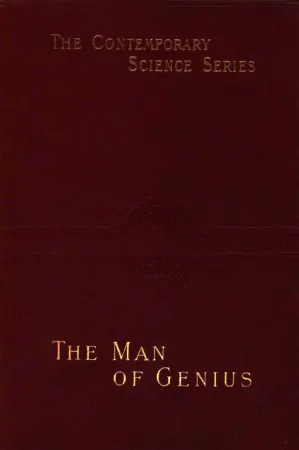
THE CLASSIC COLLECTION · 1891
"The Man of Genius" by Cesare Lombroso is a scientific publication written in the late 19th century. The book delves into the complex relationship between genius and madness, exploring the characteristics of individuals considered genius and how these traits intersect with patterns of mental illness. Lombroso examines historical figures and provides a foundational analysis of genius through a lens of physiological and psychological phenomena. The opening of the work sets the stage for an exploration of genius by referencing significant historical thoughts on the topic, from Aristotle to more contemporary thinkers. Lombroso reflects on his evolving views about genius relating to degradation and neurosis, suggesting that exceptional intellectual capabilities often stem from psychological anomalies. He lays out an argument that associates genius with various signs of degeneration, prompting readers to reconsider what defines genius and how societal perceptions may have historically conflated brilliance with madness. This thought-provoking introduction invites further examination of the intertwining nature of genius, mental health, and societal recognition.
Introduction adapted from the source catalogue; source summaries may be automatically generated.
Free to read · English · 130,716 words · No account needed
MAKE TIME FOR A GOOD BOOK
On by default. Untick to stop anonymous reading totals. Each page counts after 10 seconds in view. How this works.
Anonymous counting is on unless you have switched it off.
[77] Physiologie des Génies, 1875.
[78] Science et Matérialisme, 1890, p. 103.
[79] Brewster, Life, 1856.
[80] Revue Scientifique, 1888.
[81] Michiels, Le Monde du Comique, 1886.
[82] Réveillé-Parise, op. cit.
[83] Perez, L’enfant de trois à sept ans, 1886.
[84] Scherer, Diderot, 1880.
[85] Ueber die Verwandtschaft des Genies mit dem Irrsinn, 1887.
[86] Bertolotti, Il Testamento di Cardano, 1883.
[87] G. Flaubert, Lettres à Georges Sand, Paris, 1885.
[88] Delepierre, Histoire Littéraire des fous, Paris, 1860.
[89] Réveillé-Parise, Physiologie et Hygiène des hommes livrés aux travaux de l’esprit, Paris, 1856.
[90] Mantegazza, Physiognomy and Expression.
[91] Arago, ii. p. 82.
[92] Plutarch, Life, &c.
[93] Radestock, op. cit.
[94] Moreau, op. cit., p. 523.
[95] Correspondance, p. 119, 1887.
[96] Memorie dell Istituto Lombardo, 1878.
[97] Letter to Giordani, Aug., 1817.
[98] Sette Anni di Sodalizio.
[99] B. de Boismont, op. cit. p. 265.
[100] Hagen, Ueber die Verwandtschaft, &c., 1877.
[101] Roger, Voltaire Malade, 1883.
[102] G. Sand, Histoire de Ma Vie, 9.
[103] Berti, p. 154.
[104] Berti, Cavour Avanti il 1848, Rome; Mayor, in Archivo di
Psichiatria, vol. iv.
[105] Mayor, op. cit.
[106] Autobiography.
[107] Autobiography, p. 145.
[108] Von Sedlitz, Schopenhauer, 1872.
[109] Letters, 1885.
[110] Histoire de Ma Vie, v. p. 9.
[111] G. Sand, op. cit.
[112] De Immenso et innumerat., iii.
[113] G. Menke, De ciarlataneria eruditorum, 1780.
[114] Revue des Deux Mondes, 1883.
[115] Letters, p. 62.
[116] Ibid., pp. 62, 119, 123.
[117] G. Sforza, Epistolario di A. Manzoni, Milan, 1883.
[118] Epistolario, 3, p. 163.
[119] Correspondance, p. 119. 1887.
[120] Journal de ma vie intime.
[121] Souvenirs d’Enfance et de Jeunesse.
[122] Amiel, Journal Intime, Geneva, 2nd ed., 1889.
[123] Clément, Musiciens célèbres, Paris, 1868.
[124] W. Irving, Life, 1880.
[125] Verga, Lazzaretti,&c., Milan, 1880.
[126] Forbes Winslow, op. cit., p. 123.
[127] Forbes Winslow, op. cit., p. 126.
[128] Works, vol. xxvi. p. 83.
[129] Dendy, op. cit., p. 41.
[130] Correspondance, vol. ii. letter 9.
[131] De Factis Dictisque Memorabilibus, Lib. vi. Cap. 9.
[132] Tertullian, Apologetica, p. 46. But see A. Gellii Noctes
Atticæ, x. p. 17.
[133] Wiederbelebung des Klassisch, Altert., 1882.
[134] Pouchet, Histoire des Sciences Naturelles dans le Moyen Age,
1870.
[135] Masi, La vita ed i tempi di Albergati, 1882.
[136] Laura had eleven children and Petrarch himself two when he dedicated to her 294 sonnets. In politics he turned from Cola di Rienzi to his enemy Colonna and from Robert to Charles IV. (Famil, xix. 1. p. 32). He was too much occupied with himself, says Perrens, to be occupied with his country.
[137] Lettres à G. Sand, 1885.
[138] Revue Philosophique, 1887, p. 69.
[139] Confessions d’un Enfant du Siècle, pp. 250, 251.
[140] Cottrau, Lettre d’un Mélomane, Naples, 1885.
[141] Matthew x. 34-36; Luke xii. 51-53.
[142] Luke xii. 49. See the Greek text.
[143] Luke xviii. 29-30.
[144] Luke xiv. 26.
[145] Matthew x. 37, xvi. 24; Luke v. 23.
[146] Matthew viii. 21; Luke v. 23.
[147] Fiorentino, La Musica, Rome, 1884.
[148] L’Uomo Delinquente, 1889.
[149] Mastriani, Sul Genio e la Follia, Naples, 1881.
[150] Tra un Sigaro e l’altro, p. 194.
[151] Max. du Camp, Souvenirs, 1884.
[152] Schilling, Psychiatr. Briefe., p. 488, 1863.
[153] Zimmermann, Solitude.
[154] Tagebuch, 1787, Berne.
[155] Sketches of Bedlam, 1823.
[156] Biographie, by Wasielewski, Dresden, 1858.
[157] Maxime du Camp, Souvenirs littéraires, 1887.
[158] Brunetière, Revue des Deux Mondes, 1887, No. 706. Revue
Bleue, July, 1887.
[159] Maxime du Camp, Souvenirs littéraires.
Your reading position is saved on this browser. Take it to another device with a library code. Reading pages adapt to text, rather than matching a printed edition.
BEHIND THE BOOK
This eBook is for the use of anyone anywhere in the United States and most other parts of the world at no cost and with almost no restrictions whatsoever. You may copy it, give it away or re-use it under the terms of the Project Gutenberg License included with this eBook or online at www.gutenberg.org. If you are not located in the United States, you will have to check the laws of the country where you are located before using this eBook. Read the source licence.
The original source file, including credits and licence, is retained by this library. Request an original-format copy at no charge. Please include the book title and Project Gutenberg identifier #50539.
KEEP YOUR CURIOSITY GOING
David Patterson (Spirit) Hatch
Coulson Kernahan

Ralph Waldo Emerson
Frances Wright

Edwin Abbott Abbott

Joseph Droz