
Last letters from the living dead man
David Patterson (Spirit) Hatch
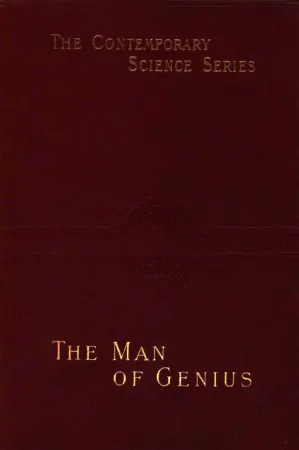
THE CLASSIC COLLECTION · 1891
"The Man of Genius" by Cesare Lombroso is a scientific publication written in the late 19th century. The book delves into the complex relationship between genius and madness, exploring the characteristics of individuals considered genius and how these traits intersect with patterns of mental illness. Lombroso examines historical figures and provides a foundational analysis of genius through a lens of physiological and psychological phenomena. The opening of the work sets the stage for an exploration of genius by referencing significant historical thoughts on the topic, from Aristotle to more contemporary thinkers. Lombroso reflects on his evolving views about genius relating to degradation and neurosis, suggesting that exceptional intellectual capabilities often stem from psychological anomalies. He lays out an argument that associates genius with various signs of degeneration, prompting readers to reconsider what defines genius and how societal perceptions may have historically conflated brilliance with madness. This thought-provoking introduction invites further examination of the intertwining nature of genius, mental health, and societal recognition.
Introduction adapted from the source catalogue; source summaries may be automatically generated.
Free to read · English · 130,716 words · No account needed
MAKE TIME FOR A GOOD BOOK
On by default. Untick to stop anonymous reading totals. Each page counts after 10 seconds in view. How this works.
Anonymous counting is on unless you have switched it off.
[46] Darwin’s Life, 1887.
[47] Genie und Talent.
[48] Fischer, Æsthetik, ii. 1, p. 386.
[49] “I am one who, when Love inspires, attend, and according as he speaks within me, so I express myself.”
[50] Schilling, Psychiat. Briefe, p. 486.
[51] Ball, Leçons des Maladies Mentales, 1881.
[52] Radestock, p. 42.
[53] Apologia.
[54] Letter of April 20, 1752.
[55] Verga, Lazzaretti, 1880.
[56] Réveillé-Parise, p. 285.
[57] Arago, Œuvres, iii.
[58] Kreislauf des Lebens, Brief. xviii.
[59] Dilthey, Ueber Einbildungskraft der Dichter, 1887.
[60] Lazzaretti, op. cit., 1880.
[61] Des Hallucinations, p. 30. Recent investigations in hypnotism show that the hallucination often has the character of real sensation; that, for example, visual suggestions may be modified by lenses. See my Nuove Studii sull’ ipnotismo.
[62] Studi Critici, Naples, 1880, p. 95.
[63] Souvenirs, p. 73, Paris, 1883.
[64] Confessions d’un Enfant du Siècle, pp. 218, 251.
[65] Introduction to Essai sur les Mœurs.
[66] Siècle de Louis XIV., 1.
[67] Dictionnaire Philosophique, art. Climat.
[68] Tagebuch, ii. p. 120.
[69] Paradoxe sur le Comédien.
[70] Noise had become an obsession to Jules de Goncourt, says his brother Edmund, in a note to the former’s Lettres: “It seemed to him that he had ‘an ear in the pit of his stomach,’ and indeed noise had taken, and continued to take as his illness increased, as it were in some féerie at once absurd and fatal, the character of a persecution of the things and surroundings of his life.... During the last years of his life he suffered from noise as from a brutal physical touch.... This persecution by noise led my brother to sketch a gloomy story during his nightly insomnia.... In this story a man was eternally pursued by noise, and leaves the rooms he had rented, the houses he had bought, the forests in which he had camped, forests like Fontainebleau, from which he is driven by the hunter’s horn, the interior of the pyramids, in which he was deafened by the crickets, always seeking silence, and at last killing himself for the sake of the silence of supreme repose, and not finding it then, for the noise of the worms in his grave prevented him from sleeping. Oh, noise, noise, noise! I can no longer bear to hear the birds. I begin to cry to them like Débureau to the nightingale, ‘Will you not be still, vile beast?’” (Lettres de Jules de Goncourt, Paris, 1885.)
[71] Étude sur Gustave Flaubert, Paris, 1885.
[72] Among the fragments that have been preserved some are of great
sweetness:--
“Quanto fu dolce il giogo e la catena
De’ suoi candidi bracci al col mio volte,
Che sciogliendomi io sento mortal pena;
D’altre cose non dico che son molte,
Chè soverchia dolcezza a morte mena.”
[73] Mantegazza, Del Nervosismo dei grandi uomini, 1881.
[74] Journal des Savants, Oct., 1863.
[75] Epistolario, v. 3, p. 163.
[76] Vicq d’Azir, Elog., p. 209.
Your reading position is saved on this browser. Take it to another device with a library code. Reading pages adapt to text, rather than matching a printed edition.
BEHIND THE BOOK
This eBook is for the use of anyone anywhere in the United States and most other parts of the world at no cost and with almost no restrictions whatsoever. You may copy it, give it away or re-use it under the terms of the Project Gutenberg License included with this eBook or online at www.gutenberg.org. If you are not located in the United States, you will have to check the laws of the country where you are located before using this eBook. Read the source licence.
The original source file, including credits and licence, is retained by this library. Request an original-format copy at no charge. Please include the book title and Project Gutenberg identifier #50539.
KEEP YOUR CURIOSITY GOING
David Patterson (Spirit) Hatch
Coulson Kernahan

Ralph Waldo Emerson
Frances Wright

Edwin Abbott Abbott

Joseph Droz