THE CLASSIC COLLECTION✦An Introduction to MythologyCLASSIC FREE BOOKS
An Introduction to Mythology
Lewis Spence
THE CLASSIC COLLECTION · 1923
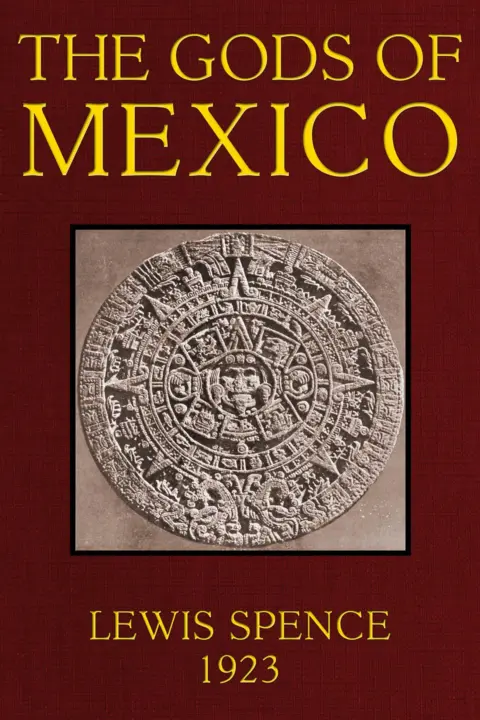
"The Gods of Mexico" by Lewis Spence is a scholarly work focused on the religion of ancient Mexico, written in the early 20th century. This book delves into the mythology and deities associated with the Nahua peoples, particularly the Aztec and Chichimec cultures, while distinguishing these beliefs from those of the Maya civilization further south. The text explores the origins, characteristics, and evolution of these gods, as well as their rituals and cultural significance. The opening of the book sets the stage for a detailed examination of Mexican religious beliefs, establishing the intention to separate the nuances of Nahua religion from broader Central American practices. Spence emphasizes the complexity and development of Mexican gods, introducing significant themes such as the agricultural rain-cult and the necessity of human sacrifice intertwined with divine favor. He mentions various deities while hinting at the deep historical and archaeological context necessary for understanding these ancient beliefs. Through an academic lens, Spence seeks to unpack the intricate tapestry of ceremonial practices and mythological narratives that shaped the spiritual life of pre-Columbian Mexico.
Introduction adapted from the source catalogue; source summaries may be automatically generated.
Free to read · English · 130,713 words · No account needed
MAKE TIME FOR A GOOD BOOK
On by default. Untick to stop anonymous reading totals. Each page counts after 10 seconds in view. How this works.
Anonymous counting is on unless you have switched it off.
[43] L. Spence, The Popol Vuh (1908), description of bk. i; Brasseur de Bourbourg, Le Vuh Popol, Paris, 1861.
[44] An important work republished with a Latin translation by Dr. W. Lehmann under the title of Traditions des anciens Mexicains (Jour. Soc. Amer. Paris, n.s., vol. iii. Paris, 1906. pp. 239–298).
[45] Kingsborough’s translation, vol. vi, p. 171.
[46] Chavero’s edition, Mexico, 1892, p. 21.
[47] See the Popol Vuh, bk. i., for a Quiche analogy to this tale of
human degradation.
[48] Chavero’s edition, Mexico, 1891, pp. ii ff.
[49] Hist. de Tlaxcala, in Ternaux-Compan’s Voyages, tom. lxxxvi, p. 5; also edition by A. Chavero, Mexico, 1892.
[50] Hist. Antigua de Mexico, bk. i, c. 4.
[51] First Relacion.
[52] Historia Eccles.
[53] A variant myth makes Quetzalcoatl the god who seeks bones in the underworld from which to make the human race. As he returns, the bones drop to earth and quails gnaw them. Ciuacoatl pounds them into a paste from which men are formed. The Anales de Quauhtitlan makes the gods create man from the cinders of the worlds destroyed in the four epochs.
[54] Probably because of his status as god of twins and of duplicates
of all kinds.
[55] Obviously this sacred bundle is in the same category with the “medicine-bundle” of the North American Indian tribes, and it would seem that from such a form certain of the Mexican gods were evolved.
[56] Bk. vii, c. 2.
[57] For further information regarding this incident see Boturini, Idea, section iii, 14, “Tlatocaocelotl.”
[58] These metamorphoses, or at least the first two, are obviously founded upon Xolotl’s dual characteristic as a twin. The resemblance between his name and that of the little amphibious animal axolotl is due to the monstrous character of both.
[59] Hist. du Tlaxcallan in Ternaux-Compan’s Nouvelles Annales des Voyages (tom. xcix, p. 129).
[60] Hist. Antig. de Mexico, tom. i, p. 7.
[61] Storia Antica del Messico, tom. ii, p. 7.
[62] Hist. Eccles, p. 81.
[63] Curtin, Creation Myths of Primitive America, Intro., p. 35.
[64] Relaciones (Chavero’s edition; Mexico, 1891), p. 11. Hist. Chichimeca (Chavero’s edition; Mexico, 1892), p. 21.
[65] Among the American races the soul was thought of as residing in the bones. See Brinton, Myths of the New World, pp. 295 ff., 299, 321.
[66] Anales de Quauhtitlan.
[67] Translation of interpretation in Kingsborough, vol. vi, p. 127.
[69] See Rady y Delgado’s reproduction of this Codex, Madrid, 1892.
[70] The colours associated with the points of the compass were: East, yellow; north, red; west, blue; south, white.
[71] For the further relation of the gods to time and space see the
appendix on the tonalamatl.
[72] See myth of the creation of the four supporters, supra.
[73] Humming-birds. The warriors seem to have been metamorphosed into the naualli or bird-disguise of Uitzilopochtli, the humming-bird god of war.
Your reading position is saved on this browser. Take it to another device with a library code. Reading pages adapt to text, rather than matching a printed edition.
BEHIND THE BOOK
This eBook is for the use of anyone anywhere in the United States and most other parts of the world at no cost and with almost no restrictions whatsoever. You may copy it, give it away or re-use it under the terms of the Project Gutenberg License included with this eBook or online at www.gutenberg.org. If you are not located in the United States, you will have to check the laws of the country where you are located before using this eBook. Read the source licence.
The original source file, including credits and licence, is retained by this library. Request an original-format copy at no charge. Please include the book title and Project Gutenberg identifier #71503.
KEEP YOUR CURIOSITY GOING

David Patterson (Spirit) Hatch

David Patterson (Spirit) Hatch

David Patterson (Spirit) Hatch
Cécile Tormay

Moritz Busch
John L. Ransom