THE CLASSIC COLLECTION✦An Introduction to MythologyCLASSIC FREE BOOKS
An Introduction to Mythology
Lewis Spence
THE CLASSIC COLLECTION · 1923
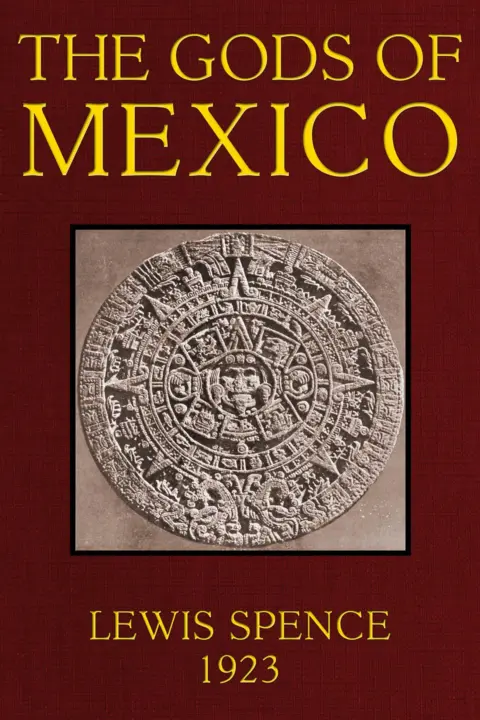
"The Gods of Mexico" by Lewis Spence is a scholarly work focused on the religion of ancient Mexico, written in the early 20th century. This book delves into the mythology and deities associated with the Nahua peoples, particularly the Aztec and Chichimec cultures, while distinguishing these beliefs from those of the Maya civilization further south. The text explores the origins, characteristics, and evolution of these gods, as well as their rituals and cultural significance. The opening of the book sets the stage for a detailed examination of Mexican religious beliefs, establishing the intention to separate the nuances of Nahua religion from broader Central American practices. Spence emphasizes the complexity and development of Mexican gods, introducing significant themes such as the agricultural rain-cult and the necessity of human sacrifice intertwined with divine favor. He mentions various deities while hinting at the deep historical and archaeological context necessary for understanding these ancient beliefs. Through an academic lens, Spence seeks to unpack the intricate tapestry of ceremonial practices and mythological narratives that shaped the spiritual life of pre-Columbian Mexico.
Introduction adapted from the source catalogue; source summaries may be automatically generated.
Free to read · English · 130,713 words · No account needed
MAKE TIME FOR A GOOD BOOK
On by default. Untick to stop anonymous reading totals. Each page counts after 10 seconds in view. How this works.
Anonymous counting is on unless you have switched it off.
[74] Historia de los Mexicanos por sus Pinturas. I believe these different heavens to have resulted from the clashing and mingling of rival cults.
[75] As it has been found impossible to include every illustration from the codices which is mentioned in the text, those pictures not supplied may be consulted in the reproductions of the codices themselves. A full bibliography of the codices will be found at the end. When the letter K appears with reference to a codex, its reproduction in Kingsborough’s “Mexican” antiquities is implied.
[76] This stellar mask is so called from being worn by the stellar deities. It is usually connected with the red-and-white striped painting of the body. The Sahagun Aztec MS. calls it “face-cage marking” and “face-star marking which is called darkness,” the former referring to stripes over the face, the latter to the mask design, which seems to me to symbolize night surrounded by the “eyes” of the stars.
[77] Hist. Nat. Ind., pp. 352 ff., English translation in Purchas his Pilgrimes, bk. v, c. 9. Maclehoses’ edition.
[78] Hist. Conq. Mex., tom. i, pp. 396–398.
[79] Gage’s trans. of Herrera, in New Survey, pp. 116–117; for Spanish text, see Hist. Gen., tom. i, dec. ii, bk. vii, c. xvii.
[80] Monarq. Ind., tom. i, p. 293.
[81] Quarter, district.
[82] House of the youths, where the acolytes or junior priests resided.
[83] Governors.
[84] Vassals, burghers.
[85] Dance.
[86] This custom was in vogue among certain prehistoric races, and is still practised on the death of a relative by African bushmen, who first remove a finger-joint.
[87] More correctly quauhxicalli, a stone vase for the reception of the hearts of victims, from quauh (tli) “eagle,” and xicalli, “cup.”
[88] Monarq. Ind., tom. ii, p. 73.
[89] Hist. Mex., English translation by C. Cullen (London, 1787), vol.
i, bk. vi.
[90] Idea de una Hist., pp. 60–61.
[91] Bk. i, c. i.
[92] So Uitzilopochtli addresses his half-brother. “Uncle” among the ancient Mexicans was an honorific title.
[93] Bk. iii, c, i, par. i.
[94] Monarq. Ind., tom. i, p. 294.
[95] See chapter on Cosmogony.
[96] Sahagun, Appendix to bk. iii, c. ix.
[97] Hist. Nat. Ind. in Purchas his Pilgrimes, bk. v, c. xiii. See also Manuel Gamio, Proc. 19th Cong. Amer., Washington, 1915, for account of discoveries when the foundations of this temple were partly laid bare in 1913.
[98] C. i.
[99] Sahagun, bk. ii, c. xxxiv; Uitzilopochtli himself, as we shall see, was oracular. In this case I take it that the octli distilled from the plant conferred the boon of oracular speech.
Your reading position is saved on this browser. Take it to another device with a library code. Reading pages adapt to text, rather than matching a printed edition.
BEHIND THE BOOK
This eBook is for the use of anyone anywhere in the United States and most other parts of the world at no cost and with almost no restrictions whatsoever. You may copy it, give it away or re-use it under the terms of the Project Gutenberg License included with this eBook or online at www.gutenberg.org. If you are not located in the United States, you will have to check the laws of the country where you are located before using this eBook. Read the source licence.
The original source file, including credits and licence, is retained by this library. Request an original-format copy at no charge. Please include the book title and Project Gutenberg identifier #71503.
KEEP YOUR CURIOSITY GOING

David Patterson (Spirit) Hatch

David Patterson (Spirit) Hatch

David Patterson (Spirit) Hatch
Cécile Tormay

Moritz Busch
John L. Ransom