THE CLASSIC COLLECTION✦An Introduction to MythologyCLASSIC FREE BOOKS
An Introduction to Mythology
Lewis Spence
THE CLASSIC COLLECTION · 1923
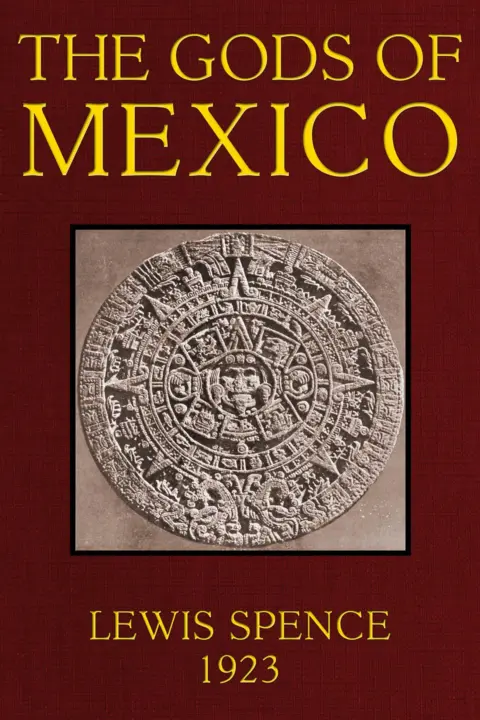
"The Gods of Mexico" by Lewis Spence is a scholarly work focused on the religion of ancient Mexico, written in the early 20th century. This book delves into the mythology and deities associated with the Nahua peoples, particularly the Aztec and Chichimec cultures, while distinguishing these beliefs from those of the Maya civilization further south. The text explores the origins, characteristics, and evolution of these gods, as well as their rituals and cultural significance. The opening of the book sets the stage for a detailed examination of Mexican religious beliefs, establishing the intention to separate the nuances of Nahua religion from broader Central American practices. Spence emphasizes the complexity and development of Mexican gods, introducing significant themes such as the agricultural rain-cult and the necessity of human sacrifice intertwined with divine favor. He mentions various deities while hinting at the deep historical and archaeological context necessary for understanding these ancient beliefs. Through an academic lens, Spence seeks to unpack the intricate tapestry of ceremonial practices and mythological narratives that shaped the spiritual life of pre-Columbian Mexico.
Introduction adapted from the source catalogue; source summaries may be automatically generated.
Free to read · English · 130,713 words · No account needed
MAKE TIME FOR A GOOD BOOK
On by default. Untick to stop anonymous reading totals. Each page counts after 10 seconds in view. How this works.
Anonymous counting is on unless you have switched it off.
[2] Motecuhzoma described his faith to Cortéz in almost precisely similar terms. See Bernal Diaz, True History of the Conquest of Mexico, Maudslay’s translation. London, 1908.
[3] Especially in The Civilization of Ancient Mexico, 1911.
[4] See Seler, Gesammelte Abhandlungen, passim.
[5] See Appendix, The Tonalamatl and the Solar Calendar.
[6] A Study of Maya Art, 1913, p. 225.
[7] See his commentaries on the several codices, passim.
[8] See Torquemada, bk. vi, c. 24.
[9] Sahagun, III, c. 4; Anales de Quauhtitlan.
[10] On Quetzalcoatl generally see Sahagun, passim; Torquemada, vol. i, p. 254; Motolinia, tom. i, pp. 10–11; and Mendieta, passim.
[11] Consult bibliography to chapter ix of H. B. Alexander’s North American Mythology. Boston, 1916.
[12] Sahagun, bk. vi, c. viii.
[13] See appendix on Tonalamatl.
[14] See chapter on Cosmogony.
[15] Seler, Codex Vaticanus B, 1902–3, p. 174.
[16] In many cosmogonies—Hindu, Babylonian, Chinese, Scandinavian, for example—the earth is formed from the remains of a slain monster or living being.
[17] See section on Tlaloc.
[18] Payne in his History of the New World called America, vol. i, 1892, pp. 424 ff., was the first to indicate the “fetishtic” nature of this statue, which he identifies as that of Chicomecoatl. He pours the vials of scorn upon “the Italian dilettante Boturini” for his identification of the block as Uitzilopochtli-Teoyaomiqui. He further states that it “has no limbs,” but its large, scaly dragon-legs are at least as obvious as his lack of success in giving the sculpture its proper name.
[19] See my article “Cherokees” in Hastings’ Encyclopædia of Religion and Ethics, vol. iii, p. 504.
[20] See Brinton, Nagualism.
[21] Anales de Quauhtitlan (Brasseur, Hist. Nat. Civ. de Mex., vol. i,
pp. 400 ff.).
[22] Codex Vaticanus, 1902–3, p. 75.
[23] For much Mexican star-lore of value see Seler’s Venus Period in the Picture-Writings of the Borgia Codex Group, translated into English in Bulletin 28 of the Bureau of American Ethnology, pp. 355 ff. For the myth see section on Cosmogony.
[24] Bk. ii, c. 4.
[25] See Appendix on Tonalamatl.
[26] Sahagun, bk. ii, Appendix.
[27] Clavigero, Storia del Messico, vol. i, bk. vi, p. 257 (English
translation).
[28] The native name for Mexico, signifying “Place upon the water.”
[29] Monarq. Ind., tom. ii, p. 525.
[30] Hist. Mex., tom. i, pp. 291–2.
[31] See the section on Tlaloc.
[32] Notes on the Shushwap People of British Columbia, “Proceedings and Transactions of the Royal Society of Canada,” 1891, vol. ix, sect. ii. Montreal, 1892.
[33] Sahagun, Hist. Gen., bk. ii, c. xiv.
[34] Hist. de Tlaxcallan, c. v.
[35] See Section on Itzpapalotl.
[36] See chapter on Cosmogony.
[37] See Sahagun, bk. i, c. 6.
[38] See chapter on Cosmogony.
[39] Torquemada, bk. viii, c. 13.
[40] Although some of the old authors, Bernal Diaz for instance, say explicitly that the gods of one city were not recognized in another, in effect they were, only under other names.
[41] Translation in Kingsborough, vol. vi, p. 198.
[42] Op. cit., p. 207.
Your reading position is saved on this browser. Take it to another device with a library code. Reading pages adapt to text, rather than matching a printed edition.
BEHIND THE BOOK
This eBook is for the use of anyone anywhere in the United States and most other parts of the world at no cost and with almost no restrictions whatsoever. You may copy it, give it away or re-use it under the terms of the Project Gutenberg License included with this eBook or online at www.gutenberg.org. If you are not located in the United States, you will have to check the laws of the country where you are located before using this eBook. Read the source licence.
The original source file, including credits and licence, is retained by this library. Request an original-format copy at no charge. Please include the book title and Project Gutenberg identifier #71503.
KEEP YOUR CURIOSITY GOING

David Patterson (Spirit) Hatch

David Patterson (Spirit) Hatch

David Patterson (Spirit) Hatch
Cécile Tormay

Moritz Busch
John L. Ransom