THE CLASSIC COLLECTION✦An Introduction to MythologyCLASSIC FREE BOOKS
An Introduction to Mythology
Lewis Spence
THE CLASSIC COLLECTION · 1923
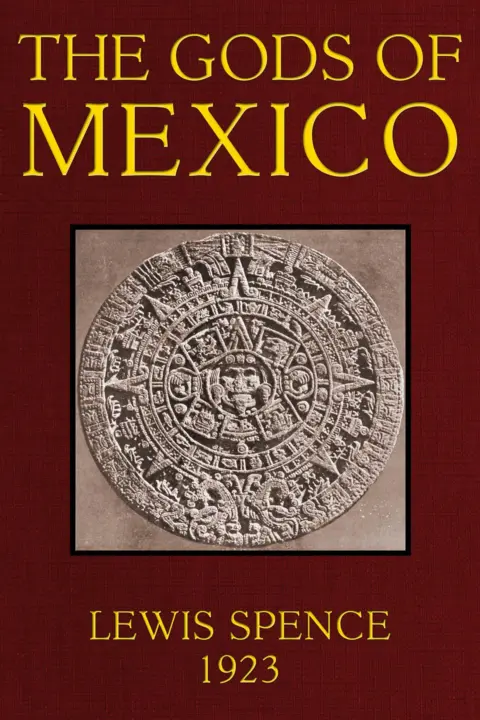
"The Gods of Mexico" by Lewis Spence is a scholarly work focused on the religion of ancient Mexico, written in the early 20th century. This book delves into the mythology and deities associated with the Nahua peoples, particularly the Aztec and Chichimec cultures, while distinguishing these beliefs from those of the Maya civilization further south. The text explores the origins, characteristics, and evolution of these gods, as well as their rituals and cultural significance. The opening of the book sets the stage for a detailed examination of Mexican religious beliefs, establishing the intention to separate the nuances of Nahua religion from broader Central American practices. Spence emphasizes the complexity and development of Mexican gods, introducing significant themes such as the agricultural rain-cult and the necessity of human sacrifice intertwined with divine favor. He mentions various deities while hinting at the deep historical and archaeological context necessary for understanding these ancient beliefs. Through an academic lens, Spence seeks to unpack the intricate tapestry of ceremonial practices and mythological narratives that shaped the spiritual life of pre-Columbian Mexico.
Introduction adapted from the source catalogue; source summaries may be automatically generated.
Free to read · English · 130,713 words · No account needed
MAKE TIME FOR A GOOD BOOK
On by default. Untick to stop anonymous reading totals. Each page counts after 10 seconds in view. How this works.
Anonymous counting is on unless you have switched it off.
The Aubin-Goupil Tonalamatl.
(A) Reproduced by the Duc de Loubat, with commentary by E. Seler.
(Paris, 1900.)
(B) English translation of above by A. H. Keane, with reproduction.
(Berlin and London, 1901.)
Codex Vienna, Vindobonensis, or Indiæ Meridionalis.
(A) First reproduced in part by Olaus Wormius, Museum Wormianum.
(Leyden, 1655, p. 383.)
(B) Reproduced in Kingsborough’s Antiquities, vol. ii.
(C) Commentary in E. Seler’s Gesammelte Abhandlungen.
Codex Zouche or Nuttall.
Reproduced with commentary by Zelia Nuttall. (Peabody Museum publication.) (Cambridge, Mass., 1902.)
Codex Borbonicus.
Reproduced by the Duc de Loubat, with commentary by E. T. Hamy. (Paris,
1899.)
See also on the subject of the codices generally:
Aubin, Mémoire sur la peinture didactique des anciens Mexicains (Revue Orientale et Américaine). (Paris, 1860, pp. 224–255.)
Boban, Catalogue raisonné de la Collection Aubin-Goupil. (Paris, 1889.) (With an atlas in which many MSS. are reproduced in phototype.)
Lehmann, W., “Les peintures Mixteco-zapotèques” (Journ. Soc. Amer. de Paris, N.S., tom. ii). (Paris, 1905, pp. 241–280.)
Antigüedades mexicanas, publicadas por la junta Colombina de Mexico. (Mexico, 1892.) Atlas with plates.
Paso y Troncoso, Catalogo de Mexico en la Exposicion de Madrid.
(Mexico, 1892.)
Peñafiel, Monumentos del arte mexicana antigua. (Berlin, 1890.)
Chavero, Pinturas jeroglificas, 2 parts. (Mexico, 1900–1901.)
For the convenience of readers a glossary of the Mexican words most frequently employed in this work is appended:
anauatl Ring of white mussel-shell. areyto Sacred dance; a word of Antillean origin, introduced by the Spanish conquerors of Mexico. atlatl Spear-thrower. aztaxelli Forked heron-feather plume. calpulli Augmentative of calli, house, signifying “quarter,” “district.” chalchihuitl Green stone—jadeite, turquoise, emerald—and precious or semi-precious stones of a green colour. chicauaztli The rattle-staff, associated with the water and fertility deities. cueitl Skirt, petticoat. maxtli Loin-cloth. naualli Disguise, magical form or shape. nequen Robe. octli The fermented juice of the Agave americana. The modern term is pulque, a word of Argentine origin. piloechmilli “Face-painting of children.” quauhxicalli “Cup of eagles”; stone vase in which the hearts of sacrificed victims were placed. quetzalli Feather-plumes of the quetzaltototl or Trogon pavoninus, a bird indigenous to Mexico, the plumes of which were greatly prized by the natives. tamalli Maize-cake (same as Spanish corrupted form tamale). tecutli Noble, lord, person of quality. teocalli Pyramid-temple. teopan Temple precinct. teotl God. telpochcalli House of the youths, the place of instruction for boys in training for the priesthood. teueuelli Shield with eagle’s-down feathers. tilmatli Mantle or cloak. tlachtli A ball-game, a kind of hockey. tlachinolli Fire-and-water symbol. tonalamatl Book of Days: an arrangement of signs indicating lucky and unlucky days, adapted to the calendar. toualli Four balls or beads as a shield device. ulli Indiarubber. xiuhcoatl Fire-snake.
[1] See Bibliography for description of this and all other works
alluded to throughout the work.
Your reading position is saved on this browser. Take it to another device with a library code. Reading pages adapt to text, rather than matching a printed edition.
BEHIND THE BOOK
This eBook is for the use of anyone anywhere in the United States and most other parts of the world at no cost and with almost no restrictions whatsoever. You may copy it, give it away or re-use it under the terms of the Project Gutenberg License included with this eBook or online at www.gutenberg.org. If you are not located in the United States, you will have to check the laws of the country where you are located before using this eBook. Read the source licence.
The original source file, including credits and licence, is retained by this library. Request an original-format copy at no charge. Please include the book title and Project Gutenberg identifier #71503.
KEEP YOUR CURIOSITY GOING

David Patterson (Spirit) Hatch

David Patterson (Spirit) Hatch

David Patterson (Spirit) Hatch
Cécile Tormay

Moritz Busch
John L. Ransom