THE CLASSIC COLLECTION✦An Introduction to MythologyCLASSIC FREE BOOKS
An Introduction to Mythology
Lewis Spence
THE CLASSIC COLLECTION · 1923
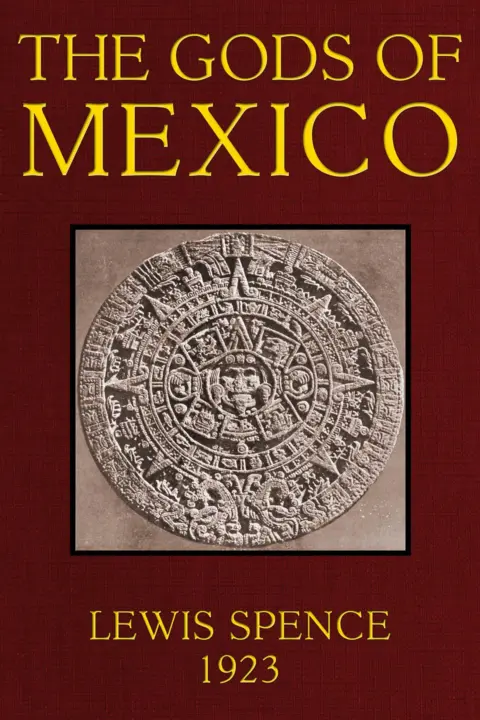
"The Gods of Mexico" by Lewis Spence is a scholarly work focused on the religion of ancient Mexico, written in the early 20th century. This book delves into the mythology and deities associated with the Nahua peoples, particularly the Aztec and Chichimec cultures, while distinguishing these beliefs from those of the Maya civilization further south. The text explores the origins, characteristics, and evolution of these gods, as well as their rituals and cultural significance. The opening of the book sets the stage for a detailed examination of Mexican religious beliefs, establishing the intention to separate the nuances of Nahua religion from broader Central American practices. Spence emphasizes the complexity and development of Mexican gods, introducing significant themes such as the agricultural rain-cult and the necessity of human sacrifice intertwined with divine favor. He mentions various deities while hinting at the deep historical and archaeological context necessary for understanding these ancient beliefs. Through an academic lens, Spence seeks to unpack the intricate tapestry of ceremonial practices and mythological narratives that shaped the spiritual life of pre-Columbian Mexico.
Introduction adapted from the source catalogue; source summaries may be automatically generated.
Free to read · English · 130,713 words · No account needed
MAKE TIME FOR A GOOD BOOK
On by default. Untick to stop anonymous reading totals. Each page counts after 10 seconds in view. How this works.
Anonymous counting is on unless you have switched it off.
(Works written from 1800–1920)
Alexander, Hartley Burr, Latin-American Mythology. (Boston, 1920.)
Anales del Museo Nacional de Mexico. Tom. i, Mexico, 1877. (In
progress.)
Bancroft, Hubert Howe, The Native Races of the Pacific States, 5 vols. (New York and London, 1875–1876.)
This great compilation is admirable as a painstaking précis of the extensive sources relating to Mexican and Mayan history and religion, but its author and his assistants confined themselves to collection and compilation alone, and ventured upon no critical treatment of the subject, for which task, they admit, they were not equipped.
Batres, L., Archæological Explorations in Escalerillas Street, City of Mexico, Year 1900. (Mexico, 1902.)
Beuchat, H., Manuel d’Archéologie Américaine (Amérique Préhistorique—Civilisations disparues). (Paris, 1912.)
A useful if somewhat condensed review of American archæology. Chapitre iv, livre ii, gives a short and not very thorough account of the gods, rites, priesthood, and magic of the ancient Mexicans. Chapitre v deals with the Calendar, and chapitre vi is useful for reference regarding the manuscripts and writing. There is a good bibliography.
Brasseur de Bourbourg, E. C., Histoire des nations civilisées du Mexique et de l’Amérique Centrale durant les siècles antérieurs à Christophe Colomb. 4 vols. (Paris, 1857–1859.)
The Abbé Brasseur’s idea was to explain American mythology as the apotheosis of history. But he unearthed many priceless materials, some of which are included in this work.
Brinton, Daniel Garrison, American Hero Myths (Philadelphia, 1882); “Were the Toltecs an Historic Nationality?” (Proc. Am. Phil. Soc., xxiv, pp. 229–241, 1887); Essays of an Americanist (Philadelphia, 1890); The Myths of the New World (3rd edition, revised) (Philadelphia, 1905).
Brinton’s books are all well written, but his ideas regarding mythology generally are now a little out-of-date. His works, however, will repay perusal. The student must be on his guard against Brinton’s etymologies, as his knowledge of the native languages, though extensive, was not exact.
Charency, H. de, Le Mythe de Votan, étude sur les origines Asiatiques de la Civilisation Américaine. (Alençon, 1871.)
Charnay, Désiré, Les anciennes Villes du nouveau monde. (Paris, 1885.) English translation as Ancient Cities of the New World. (London, 1887.)
Charnay’s acquaintance with Mexican archæology and mythology was
elementary.
Chavero, Alfredo, Mexico a traves de los siglos, tom. i; Historia antigua y de la Conquista. (Barcelona, 1884.)
This enthusiastic and painstaking antiquary did much for the elucidation of all subjects relating to ancient Mexico, especially as regards the discovery and criticism of ancient works and manuscripts. But his zeal frequently betrayed him into somewhat fanciful explanations.
Chevalier, M., Le Mexique Ancien et Moderne. (Paris, 1886.)
Congrès international des Américanistes—comptes rendus. (Biennially,
1878 ff.)
Dieseldorff, E. P., “Cuculcan” (Zeit. für Ethnol., xxvii, Verhand., pp.
780–873).
Your reading position is saved on this browser. Take it to another device with a library code. Reading pages adapt to text, rather than matching a printed edition.
BEHIND THE BOOK
This eBook is for the use of anyone anywhere in the United States and most other parts of the world at no cost and with almost no restrictions whatsoever. You may copy it, give it away or re-use it under the terms of the Project Gutenberg License included with this eBook or online at www.gutenberg.org. If you are not located in the United States, you will have to check the laws of the country where you are located before using this eBook. Read the source licence.
The original source file, including credits and licence, is retained by this library. Request an original-format copy at no charge. Please include the book title and Project Gutenberg identifier #71503.
KEEP YOUR CURIOSITY GOING

David Patterson (Spirit) Hatch

David Patterson (Spirit) Hatch

David Patterson (Spirit) Hatch
Cécile Tormay

Moritz Busch
John L. Ransom