THE CLASSIC COLLECTION✦An Introduction to MythologyCLASSIC FREE BOOKS
An Introduction to Mythology
Lewis Spence
THE CLASSIC COLLECTION · 1923
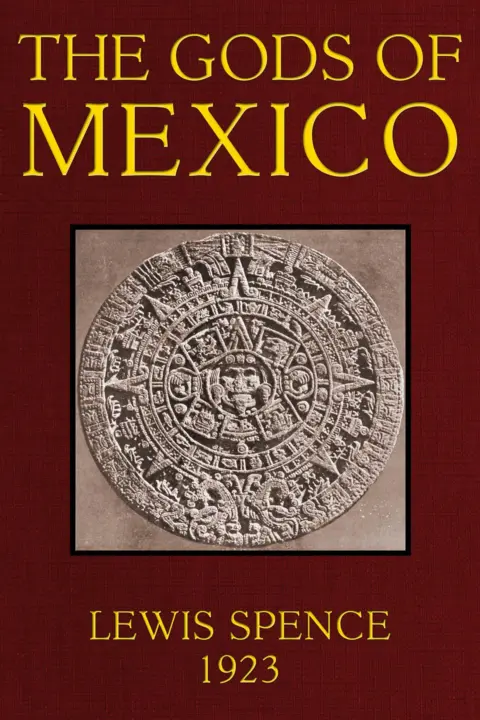
"The Gods of Mexico" by Lewis Spence is a scholarly work focused on the religion of ancient Mexico, written in the early 20th century. This book delves into the mythology and deities associated with the Nahua peoples, particularly the Aztec and Chichimec cultures, while distinguishing these beliefs from those of the Maya civilization further south. The text explores the origins, characteristics, and evolution of these gods, as well as their rituals and cultural significance. The opening of the book sets the stage for a detailed examination of Mexican religious beliefs, establishing the intention to separate the nuances of Nahua religion from broader Central American practices. Spence emphasizes the complexity and development of Mexican gods, introducing significant themes such as the agricultural rain-cult and the necessity of human sacrifice intertwined with divine favor. He mentions various deities while hinting at the deep historical and archaeological context necessary for understanding these ancient beliefs. Through an academic lens, Spence seeks to unpack the intricate tapestry of ceremonial practices and mythological narratives that shaped the spiritual life of pre-Columbian Mexico.
Introduction adapted from the source catalogue; source summaries may be automatically generated.
Free to read · English · 130,713 words · No account needed
MAKE TIME FOR A GOOD BOOK
On by default. Untick to stop anonymous reading totals. Each page counts after 10 seconds in view. How this works.
Anonymous counting is on unless you have switched it off.
Name: Centzon Totochtin = “Four Hundred Rabbits.”
Area of Worship: Mexico generally.
Festival: The day ome tochtli (“two rabbit”) in the sign ce mazatl (“one deer”), a movable feast.
The constituent elements of the insignia of the octli-gods may be generally described as follows:
(1) A two-coloured face-painting, the front half of the facial profile (i.e. the middle part of the face) being painted red in its entire length, both sides at the temples black (or dark green), or else black with longish yellow spots.
(2) A nasal plate, handle-shaped, the ends involuted outwardly, or crescent-shaped, the golden Huaxtec nose-ornament, yaca-metztli. It is usually marked on all articles dedicated to the octli-gods.
(3) A four-cornered ear-pendant, which agrees substantially with that
of the Rain-god.
(4) A neck-ornament falling far down, loose in texture, made of
malinalli grass fibre.
(5) A crown of heron-feathers, such as is worn by the Rain-god, but here combined with the cuecaluitoncatl, Quetzal’s neck-ornament made of dark feathers, with some projecting arara plumes.
(6) A stone axe as a weapon.
The most striking of these objects are the first two. So characteristic are they of the octli-gods, that a juxtaposition of red and black lines on a tilmatli is explained in the Codex Magliabecchiano as “manta de dos conejos,” or shoulder-covering of the Two-rabbit octli-god. [305]
Sahagun, speaking of the octli-gods, [306] says that Tezcatzoncatl [307] was the parent or brother of the rest, who were called Yiauhtecatl, Izquitecatl, Acolua, Tlilhua, Patecatli, Toltecatl, Papaztac, Tlaltecayoua, Ome tochtli, Tepuztecatl, Chimapaleuecatl, and Cohuatzincatl.
One of the hymns in Sahagun’s collection alludes as follows to the
octli-gods:
In Colhuacan in fear
Fear has his home.
The God in the Palace, Tezcatzonco,
He was dealt with, therefore he wept (the fire wept?).
Not so, not so (shall it be) (saith he)
The God was dealt with, therefore he wept.
The God in the Palace Axalaco,
He was dealt with, therefore he wept.
Not so, not so (shall it be) (saith he)
The God was dealt with, therefore he wept.
I have followed Seler’s translation of this hymn, but, like him, can glean little from it. It seems to me to allude vaguely to the cutting of the agave-plant, and the consequent withdrawal of the sap from which octli is made.
A report on the Huaxtec territory dated 1579 evidently relates to the octli-gods. It states that:
Your reading position is saved on this browser. Take it to another device with a library code. Reading pages adapt to text, rather than matching a printed edition.
BEHIND THE BOOK
This eBook is for the use of anyone anywhere in the United States and most other parts of the world at no cost and with almost no restrictions whatsoever. You may copy it, give it away or re-use it under the terms of the Project Gutenberg License included with this eBook or online at www.gutenberg.org. If you are not located in the United States, you will have to check the laws of the country where you are located before using this eBook. Read the source licence.
The original source file, including credits and licence, is retained by this library. Request an original-format copy at no charge. Please include the book title and Project Gutenberg identifier #71503.
KEEP YOUR CURIOSITY GOING

David Patterson (Spirit) Hatch

David Patterson (Spirit) Hatch

David Patterson (Spirit) Hatch
Cécile Tormay

Moritz Busch
John L. Ransom