THE CLASSIC COLLECTION✦Shadows and sunbeams: Being a second series of Fern leaves from Fanny’s portfolioCLASSIC FREE BOOKS
Shadows and sunbeams: Being a second series of Fern leaves from Fanny’s portfolio
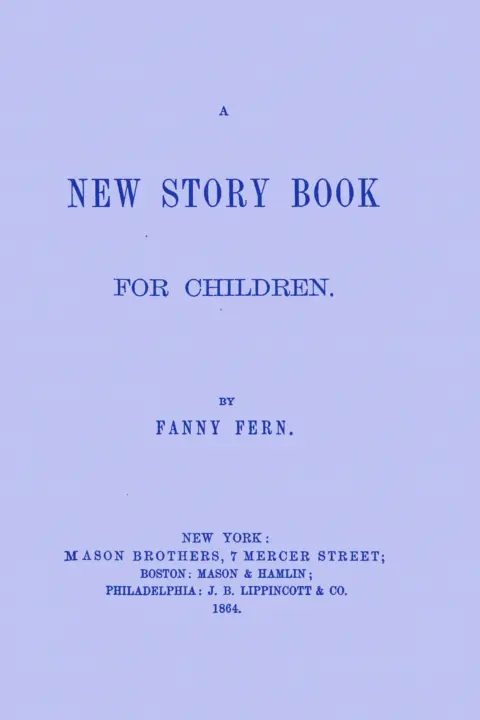
Fanny Fern
THE CLASSIC COLLECTION · 1856
"Rose Clark" by Fanny Fern is a novel written in the mid-19th century. The story follows the life of Rose, a young orphan girl who faces hardship and mistreatment in a charity school run by a harsh matron named Mrs. Markham. As Rose navigates her struggles for basic dignity and love, the novel explores themes of childhood, abuse, and the complexities of adult relationships. The opening of the novel introduces Rose to the orphan asylum where she is brought after the death of her mother. Mrs. Markham, the matron, displays a cold and contemptuous attitude toward Rose, labeling her as just another beggar. The scene depicts Rose's distress and vulnerability as she is forcibly stripped of her clothing and her identity by Mrs. Markham, who seeks to break her spirit. Through Rose's interactions with both the matron and another caregiver, Timmins, we are treated to a glimpse of her deep longing for maternal affection and her past experiences of sorrow. This stark contrast lays the groundwork for the emotional journey that awaits Rose as she seeks to overcome her adversities.
Introduction adapted from the source catalogue; source summaries may be automatically generated.
Free to read · English · 91,366 words · No account needed
MAKE TIME FOR A GOOD BOOK
On by default. Untick to stop anonymous reading totals. Each page counts after 10 seconds in view. How this works.
Anonymous counting is on unless you have switched it off.
"What is that?" exclaimed old Mrs. Bond, as she saw the stage, dimly, through the pelting rain, plowing through the clayey mud, up the steep hill toward her door. "Somebody must be coming here, else the driver would have taken the easier cut to the village," and she pressed her face closer against the moist window-pane to get a clearer view.
"It is going to stop here, sure as the world," she exclaimed. "Who can be coming a visiting in such a rain as this? It is not time for old Cousin Patty, these three months yet."
"Dear heart," she said, as the driver jumped off his box, and opened the stage-door, "if it isn't Rose, and that sick baby! Dear heart--dear heart, it is as much as its life is worth. I hope I shall have grace to forgive that woman, but I don't know, I don't know; who could have believed it?" and by this time, the baby was handed into her outstretched arms, and Rose stepped dripping across the threshold.
"Cry, dear--do cry. I am going to cry myself. It is dreadful hard." And she drew the chairs up to the fire, and gazed by its light into Rose's brimming eyes and Charley's pale face.
"May God forgive her," she said, at last; "can't you say it, dear?
Try."
Rose answered by pointing to Charley.
"I know it, dear heart; I know it; but you remember the 'crown of thorns,' and the mocking 'sponge,' and the cruel 'spear,'" said the old lady, struggling down her own incensed feelings.
"Take Charley now, dear, he is quite warm, while I run and make you a cup of hot tea," and the old lady piled fresh wood upon the huge andirons, and drew out her little tea-table, stopping now to wipe her eyes, now to kiss Rose and the baby, and whispering, "Try, dear, do; it will make you feel happier; try."
The cheerful warmth of the fire, and Mrs. Bond's motherly kindness, brought a little color into Rose's pale face, and Charley kicked his little cold toes out of his frock, and winked his eyes at the crackling blaze, as if to say,
"Now, this is something like."
After tea, Rose narrated to Mrs. Bond the visit of the old crone to her attic, and expressed her firm belief that she was Dolly's mother.
This was even worse in Mrs. Bond's eyes than Mrs. Howe's cruelty to Rose, and not trusting herself to speak, she gave vent to her feelings by alternately raising her hands and eyes to heaven.
Your reading position is saved on this browser. Take it to another device with a library code. Reading pages adapt to text, rather than matching a printed edition.
Fanny Fern
Fanny Fern

Fanny Fern
Fanny Fern
BEHIND THE BOOK
This eBook is for the use of anyone anywhere in the United States and most other parts of the world at no cost and with almost no restrictions whatsoever. You may copy it, give it away or re-use it under the terms of the Project Gutenberg License included with this eBook or online at www.gutenberg.org. If you are not located in the United States, you will have to check the laws of the country where you are located before using this eBook. Read the source licence.
The original source file, including credits and licence, is retained by this library. Request an original-format copy at no charge. Please include the book title and Project Gutenberg identifier #41542.
KEEP YOUR CURIOSITY GOING
Coulson Kernahan

Maurice Baring
Frances Wright
Cécile Tormay

Frederic Jesup Stimson

W. H. P. (William Henry Pope) Jarvis