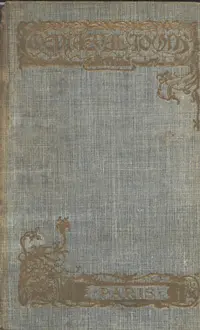
The Story of Paris
Thomas Okey
THE CLASSIC COLLECTION · 1904
"Paris and Its Story" by T. Okey is a historical account written in the early 20th century. This work chronicles the rich and complex history of Paris, focusing on its evolution from a Gallic settlement to the vibrant metropolis it is today. The narrative combines both factual history and the romantic legends that shape the city's identity, making it particularly appealing for readers interested in the cultural and historical significance of Paris. The opening of the book sets the tone by reflecting on the author’s admiration for Paris, establishing the city as a symbol of cultural significance and enduring spirit through centuries of struggle and triumph. Okey introduces the city's early beginnings as Lutetia, highlighting its geographical advantages that made it a center for trade and military importance. The narrative emphasizes the transformation Paris underwent under various rulers, starting from the Roman occupation and continuing through the medieval period, illustrating not only its resilience through invasions and internal conflicts but also its rich cultural tapestry woven through art, literature, and the continuous evolution of its society.
Introduction adapted from the source catalogue; source summaries may be automatically generated.
Free to read · English · 110,517 words · No account needed
MAKE TIME FOR A GOOD BOOK
On by default. Untick to stop anonymous reading totals. Each page counts after 10 seconds in view. How this works.
Anonymous counting is on unless you have switched it off.
Vaches, isle des, 6
Val de Grâce, church of, 223
Vallière, Mme. de la, 212
Van Dyck, 307
Vasari, his appreciation of Fra Angelico, 306
Vauban, his military science, 210;
his estimate of the national resources, 215
Vendôme, Duke of, his depravity, 216
Vendôme, place and column of, 316
Venetian merchants at Paris, 34;
their sympathy with Jeanne d'Arc, 133
Venise, Rue de, 299
Vergniaud, 260, 270
Veronese, 306
Versailles, château of, 212;
cost of, 213, note;
opera house, scene at, 248;
the revolution at, 247
Victoires, Notre Dame des, 194, note
Victor, St., prior of, stabbed, 57;
abbey of, 60
Ville, the, 146, 147
Vinci, da, his Monna Lisa at Louvre, 306
Viollet le Duc, his love of Gothic, 278
Voltaire, his solvent wit, 269, 270
Volterra, Daniele da, his statue of Louis XIII., 187
Vosges, Place des, 187
Vouet, 311
Wall, the Roman, 6
Watteau, his manner of painting, 313;
works by, at Louvre, 313
Whistler, 290
Colston & Coy., Limited, Printers, Edinburgh.
[1] "Faudra recommencer" ("We must begin again"), said, to the present writer in 1871, a Communist refugee bearing a great scar on his face from a wound received fighting at the barricades.
[2] Inf. XXIX. 121-123. A French commentator consoles himself by reflecting that the author of the Divina Commedia is far more vituperative when dealing with certain Italian peoples, whom he designates as hogs, curs, wolves and foxes.
[3] Cobbett, comparing the relative intellectual culture of the British Isles and of France between the years 1600 and 1787, found that of the writers on the arts and sciences who were distinguished by a place in the Universal, Historical, Critical and Bibliographical Dictionary one hundred and thirty belonged to England, Scotland and Ireland, and six hundred and seventy-six to France.
[4] "Nous cuisinons même l'amour."--TAINE.
[5] The Seine takes five hours to flow through the seven miles of
modern Paris.
[6] "Cesare armato con gli occhi grifani."--Inferno, iv. 123.
[7] Of some 10,000 ancient inscriptions found in Gaul, only twenty are in Celtic, and less than thirty words of Celtic origin now remain in the French language.
[8] The water supply of Paris is even now partly derived from these sources, and flows along the old repaired Roman aqueduct.
[9] Traces of the Gallo-Roman wall have been discovered, and are marked across the roadway opposite No. 6 Rue de la Colombe.
[10] The Isle de Galilée was joined to the Cité during the thirteenth
century.
[11] In 1848 some remains were found of the old halls of this building, and of its columns, worn by the ropes of the boatmen who used to moor their craft to them.
[12] The exact position of this bridge is much disputed by authorities, some of whom would locate it on the site of the present Pont au Change. The balance of probabilities seems to us in favour of the position given in the text.
[13] "Jovem brutum atque hebetem."
Your reading position is saved on this browser. Take it to another device with a library code. Reading pages adapt to text, rather than matching a printed edition.
Thomas Okey
BEHIND THE BOOK
This eBook is for the use of anyone anywhere in the United States and most other parts of the world at no cost and with almost no restrictions whatsoever. You may copy it, give it away or re-use it under the terms of the Project Gutenberg License included with this eBook or online at www.gutenberg.org. If you are not located in the United States, you will have to check the laws of the country where you are located before using this eBook. Read the source licence.
The original source file, including credits and licence, is retained by this library. Request an original-format copy at no charge. Please include the book title and Project Gutenberg identifier #45336.
KEEP YOUR CURIOSITY GOING
Wilfrid Scawen Blunt
Wilfrid Scawen Blunt

E. W. (Edgar Watson) Howe
Cécile Tormay

Moritz Busch
John L. Ransom