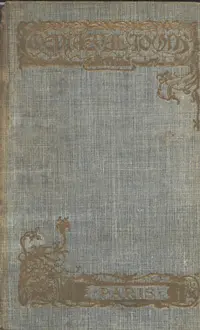
The Story of Paris
Thomas Okey
THE CLASSIC COLLECTION · 1904
"Paris and Its Story" by T. Okey is a historical account written in the early 20th century. This work chronicles the rich and complex history of Paris, focusing on its evolution from a Gallic settlement to the vibrant metropolis it is today. The narrative combines both factual history and the romantic legends that shape the city's identity, making it particularly appealing for readers interested in the cultural and historical significance of Paris. The opening of the book sets the tone by reflecting on the author’s admiration for Paris, establishing the city as a symbol of cultural significance and enduring spirit through centuries of struggle and triumph. Okey introduces the city's early beginnings as Lutetia, highlighting its geographical advantages that made it a center for trade and military importance. The narrative emphasizes the transformation Paris underwent under various rulers, starting from the Roman occupation and continuing through the medieval period, illustrating not only its resilience through invasions and internal conflicts but also its rich cultural tapestry woven through art, literature, and the continuous evolution of its society.
Introduction adapted from the source catalogue; source summaries may be automatically generated.
Free to read · English · 110,517 words · No account needed
MAKE TIME FOR A GOOD BOOK
On by default. Untick to stop anonymous reading totals. Each page counts after 10 seconds in view. How this works.
Anonymous counting is on unless you have switched it off.
Madeleine, the, 277
Maillotins, the, 123
Maintenon, Mme. de, her ascendency over Louis XIV., 213, 214, 216, 217; the Protestants and, 214
Malouel, 309
Manége, Salle du, 259
Mansard, François, extends Palais Royal, 199
Marais, the, 7, 65, 295
Marat, his body at the Cordeliers, 288;
site of his house, 289
Marcel, Etienne, buys the Maison aux Piliers, 117;
his power at Paris, 118;
accused of treachery, 119;
his statue, 117;
his death, 118, 119
Marcel, Etienne, Rue, 127
Marlborough, Duke of, his victories, 216
Marly, hermitage of, 213
Marmoutier, monastery of, 9
Mars, Champ de, 252
Martel, Charles, birth of, 29
Martin, St., des Champs, rebuilding of, 52
Martin, St., story of, 8
Martin, St., Rue, 293
Mary Stuart, at Amboise, 165
Massacres of September, 258
Maur, St., des Fossés, 34
May Tree, planting of, in Cour du Mai, 328
Mayenne, Hôtel de, 295
Mazarin, Cardinal, his cautious policy, 202;
his unpopularity, 205;
his triumph, 206;
his death, 207
Mazzini, his teaching, 268
Medici, Catherine de', her rise to importance, 165;
her plot against the Huguenots, 168, 169;
her death and unpopularity, 178;
remains of her hôtel, 302
Medici, Marie de', marriage with Henry IV., 182;
her coronation, 184;
her disgrace and death, 195
Médicine, Ecole de, 288
Merri, St., church of, 151
Meuniers, Pont des, collapse of, 188
Michel le Comte, Rue, plays in, 322
Mignard, 312
Millet, 313, 315
Miracles, Cour des, 302
Molay, Jacques de, 109-111
Molé, President, his courage, 204
Molière, imprisoned for debt, 323;
opens l'Illustre Théâtre, 323;
his success at court, 323
Monasteries, their increase, 24;
suppression of, at Paris, 272
Monastic settlements, 34
Monks and nuns, their declining morals, 55, 56
Monks, their science and learning, 24
Montaigne, College of, 94
Montfaucon, 103;
its "fair gallows," 189
Montgomery, Duke of, kills Henry II., 162
Montmartre, 7;
nunnery of, 60
Montmorency, his execution, 195
Morris, Governor, his estimate of Louis XVI., 253
Moulins, Maître de, 309, 310
Nain, Le, the brothers, 311
Napoleon I., his policy, 265;
his raids on Italy, 266;
crowns himself at Notre Dame, 266;
his genius, 267;
secret of his power, 268;
his plans for the Louvre, 276;
his new streets, 277;
his tomb, 293
Napoleon III., his coup d'état, 274
Nautæ, guild of the, 9
Navarre, college of, 93
Navarre, Henry of, affianced to Princess Marguerite, 167;
his marriage festivities, 167
Navarre, Jeanne de, 166;
her death at Court, 167
Necker, Mme., her salon, 269
Nemours, Duke of, executed at Paris, 141
Neustria, kingdom of, 21
Nicholas, St., chapel of, 31, 33;
scholars of, 92
Nobles, the, their rapacity, 192
Noces Vermeilles, the, 168
Nogaret, Guillaume de, 107
Normans, the, settle in France, 43
Notre Dame, church of, 9, 26, 281;
rebuilding of, 81;
English envoys at, 157;
clerical iconoclasts of, 236;
worship of Nature at, 272
Notre Dame, the island of, 6
Odéon, Théâtre de l', 325
OEil de Boeuf, the, 248
Oiseaux, Pont aux, consumed by fire, 189
Opera, French, rise of, 329
Opera house, the, 279, 330
Opera, Italian, introduced to Paris, 329
Orders, the reformed, 55
Oriflamme, the, its first use as royal standard, 58;
its disappearance, 128
Orleans, Philip of, his regency, 227
Orme, Philibert de l', 186
Paine, Thomas, his votes for mercy, 259, 260
Paix, Rue de la, 316
Palais Cardinal, Théâtre du, its site, 325
Your reading position is saved on this browser. Take it to another device with a library code. Reading pages adapt to text, rather than matching a printed edition.
Thomas Okey
BEHIND THE BOOK
This eBook is for the use of anyone anywhere in the United States and most other parts of the world at no cost and with almost no restrictions whatsoever. You may copy it, give it away or re-use it under the terms of the Project Gutenberg License included with this eBook or online at www.gutenberg.org. If you are not located in the United States, you will have to check the laws of the country where you are located before using this eBook. Read the source licence.
The original source file, including credits and licence, is retained by this library. Request an original-format copy at no charge. Please include the book title and Project Gutenberg identifier #45336.
KEEP YOUR CURIOSITY GOING
Wilfrid Scawen Blunt
Wilfrid Scawen Blunt

E. W. (Edgar Watson) Howe
Cécile Tormay

Moritz Busch
John L. Ransom