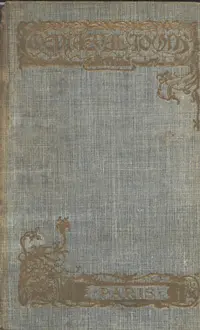
The Story of Paris
Thomas Okey
THE CLASSIC COLLECTION · 1904
"Paris and Its Story" by T. Okey is a historical account written in the early 20th century. This work chronicles the rich and complex history of Paris, focusing on its evolution from a Gallic settlement to the vibrant metropolis it is today. The narrative combines both factual history and the romantic legends that shape the city's identity, making it particularly appealing for readers interested in the cultural and historical significance of Paris. The opening of the book sets the tone by reflecting on the author’s admiration for Paris, establishing the city as a symbol of cultural significance and enduring spirit through centuries of struggle and triumph. Okey introduces the city's early beginnings as Lutetia, highlighting its geographical advantages that made it a center for trade and military importance. The narrative emphasizes the transformation Paris underwent under various rulers, starting from the Roman occupation and continuing through the medieval period, illustrating not only its resilience through invasions and internal conflicts but also its rich cultural tapestry woven through art, literature, and the continuous evolution of its society.
Introduction adapted from the source catalogue; source summaries may be automatically generated.
Free to read · English · 110,517 words · No account needed
MAKE TIME FOR A GOOD BOOK
On by default. Untick to stop anonymous reading totals. Each page counts after 10 seconds in view. How this works.
Anonymous counting is on unless you have switched it off.
Richelieu, his rise to fame, 193, 194;
his firmness, 194;
his death, 195;
second founder of Sorbonne, 200;
his tomb at the Sorbonne, 200
Rigaud, 313
Robert the Pious, his excommunication, 48;
his charity, 48;
repudiates his queen, 47, 48;
marries Constance of Aquitaine, 48
Robert the Strong, 37
Robespierre and the Terror, 246, 247;
his feast of the Etre Suprème, 273;
at chess, 333
Rochelle, la, capture of, 194
Roland, 270
Roland, Mme., 283
Rollo, 37, 43
Roman amphitheatre, the, 5
Roman aqueduct, the, 5
Roman Empire, exhaustion of, 12
Rosso, 152, 311
Rousseau, his impressions of Paris, 226;
his journey from Paris to Lyons, 244
Rousseau, Théodore, 315
Royalty, abolition of, 258
Royale, place, 187, 296, 297
Rubens, 307
Ryswick, peace of, 215
Sacre Coeur, church of, 240, 279
Sainte Chapelle, the, 69, 82, 83
Samaritaine, la, 198
Sarto, Andrea del, 152
Saxe, Marshall, his victories, 231
Scholars, their lack of discipline, 90;
their festive meetings, 91;
their depravity, 92;
poor, at Paris, 92;
defence of, by king, 97
Schoolman, the, 100
Sculpture, Greek, at Louvre, 305;
mediæval and renaissance, at Louvre, 305
Sections, the, 176, 180;
their defeat, 180
Sens, Archbishop of, and Templars, 112;
his palace, 295
Serfdom, 49
Serfs, their condition, 49, 50
Séverin, St., church of, 284, 286
Sévigné, Mme. de, 297
Siegbert, marriage with Brunehaut, 21
Siéyès, Abbé, 269
Siger, at Paris, 100
Signs, old, at Paris, 303
Simon, St., Duke of, his memoirs, 210
Soissons, the vase of, 13
Sorbon, Robert of, founds the Sorbonne, 92
Sorbonne, introduction of painting at, 143;
Greek lectureship at, 145;
the new, 288
Soubise, Hôtel de, 297
Soufflot builds Panthéon, 238;
mutilates west front of Notre Dame, 238
Staël, Mme. de, 270
States-General, establishment of, 104;
convoked by Dauphin, 117;
meet at the Louvre, 180;
at the Hôtel de Bourbon, 192;
at Versailles, 247
Stephen, St., church of, 31
Stephen III., Pope, at Paris, 30
Street names, revolutionary, 271
Streets, old, at Paris, 286, 299
Suger, Abbot, 58;
builds new St. Denis, 79
Sully, Duke of, 182, 184;
his enforced retirement, 192;
Hôtel de, 295
Sully, Maurice de, builds cathedral of Notre Dame, 81
Sulpice, St., church of, 241, 242, 291
Surgery, school of, 290
Swiss Guards, their devotion and courage, 257
Talleyrand, Bishop, 270
Talma, Julie, 270
Talma, 326
Tax farmers, their brutality, 245
Tennis-court oath, 248
Terror, the white, 247, note
Terror, the, at Paris, 262
Theatre, the early, 323
Thermæ, the, 9, 10
Tiberius Cæsar, discovery of altar to, 9
Tiers Etat, at Notre Dame, 106;
its humiliation, 192
Titian, 306
Trône, place du, 189
Troyes, treaty of, 130
Troyon, 315
Truce of God, 98
Tuileries, the, 186;
secret flight of royal family from, 255;
attack on, 257;
palace and gardens of, 315, 316
Turenne, his defeat at Paris, 205, 206
University, first use of term, 95
Ursins, Mme. des, her power in Spain, 216
Utrecht, peace of, 219
Your reading position is saved on this browser. Take it to another device with a library code. Reading pages adapt to text, rather than matching a printed edition.
Thomas Okey
BEHIND THE BOOK
This eBook is for the use of anyone anywhere in the United States and most other parts of the world at no cost and with almost no restrictions whatsoever. You may copy it, give it away or re-use it under the terms of the Project Gutenberg License included with this eBook or online at www.gutenberg.org. If you are not located in the United States, you will have to check the laws of the country where you are located before using this eBook. Read the source licence.
The original source file, including credits and licence, is retained by this library. Request an original-format copy at no charge. Please include the book title and Project Gutenberg identifier #45336.
KEEP YOUR CURIOSITY GOING
Wilfrid Scawen Blunt
Wilfrid Scawen Blunt

E. W. (Edgar Watson) Howe
Cécile Tormay

Moritz Busch
John L. Ransom