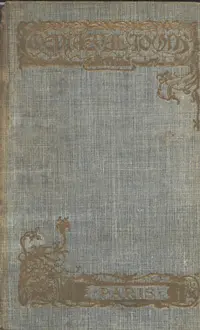
The Story of Paris
Thomas Okey
THE CLASSIC COLLECTION · 1904
"Paris and Its Story" by T. Okey is a historical account written in the early 20th century. This work chronicles the rich and complex history of Paris, focusing on its evolution from a Gallic settlement to the vibrant metropolis it is today. The narrative combines both factual history and the romantic legends that shape the city's identity, making it particularly appealing for readers interested in the cultural and historical significance of Paris. The opening of the book sets the tone by reflecting on the author’s admiration for Paris, establishing the city as a symbol of cultural significance and enduring spirit through centuries of struggle and triumph. Okey introduces the city's early beginnings as Lutetia, highlighting its geographical advantages that made it a center for trade and military importance. The narrative emphasizes the transformation Paris underwent under various rulers, starting from the Roman occupation and continuing through the medieval period, illustrating not only its resilience through invasions and internal conflicts but also its rich cultural tapestry woven through art, literature, and the continuous evolution of its society.
Introduction adapted from the source catalogue; source summaries may be automatically generated.
Free to read · English · 110,517 words · No account needed
MAKE TIME FOR A GOOD BOOK
On by default. Untick to stop anonymous reading totals. Each page counts after 10 seconds in view. How this works.
Anonymous counting is on unless you have switched it off.
Palais of the Cité rebuilt, 104;
surrendered to Parlement, 121
Palais de Justice injured by fire, 240;
booksellers at, 240, 241;
Revolutionary tribunal at, 241
Palais Royal, 199, 200, 315;
revolutionists at, 249;
theatre of, 324
Palissy, Bernard, his grotto, 186
Panthéon, its vicissitudes, 238-240
Paraclete, the, 89
Paris, its geographical situation, 1, 2;
its capture by the Romans, 4;
the White City, 4;
arms of, 9;
Julian proclaimed emperor at, 10;
siege of, by Childeric, 15;
the market of the peoples, 34;
siege of, by Normans, 37;
a city of refuge, 46;
under interdict, 57;
growth of, under Louis VI., 59;
under English rule, 135;
in the fifteenth century, 145;
crafts of, 146, 147;
siege of, by Henry III. and Henry of Navarre, 177;
siege of, by Henry IV., 179;
under Richelieu, 196, 197;
made an archbishopric, 202;
Turenne and Condé fight for, 206;
misery at, 217;
under Louis XIV., 220;
Louis XVI. and court returns to, 249;
an armourer's shop, 261;
life at, during the Revolution, 269;
school of, at Louvre, 309
Parisian women at Versailles, 249
Parisians, their chastisement by Charles VI., 123, 124; their fidelity to the revolutionary ideals, 273
Parisii, the, 3
Parlement, the, 104, 106;
councillors of, hanged by the sections, 180;
councillors arrested, 203;
its public spirit, 203;
its humiliation by Louis XIV., 206;
suppression of, 233
Pascal, his statue, 300
Passion, confraternity of, 321
Passion plays, their success, 322
Paul III., Pope, his humane protest against persecution of Lutherans, 160
Pavia, defeat of, 154
Pepin of Heristal, 29;
of Landen, 29;
the Short, becomes king of France, 30
Père la Chaise, 206
Peronne, peace of, 141
Perrault, Claude, his design for the Louvre accepted, 221;
his east façade, 222, 276
Perréal, 310
Petite Galerie, the, 173, 187
Petit Pont, the, 6;
Place du, 284
Philip Augustus, his birth and accession, 61;
his conquests, 62;
pavement of, 63;
wall of, 63-65;
his wisdom, 65
Philip I., his depravity and adultery, 52, 53;
his excommunication and death, 53, 54
Philip III., 103
Philip VI., 117
Philip le Bon, Duke of Burgundy, sides with the English, 130
Philip the Fair, 104;
conflict with Boniface VIII., 106-108;
destroys Templars, 110-115;
his death, 115
Picpus, village of, 189
Pierre aux Boeufs, St., 60, 281
Pierre, St., des Fossés, 34
Pilon, Germain, 305
Place Royale, 187, 296, 297
Playing cards, revolutionary, 271
Poitiers, Diane de, 144, 162
Pol, St., Count of, executed at Paris, 141
Pompadour, Mme. de, her power, 231, 232
Pont au Change rebuilt, 189
Pont Marie, 201
Pont Neuf, 197, 284
Pont Notre Dame, 7
Pont Royal, 224
Portes Cochères, corps of, 204
Port Royal, destruction of, 218
Poussin, 311
Prés aux Clercs, the, 97
Primaticcio, 152, 153, 311
Primitifs, at Louvre, 308
Printing, introduction of, at Paris, 143;
at the Louvre, 200
Provost of Merchants, 9;
last of, 293
Provost of Paris, his hotel, 295
Public good, league of, 139
Quatre Nations, the, 95
Quinze-vingts, establishment of, at Paris, 74
Radegonde, St., her piety, 25;
nuns of, at Cambridge, 25
Raphael, 306
Ravaillac, assassin of Henry IV., his cruel torture, 185
Rectors, their power, 95, 98
Reformation, the, 164
Rembrandt, 307
Rémi, St., 13
Republic, the second, 274
Republic, the third, its patriotism, 274;
architecture of, 278
Restoration, the, architecture of, 277
Retz, Cardinal de, 203;
joins the insurrection, 204, 205
Revolutionary, Committee of the League, 180
Revolution, the, its triumph, 262;
its results, 275;
Place de la, 317
Revolutionists, their attitude towards England, 265
Your reading position is saved on this browser. Take it to another device with a library code. Reading pages adapt to text, rather than matching a printed edition.
Thomas Okey
BEHIND THE BOOK
This eBook is for the use of anyone anywhere in the United States and most other parts of the world at no cost and with almost no restrictions whatsoever. You may copy it, give it away or re-use it under the terms of the Project Gutenberg License included with this eBook or online at www.gutenberg.org. If you are not located in the United States, you will have to check the laws of the country where you are located before using this eBook. Read the source licence.
The original source file, including credits and licence, is retained by this library. Request an original-format copy at no charge. Please include the book title and Project Gutenberg identifier #45336.
KEEP YOUR CURIOSITY GOING
Wilfrid Scawen Blunt
Wilfrid Scawen Blunt

E. W. (Edgar Watson) Howe
Cécile Tormay

Moritz Busch
John L. Ransom