
Lucinda
Anthony Hope
THE CLASSIC COLLECTION · 1892
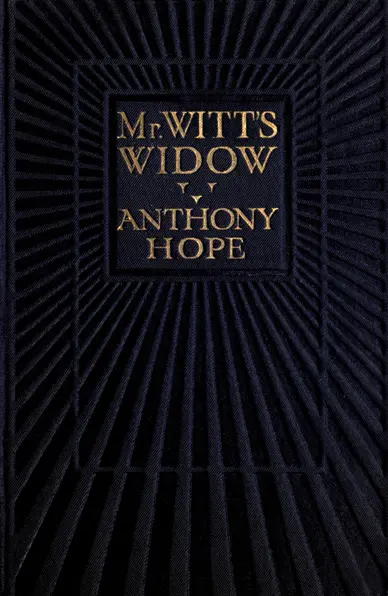
"Mr. Witt's Widow: A Frivolous Tale" by Anthony Hope is a novel written in the early 20th century, specifically in 1912. It depicts the social dynamics and romantic entanglements of the Neston family following the engagement of Gerald Neston to Neaera Witt, a wealthy widow. Central to the plot is George Neston, Gerald’s cousin, whose discovery of a hidden past involving Neaera leads to tension and conflict within the family. At the start of the story, we are introduced to the Neston family and their newly elevated social standing due to the ascension of Lord Tottlebury, bringing the attention on Gerald Neston's courtship of Neaera Witt. As the opening unfolds during a dinner at Lord Tottlebury's house, George becomes increasingly intrigued by Neaera, whom he recognizes as a young woman he defended in a theft case many years ago. This revelation sparks a moral dilemma for George, compelling him to confront Neaera and ultimately decide whether to reveal her past to Gerald, a conflict that sets the stage for escalating tension and drama amongst the characters. The initial chapters establish the balance between romance and societal expectations, while hinting at deeper themes of identity and reputation.
Introduction adapted from the source catalogue; source summaries may be automatically generated.
Free to read · English · 39,724 words · No account needed
MAKE TIME FOR A GOOD BOOK
On by default. Untick to stop anonymous reading totals. Each page counts after 10 seconds in view. How this works.
Anonymous counting is on unless you have switched it off.
"Nothing at all," said George. "Thank you, Stubbs. I'll join you and Mr.
Jennings in a moment."
"Good-bye, Mr. Stubbs," said Neaera. "I'm sure I should have known you if I'd ever seen you before."
Stubbs withdrew, believing himself to have received a compliment.
"Of course this ends the matter, George," said Lord Tottlebury.
"I should hope so," said Gerald.
George looked at Neaera; and as he looked the conviction grew stronger on him that she was Nelly Game.
"Mr. George Neston is not convinced," said she, mockingly.
"It does not much matter whether I am convinced or not," said George. "There is no kind of evidence to prove the identity."
Gerald sprang up in indignation. "Do you mean that you won't retract?"
"You can state all the facts; I shall say nothing."
"You shall apologise, or----"
"Gerald," said Lord Tottlebury, "this is no use."
There was a feeling that George was behaving very badly. Everybody thought so, and said so; and all except Neaera either exhorted or besought him to confess himself the victim of an absurd mistake. As the matter had become public, nothing less could be accepted.
George wavered. "I will let you know to-morrow," he said. "Meanwhile let me return this document to Mrs. Witt." He took out Mrs. Horne's letter and laid it on the table. "I have ventured to take a copy," he said. "As the original is valuable, I thought I had better give it back."
"Thank you," said Neaera, and moved forward to take it.
Gerald hastened to fetch it for her. As he took it up, his eye fell on the writing, for George had laid it open on the table.
"Why, Neaera," said he, "it's in your handwriting!"
George started, and he thought he saw Neaera start just perceptibly.
"Of course," she said. "That's only a copy."
"My dear, you never told me so," said Lord Tottlebury; "and I have never
seen your handwriting."
"Gerald and Maud have."
"But they never saw this."
"It was stupid of me," said Neaera, penitently; "but I never thought of there being any mistake. What difference does it make?"
George's heart was hardened. He was sure she had, if not tried to pass off the copy as an original from the first, at any rate taken advantage of the error.
"Have you the original?" he asked.
"No," said Neaera. "I sent it to somebody ever so long ago, and never
got it back."
"When did you make this copy?"
"When I sent away the original."
"To whom?" began George again.
"I won't have it," cried Gerald. "You shan't cross-examine her with your infernal insinuations. Do you mean that she forged this?"
George grew stubborn.
Your reading position is saved on this browser. Take it to another device with a library code. Reading pages adapt to text, rather than matching a printed edition.
Anthony Hope

Anthony Hope

Anthony Hope

Anthony Hope
BEHIND THE BOOK
This eBook is for the use of anyone anywhere in the United States and most other parts of the world at no cost and with almost no restrictions whatsoever. You may copy it, give it away or re-use it under the terms of the Project Gutenberg License included with this eBook or online at www.gutenberg.org. If you are not located in the United States, you will have to check the laws of the country where you are located before using this eBook. Read the source licence.
The original source file, including credits and licence, is retained by this library. Request an original-format copy at no charge. Please include the book title and Project Gutenberg identifier #41599.
KEEP YOUR CURIOSITY GOING
Coulson Kernahan

Maurice Baring
Frances Wright
Cécile Tormay

Frederic Jesup Stimson

W. H. P. (William Henry Pope) Jarvis