
Lucinda
Anthony Hope
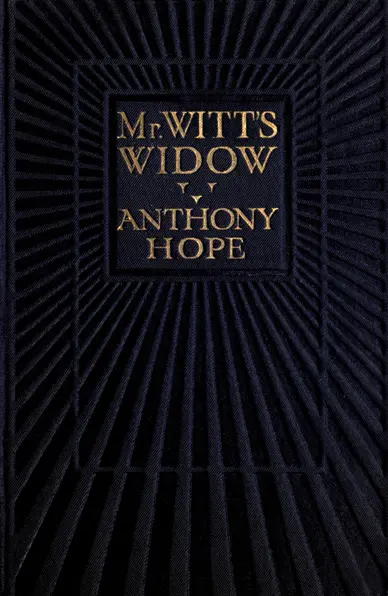
THE CLASSIC COLLECTION · 1892
"Mr. Witt's Widow: A Frivolous Tale" by Anthony Hope is a novel written in the early 20th century, specifically in 1912. It depicts the social dynamics and romantic entanglements of the Neston family following the engagement of Gerald Neston to Neaera Witt, a wealthy widow. Central to the plot is George Neston, Gerald’s cousin, whose discovery of a hidden past involving Neaera leads to tension and conflict within the family. At the start of the story, we are introduced to the Neston family and their newly elevated social standing due to the ascension of Lord Tottlebury, bringing the attention on Gerald Neston's courtship of Neaera Witt. As the opening unfolds during a dinner at Lord Tottlebury's house, George becomes increasingly intrigued by Neaera, whom he recognizes as a young woman he defended in a theft case many years ago. This revelation sparks a moral dilemma for George, compelling him to confront Neaera and ultimately decide whether to reveal her past to Gerald, a conflict that sets the stage for escalating tension and drama amongst the characters. The initial chapters establish the balance between romance and societal expectations, while hinting at deeper themes of identity and reputation.
Introduction adapted from the source catalogue; source summaries may be automatically generated.
Free to read · English · 39,724 words · No account needed
MAKE TIME FOR A GOOD BOOK
On by default. Untick to stop anonymous reading totals. Each page counts after 10 seconds in view. How this works.
Anonymous counting is on unless you have switched it off.
The ladies stood and smiled at Stubbs. Stubbs sat and peered at the ladies, and, being a man at heart, thought they were a set of as likely girls as he'd ever seen; so he told Mrs. Stubbs afterwards. But which was Nelly Game?
"It isn't her in the middle," said Stubbs, at last.
"Then," said George, "we needn't trouble Miss Bourne any longer."
Isabel went and sat down, with a scornful toss of her head, and Laura Pocklington and Neaera stood side by side.
"I feel as if it were the judgment of Paris," whispered the latter, audibly, and Mrs. Pocklington and Gerald tittered. Stubbs had once been to Paris on business, but he did not see what it had to do with the present occasion, unless indeed it were something about a previous conviction.
"It isn't her," he said, after another pause, pointing a stumpy
forefinger at Laura Pocklington.
There was a little shiver of dismay. George rigidly repressed every indication of satisfaction. Neaera stood calm and smiling, bending a look of amused kindliness on Stubbs; but the palm of the white hand on the mantelpiece grew pink as the white fingers pressed against it.
"Would you like to see me a little nearer?" she asked, and, stepping forward to where Stubbs sat, she stood right in front of him.
George felt inclined to cry "Brava!" as if he were at the play.
Stubbs was puzzled. There was a likeness, but there was so much unlikeness too. It really wasn't fair to dress people up differently. How was a man to know them?
"Might I see the photograph again, sir?" he asked George.
"Certainly not," exclaimed Gerald, angrily.
George ignored him.
"I had rather," he said, "you told us what you think without it."
George had sent Lord Tottlebury the photograph, and everybody had looked at it and declared it was not the least like Neaera.
Stubbs resumed his survey. At last he said, pressing his hand over his
eyes,
"I can't swear to her, sir."
"Very well," said George. "That'll do."
But Neaera laughed.
"Swear to me, Mr. Stubbs!" said she. "But do you mean you think I'm like
this Nelly Games?"
"'Game,' not 'Games,' Mrs. Witt," said George, smiling again.
"Well, then, 'Game.'"
"Yes, miss, you've a look of her."
"Of course she has," said Mrs. Pocklington, "or Mr. George would never have made the mistake." Mrs. Pocklington liked George, and wanted to let him down easily.
"That's all you can say?" asked Lord Tottlebury.
"Yes, sir; I mean, my lord."
"It comes to nothing," said Lord Tottlebury, decisively.
Your reading position is saved on this browser. Take it to another device with a library code. Reading pages adapt to text, rather than matching a printed edition.
Anthony Hope

Anthony Hope

Anthony Hope

Anthony Hope
BEHIND THE BOOK
This eBook is for the use of anyone anywhere in the United States and most other parts of the world at no cost and with almost no restrictions whatsoever. You may copy it, give it away or re-use it under the terms of the Project Gutenberg License included with this eBook or online at www.gutenberg.org. If you are not located in the United States, you will have to check the laws of the country where you are located before using this eBook. Read the source licence.
The original source file, including credits and licence, is retained by this library. Request an original-format copy at no charge. Please include the book title and Project Gutenberg identifier #41599.
KEEP YOUR CURIOSITY GOING
Coulson Kernahan

Maurice Baring
Frances Wright
Cécile Tormay

Frederic Jesup Stimson

W. H. P. (William Henry Pope) Jarvis