
Lucinda
Anthony Hope
THE CLASSIC COLLECTION · 1892
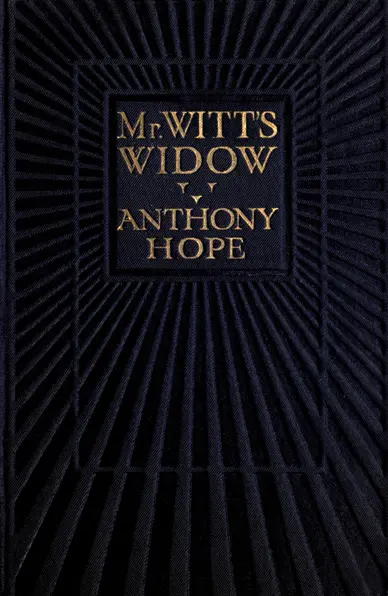
"Mr. Witt's Widow: A Frivolous Tale" by Anthony Hope is a novel written in the early 20th century, specifically in 1912. It depicts the social dynamics and romantic entanglements of the Neston family following the engagement of Gerald Neston to Neaera Witt, a wealthy widow. Central to the plot is George Neston, Gerald’s cousin, whose discovery of a hidden past involving Neaera leads to tension and conflict within the family. At the start of the story, we are introduced to the Neston family and their newly elevated social standing due to the ascension of Lord Tottlebury, bringing the attention on Gerald Neston's courtship of Neaera Witt. As the opening unfolds during a dinner at Lord Tottlebury's house, George becomes increasingly intrigued by Neaera, whom he recognizes as a young woman he defended in a theft case many years ago. This revelation sparks a moral dilemma for George, compelling him to confront Neaera and ultimately decide whether to reveal her past to Gerald, a conflict that sets the stage for escalating tension and drama amongst the characters. The initial chapters establish the balance between romance and societal expectations, while hinting at deeper themes of identity and reputation.
Introduction adapted from the source catalogue; source summaries may be automatically generated.
Free to read · English · 39,724 words · No account needed
MAKE TIME FOR A GOOD BOOK
On by default. Untick to stop anonymous reading totals. Each page counts after 10 seconds in view. How this works.
Anonymous counting is on unless you have switched it off.
"I should eat humble-pie, George," said Mr. Blodwell, tapping his eye-glasses against his front teeth. "She's one too many for you."
"Do you think I'm wrong?"
"On the whole, I incline to think you're right. But I should eat humble-pie if I were you, all the same."
The suggested diet is palatable to nobody, and the power of consuming it without contortion is rightly put high in the list of virtues, if virtue be proportionate to difficulty. To a man of George Neston's temperament penance was hard, even when enforced by the consciousness of sin; to bend the knees in abasement, when the soul was erect in self-approval, came nigh impossibility.
Still it was unquestionably necessary that he should assume the sheet and candle, or put up with an alternative hardly, if at all, less unpleasant. The "Fourth Paragraph" had appeared. It was called a paragraph for the sake of uniformity, but it was in reality a narrative, stretching to a couple of columns, and giving a detailed account of the attempted identification. For once, George implicitly believed the editor's statement that his information came to him on unimpeachable authority. The story was clearly not only inspired by, but actually written by the hand of Gerald himself, and it breathed a bitter hostility to himself that grieved George none the less because it was very natural. This hostility showed itself, here and there, in direct attack; more constantly in irony and ingenious ridicule. George's look, manner, tones, and walk were all pressed into the service. In a word, the article certainly made him look an idiot; he rather thought it made him look a malignant idiot.
"What can you do?" demanded Mr. Blodwell again. "You can't bring up any more people from Peckton. You chose your witnesses, and they let you in."
George nodded.
"You went to Bournemouth, and you found--what? Not that Mrs. What's-her-name--Horne--was a myth, as you expected, or conveniently--and, mind you, not unplausibly--dead, as I expected, but an actual, existent, highly respectable, though somewhat doting, old lady. She had you badly there, George my boy!"
"Yes," admitted George. "I wonder if she knew the woman was alive?"
"She chanced it; wished she might be dead, perhaps, but chanced it. That, George, is where Mrs. Witt is great."
"Mrs. Horne doesn't remember her being there in March, or indeed April."
"Perhaps not; but she doesn't say the contrary."
"Oh, no. She said that if the character says March, of course it was
March."
"The 'of course' betrays a lay mind. But still the character does say March--for what it's worth."
"The copy of it does."
Your reading position is saved on this browser. Take it to another device with a library code. Reading pages adapt to text, rather than matching a printed edition.
Anthony Hope

Anthony Hope

Anthony Hope

Anthony Hope
BEHIND THE BOOK
This eBook is for the use of anyone anywhere in the United States and most other parts of the world at no cost and with almost no restrictions whatsoever. You may copy it, give it away or re-use it under the terms of the Project Gutenberg License included with this eBook or online at www.gutenberg.org. If you are not located in the United States, you will have to check the laws of the country where you are located before using this eBook. Read the source licence.
The original source file, including credits and licence, is retained by this library. Request an original-format copy at no charge. Please include the book title and Project Gutenberg identifier #41599.
KEEP YOUR CURIOSITY GOING
Coulson Kernahan

Maurice Baring
Frances Wright
Cécile Tormay

Frederic Jesup Stimson

W. H. P. (William Henry Pope) Jarvis