
Lucinda
Anthony Hope
THE CLASSIC COLLECTION · 1892
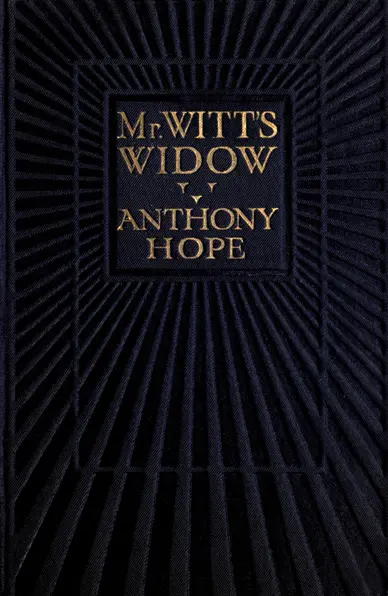
"Mr. Witt's Widow: A Frivolous Tale" by Anthony Hope is a novel written in the early 20th century, specifically in 1912. It depicts the social dynamics and romantic entanglements of the Neston family following the engagement of Gerald Neston to Neaera Witt, a wealthy widow. Central to the plot is George Neston, Gerald’s cousin, whose discovery of a hidden past involving Neaera leads to tension and conflict within the family. At the start of the story, we are introduced to the Neston family and their newly elevated social standing due to the ascension of Lord Tottlebury, bringing the attention on Gerald Neston's courtship of Neaera Witt. As the opening unfolds during a dinner at Lord Tottlebury's house, George becomes increasingly intrigued by Neaera, whom he recognizes as a young woman he defended in a theft case many years ago. This revelation sparks a moral dilemma for George, compelling him to confront Neaera and ultimately decide whether to reveal her past to Gerald, a conflict that sets the stage for escalating tension and drama amongst the characters. The initial chapters establish the balance between romance and societal expectations, while hinting at deeper themes of identity and reputation.
Introduction adapted from the source catalogue; source summaries may be automatically generated.
Free to read · English · 39,724 words · No account needed
MAKE TIME FOR A GOOD BOOK
On by default. Untick to stop anonymous reading totals. Each page counts after 10 seconds in view. How this works.
Anonymous counting is on unless you have switched it off.
It was fortunate that Mr. Blodwell was not very busy on Saturday morning, or he might have resented the choice of his chambers for a council, and not been mollified by being asked to take part in the deliberations. At eleven o'clock in the morning, Gerald Neston arrived, accompanied by Sidmouth Vane and Mr. Lionel Fitzderham, who was, in the first place, Mrs. Pocklington's brother, and, in the second place, chairman of the committee of the Themis Club.
"We have come, sir," said Gerald, "to ask you to use your influence with George. His conduct is past endurance."
"Anything new?" asked Mr. Blodwell.
"No, that's just it. This is Saturday. I'm to be married on Monday week; and George does nothing."
"What do you want him to do?"
"Why, to acknowledge himself wrong, as he can't prove himself right."
Mr. Blodwell looked at Fitzderham.
"Yes," said the latter. "It can't stay as it is. The lady must be cleared, if she can't be proved guilty. We arrived clearly at that conclusion."
"We?"
"The committee of the Themis."
"Oh, ah, yes. And you, Vane?"
"I concur," said Vane, briefly. "I've backed George up to now: but I agree he must do one thing or the other."
"Well, gentlemen, I suppose you're right. Only, if he won't?"
"Then we shall take action," said Fitzderham.
"So shall I," said Gerald.
Vane shrugged his shoulders.
Mr. Blodwell rang the bell.
"Is Mr. George in, Timms?" he asked.
"Yes, sir; just arrived."
"Ask him to step in to me, if he will. I don't see," he continued, "why you shouldn't settle it with him. I've nothing to do with it, thank God."
George entered. He was surprised to see the deputation, but addressed himself exclusively to Blodwell.
"Here I am, sir. What is it?"
"These gentlemen," said Mr. Blodwell, "think that the time has come for you to withdraw your allegations or to prove them."
"You see, George," said Vane, "it's not fair to leave Mrs. Witt under
this indefinite stigma."
"Far from it," said Fitzderham.
George stood with his back against the mantel-piece. "I quite agree," he said. "Let's see--to-day's Saturday. When is the wedding, if there----?"
"Monday week," said Blodwell, hastily, fearing an explosion from Gerald.
"Very well. On Tuesday----"
"A telegram for you, sir," said Timms, entering.
"Excuse me," said George.
He opened and read his telegram. It ran, "Yes--my handwriting. Will return by next post registered--Horne, Bournemouth."
"On Monday," continued George, "at five o'clock in the afternoon, I will prove all I said, or withdraw it."
Your reading position is saved on this browser. Take it to another device with a library code. Reading pages adapt to text, rather than matching a printed edition.
Anthony Hope

Anthony Hope

Anthony Hope

Anthony Hope
BEHIND THE BOOK
This eBook is for the use of anyone anywhere in the United States and most other parts of the world at no cost and with almost no restrictions whatsoever. You may copy it, give it away or re-use it under the terms of the Project Gutenberg License included with this eBook or online at www.gutenberg.org. If you are not located in the United States, you will have to check the laws of the country where you are located before using this eBook. Read the source licence.
The original source file, including credits and licence, is retained by this library. Request an original-format copy at no charge. Please include the book title and Project Gutenberg identifier #41599.
KEEP YOUR CURIOSITY GOING
Coulson Kernahan

Maurice Baring
Frances Wright
Cécile Tormay

Frederic Jesup Stimson

W. H. P. (William Henry Pope) Jarvis