
Lucinda
Anthony Hope
THE CLASSIC COLLECTION · 1892
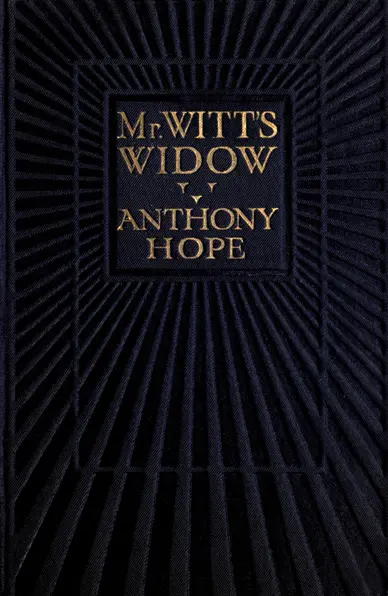
"Mr. Witt's Widow: A Frivolous Tale" by Anthony Hope is a novel written in the early 20th century, specifically in 1912. It depicts the social dynamics and romantic entanglements of the Neston family following the engagement of Gerald Neston to Neaera Witt, a wealthy widow. Central to the plot is George Neston, Gerald’s cousin, whose discovery of a hidden past involving Neaera leads to tension and conflict within the family. At the start of the story, we are introduced to the Neston family and their newly elevated social standing due to the ascension of Lord Tottlebury, bringing the attention on Gerald Neston's courtship of Neaera Witt. As the opening unfolds during a dinner at Lord Tottlebury's house, George becomes increasingly intrigued by Neaera, whom he recognizes as a young woman he defended in a theft case many years ago. This revelation sparks a moral dilemma for George, compelling him to confront Neaera and ultimately decide whether to reveal her past to Gerald, a conflict that sets the stage for escalating tension and drama amongst the characters. The initial chapters establish the balance between romance and societal expectations, while hinting at deeper themes of identity and reputation.
Introduction adapted from the source catalogue; source summaries may be automatically generated.
Free to read · English · 39,724 words · No account needed
MAKE TIME FOR A GOOD BOOK
On by default. Untick to stop anonymous reading totals. Each page counts after 10 seconds in view. How this works.
Anonymous counting is on unless you have switched it off.
Once upon a time, many years before this story begins, a certain lady said, and indeed swore with an oath, that Lord Mapledurham had promised to marry her, and claimed ten thousand pounds as damages for the breach of that promise. Lord Mapledurham said his memory was treacherous about such things, and he never contradicted a lady on a question of fact: but the amount which his society was worth seemed fairly open to difference of opinion, and he asked a jury of his countrymen to value it. This cause célèbre, for such it was in its day, did not improve Lord Mapledurham's reputation, but, on the other hand, it made Mr. Blodwell's. That gentleman reduced the damages to one thousand, and Lord Mapledurham said that his cross-examination of the plaintiff was quite worth the money. Since then, the two had been friends, and Mr. Blodwell prided himself greatly on his intimacy with such an exclusive person as the Marquis. George enjoyed his surprise at the announcement that they would meet that evening at the dinner-party.
"Why the dickens does he ask you?"
"Upon my honour, I don't know."
"It will destroy the last of your reputation."
"Oh, not if you are there, sir."
When George arrived at Lord Mapledurham's, he found nobody except his
host and Mr. Blodwell.
"I must apologize for having nobody to meet you, Mr. Neston, except an old friend. I asked young Vane--whose insolence amuses me,--and Fitzderham, but they couldn't come."
"Three's a good number," said Mr. Blodwell.
"If they're three men. But two men and a woman, or two women and a
man--awful!"
"Well, we are men, though George is a young one."
"I don't feel very young," said George, smiling, as they sat down.
"I am fifty-five," said the Marquis, "and I feel younger every day,--not in body, you know, for I'm chockful of ailments; but in mind. I am growing out of all the responsibilities of this world."
"And of the next?" asked Blodwell.
"In the next everything is arranged for us, pleasantly or otherwise. As to this one, no one expects anything more of me--no work, no good deeds, no career, no nothing. It's a delicious freedom."
"You never felt your bonds much."
"No; but they were there, and every now and then they dragged on my
feet."
"Your view of old age is comforting," said George.
"Only, George, if you want to realize it, you must not marry," said Mr.
Blodwell.
"No, no," said the Marquis. "By the way, Blodwell, why did you never
marry?"
"Too poor, till too late," said Mr. Blodwell, briefly.
Your reading position is saved on this browser. Take it to another device with a library code. Reading pages adapt to text, rather than matching a printed edition.
Anthony Hope

Anthony Hope

Anthony Hope

Anthony Hope
BEHIND THE BOOK
This eBook is for the use of anyone anywhere in the United States and most other parts of the world at no cost and with almost no restrictions whatsoever. You may copy it, give it away or re-use it under the terms of the Project Gutenberg License included with this eBook or online at www.gutenberg.org. If you are not located in the United States, you will have to check the laws of the country where you are located before using this eBook. Read the source licence.
The original source file, including credits and licence, is retained by this library. Request an original-format copy at no charge. Please include the book title and Project Gutenberg identifier #41599.
KEEP YOUR CURIOSITY GOING
Coulson Kernahan

Maurice Baring
Frances Wright
Cécile Tormay

Frederic Jesup Stimson

W. H. P. (William Henry Pope) Jarvis