
Lucinda
Anthony Hope
THE CLASSIC COLLECTION · 1892
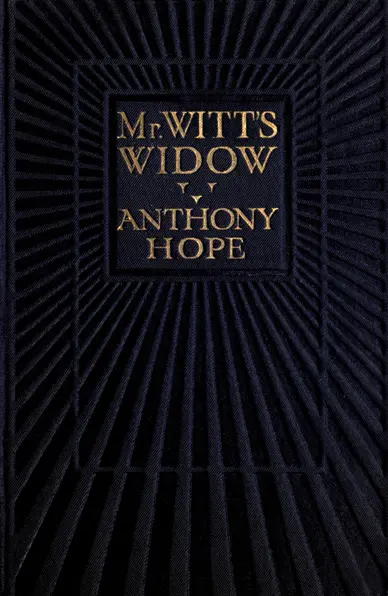
"Mr. Witt's Widow: A Frivolous Tale" by Anthony Hope is a novel written in the early 20th century, specifically in 1912. It depicts the social dynamics and romantic entanglements of the Neston family following the engagement of Gerald Neston to Neaera Witt, a wealthy widow. Central to the plot is George Neston, Gerald’s cousin, whose discovery of a hidden past involving Neaera leads to tension and conflict within the family. At the start of the story, we are introduced to the Neston family and their newly elevated social standing due to the ascension of Lord Tottlebury, bringing the attention on Gerald Neston's courtship of Neaera Witt. As the opening unfolds during a dinner at Lord Tottlebury's house, George becomes increasingly intrigued by Neaera, whom he recognizes as a young woman he defended in a theft case many years ago. This revelation sparks a moral dilemma for George, compelling him to confront Neaera and ultimately decide whether to reveal her past to Gerald, a conflict that sets the stage for escalating tension and drama amongst the characters. The initial chapters establish the balance between romance and societal expectations, while hinting at deeper themes of identity and reputation.
Introduction adapted from the source catalogue; source summaries may be automatically generated.
Free to read · English · 39,724 words · No account needed
MAKE TIME FOR A GOOD BOOK
On by default. Untick to stop anonymous reading totals. Each page counts after 10 seconds in view. How this works.
Anonymous counting is on unless you have switched it off.
"How could I ever have forgotten?" said George, aloud, as he walked home. "I remember her now as if it was yesterday."
Memory, like much else that appertains to man, is a queer thing, and the name of Peckton had supplied the one link missing in his recollection. How, indeed, had he ever forgotten it? Can a man forget his first brief any more than his first love?--so like are they in their infinite promise, so like in their very finite results!
The picture was now complete in his mind: the little, muggy court at Peckton; old Dawkins, his wig black with age, the rest of him brown with snuff; the fussy clerk; the prosecuting counsel, son to the same fussy clerk; he himself, thrusting his first guinea into his pocket with shaking hand and beating heart (nervous before old Daw! Imagine!); the fat, peaceful policeman; the female warder, in her black straw-bonnet trimmed with dark-blue ribbons; and last of all, in the dock, a young girl, in shabby, nay, greasy, black, with pale cheeks, disordered hair, and swollen eyelids, gazing in blank terror on the majesty of the law, strangely expressed in the Recorder's ancient person. And, beyond all doubt or imagination of a doubt, the girl was Gerald's bride, Neaera Witt.
"I could swear to her to-day!" cried George.
She had scraped together a guinea for his fee. "I don't know where she got it from," the fat policeman said with professional cynicism as he gave it to George. "She pleads guilty and wants you to address the court." So George had, with infinite trepidation, addressed the court.
The girl had a father--drunk when not starving, and starving when not drunk. Now he was starving, and she had stolen the shoes (oh! the sordidness of it all!) to pawn, and buy food--or drink. It was a case for a caution merely--and--and--and George himself, being young to the work, stammered and stuttered as much from emotion as from fright. You see the girl was pretty!
All old Daw said was, "Do you know anything about her, policeman?" and the fat policeman said her father was a bad lot, and the girl did no work, and----
"That's enough," said old Daw; and, leaning forward, he pronounced his
sentence:
"I'll deal lightly with you. Only"--shaking a snuffy forefinger--"take care you don't come here again! One calendar month, with hard labour."
And the girl, gazing back at honest old Daw, who would not have hurt a fly except from the Bench, softly murmured, "Cruel, cruel, cruel!" and was led away by the woman in the black straw bonnet.
Your reading position is saved on this browser. Take it to another device with a library code. Reading pages adapt to text, rather than matching a printed edition.
Anthony Hope

Anthony Hope

Anthony Hope

Anthony Hope
BEHIND THE BOOK
This eBook is for the use of anyone anywhere in the United States and most other parts of the world at no cost and with almost no restrictions whatsoever. You may copy it, give it away or re-use it under the terms of the Project Gutenberg License included with this eBook or online at www.gutenberg.org. If you are not located in the United States, you will have to check the laws of the country where you are located before using this eBook. Read the source licence.
The original source file, including credits and licence, is retained by this library. Request an original-format copy at no charge. Please include the book title and Project Gutenberg identifier #41599.
KEEP YOUR CURIOSITY GOING
Coulson Kernahan

Maurice Baring
Frances Wright
Cécile Tormay

Frederic Jesup Stimson

W. H. P. (William Henry Pope) Jarvis