
Life of Edwin Forrest, the American Tragedian. Volume 2 (of 2)
William Rounseville Alger & Horatio, Jr. Alger
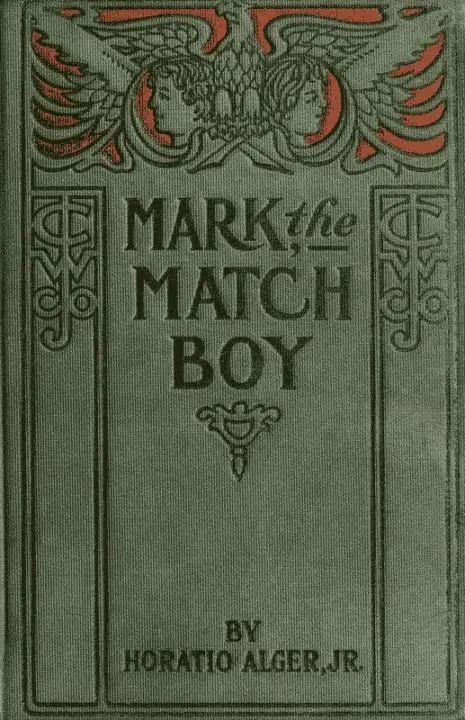
THE CLASSIC COLLECTION · 1869
"Mark the Match Boy; or, Richard Hunter's Ward" by Horatio Alger, Jr. is a novel written in the late 19th century. This story follows a young boy named Mark, who sells matches on the streets of New York City while enduring hardships and abuse from his caregiver, Mother Watson. As Mark navigates his struggles, themes of resilience, friendship, and the hope for a better life are prevalent throughout the narrative. At the start of the book, we are introduced to Mark, a thinly-clad boy deeply affected by hunger and the harsh realities of street life. He returns home after a long day of trying to sell matches but is met with hostility and threats from Mother Watson, who only cares about the money he brings in. As he contemplates his situation, Mark begins to consider breaking free from this abusive arrangement. His fate takes a turn when he unexpectedly receives some money while resting on a ferryboat, igniting a spark of independence. This opening sets the stage for Mark's journey toward self-sufficiency as he ponders his future and contemplates the possibility of escaping his current life.
Introduction adapted from the source catalogue; source summaries may be automatically generated.
Free to read · English · 48,243 words · No account needed
MAKE TIME FOR A GOOD BOOK
On by default. Untick to stop anonymous reading totals. Each page counts after 10 seconds in view. How this works.
Anonymous counting is on unless you have switched it off.
"Glad to make your acquaintance, sir," said Jackson.
"Thank you," said Roswell.
"Jackson takes care of the club-room," explained Ralph, "and is in attendance to admit the members on club nights. Now let us go upstairs."
They went up one flight of stairs, and opened the door of a back room.
It was not a very imposing-looking apartment, being only about twenty feet square, the floor covered with a faded carpet, while the furniture was not particularly sumptuous. At one end of the room was a table, behind which were two arm-chairs.
"That is where the president and secretary sit," said Ralph.
There were already three or four youths in the room. One of them came forward and offered his hand to Ralph.
"How are you, Graham?" he said.
"How are you, Tracy?" returned Ralph. "This is Mr. Crawford, who was elected a member at our last meeting. Roswell, this is Mr. Tracy, our secretary."
"I am glad to see you, Mr. Crawford," said Tracy. "I hope you received the notification of your election which I sent you."
"Yes," said Roswell. "I am much obliged to you."
"I hope you intend to accept."
"It will give me great pleasure," said Roswell. "You must have very
pleasant meetings."
"I hope you will find them pleasant. By the way, here is our president, Mr. Brandon. Brandon, let me introduce you to a new member of our society, Mr. Crawford."
The president, who was a tall young man of eighteen, bowed graciously
to Roswell.
"Mr. Crawford," said he, "allow me, in the name of the society, to bid you welcome to our gay and festive meetings. We are a band of good fellows, who like to meet together and have a social time. We are proud to receive you into our ranks."
"And I am very glad to belong," said Roswell, who felt highly pleased at the cordial manner in which he was received.
"You'd better go to the secretary, and enter your name in the books of the club," suggested Ralph. "You can pay him the five dollars at the same time. Here, Tracy, Mr. Crawford wants to enroll his name."
"All right," said Tracy; "walk this way if you please, Mr. Crawford."
Roswell wrote down his name, residence, and the store where he was
employed.
"I see, Mr. Crawford, you are engaged in literary pursuits," said the
secretary.
"Yes, for the present," said Roswell. "I don't think I shall remain long, as the book business doesn't give me scope enough; but I shall not leave at present, as it might inconvenience Mr. Baker. What is your initiation fee?"
"Five dollars."
Your reading position is saved on this browser. Take it to another device with a library code. Reading pages adapt to text, rather than matching a printed edition.
William Rounseville Alger & Horatio, Jr. Alger

William Rounseville Alger & Horatio, Jr. Alger

Horatio, Jr. Alger

Horatio, Jr. Alger
BEHIND THE BOOK
This eBook is for the use of anyone anywhere in the United States and most other parts of the world at no cost and with almost no restrictions whatsoever. You may copy it, give it away or re-use it under the terms of the Project Gutenberg License included with this eBook or online at www.gutenberg.org. If you are not located in the United States, you will have to check the laws of the country where you are located before using this eBook. Read the source licence.
The original source file, including credits and licence, is retained by this library. Request an original-format copy at no charge. Please include the book title and Project Gutenberg identifier #53071.
KEEP YOUR CURIOSITY GOING
Coulson Kernahan

Maurice Baring
Frances Wright
Cécile Tormay

Frederic Jesup Stimson

W. H. P. (William Henry Pope) Jarvis