
Life of Edwin Forrest, the American Tragedian. Volume 2 (of 2)
William Rounseville Alger & Horatio, Jr. Alger
THE CLASSIC COLLECTION · 1869
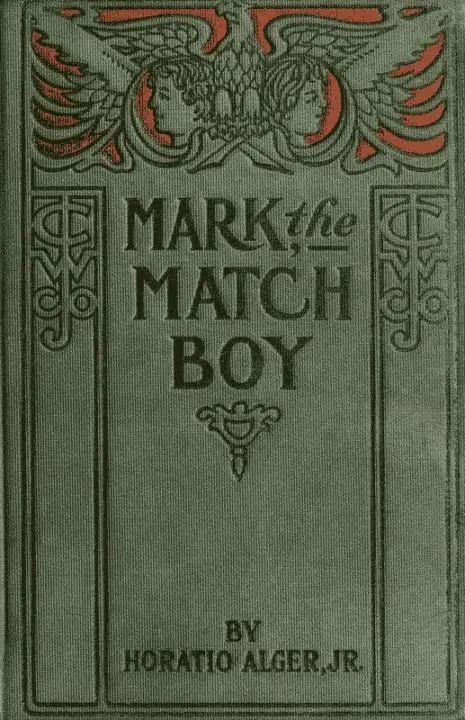
"Mark the Match Boy; or, Richard Hunter's Ward" by Horatio Alger, Jr. is a novel written in the late 19th century. This story follows a young boy named Mark, who sells matches on the streets of New York City while enduring hardships and abuse from his caregiver, Mother Watson. As Mark navigates his struggles, themes of resilience, friendship, and the hope for a better life are prevalent throughout the narrative. At the start of the book, we are introduced to Mark, a thinly-clad boy deeply affected by hunger and the harsh realities of street life. He returns home after a long day of trying to sell matches but is met with hostility and threats from Mother Watson, who only cares about the money he brings in. As he contemplates his situation, Mark begins to consider breaking free from this abusive arrangement. His fate takes a turn when he unexpectedly receives some money while resting on a ferryboat, igniting a spark of independence. This opening sets the stage for Mark's journey toward self-sufficiency as he ponders his future and contemplates the possibility of escaping his current life.
Introduction adapted from the source catalogue; source summaries may be automatically generated.
Free to read · English · 48,243 words · No account needed
MAKE TIME FOR A GOOD BOOK
On by default. Untick to stop anonymous reading totals. Each page counts after 10 seconds in view. How this works.
Anonymous counting is on unless you have switched it off.
"That's the way to talk," said Ralph, looking keenly at Roswell. "Is there anything new with you?"
"Not particularly," said Roswell, coloring a little, for he did not care to own what he had done to his companion, though it was from him that he had received the advice.
The next day when Roswell was again alone, a lady entered the shop.
"Have you got La Fontaine's Fables in English?" she asked. "I have asked at half a dozen stores, but I can't find it. I am afraid it is out of print."
"Yes, I believe we have it," said Roswell.
He remembered one day when he was looking for a book he wanted to read, that he had come across a shop-worn copy of La Fontaine's Fables. It was on a back shelf, in an out of-the-way place. He looked for it, and found his memory had served him correctly.
"Here it is," he said, handing it down.
"I am very glad to get it," said the lady. "How much will it be?"
"The regular price is a dollar and a quarter, but as this is a little shop-worn you may have it for a dollar."
"Very well."
The lady drew out a dollar bill from her purse, and handed it to
Roswell.
He held it in his hand till she was fairly out of the door. Then the thought came into his mind, "Why should I not keep this money? Mr. Baker would never know. Probably he has quite forgotten that such a book was in his stock."
Besides, as the price of a ticket to the family circle at Wallack's was only thirty cents, this sum would carry in him and his friend, and there would be enough left for an ice-cream after they had got through.
The temptation was too much for poor Roswell I call him poor, because I pity any boy who foolishly yields to such a temptation for the sake of a temporary gratification.
Roswell put the money into his vest-pocket, and shortly afterwards Mr. Baker returned to the store.
"Have you sold anything, Roswell?" he inquired, on entering.
"Yes, sir. I have sold a slate, a quire of notepaper, and one of Oliver
Optic's books."
Roswell showed Mr. Baker the slate, on which, as required by his employer, he had kept a record of sales.
Mr. Baker made no remark, but appeared to think all was right.
So the afternoon passed away without any incident worthy of mention.
In the evening Roswell met Ralph Graham, as he had got into the habit
of doing.
"Well, Roswell, I feel just like going to the theatre to-night," were his first words of salutation.
Your reading position is saved on this browser. Take it to another device with a library code. Reading pages adapt to text, rather than matching a printed edition.
William Rounseville Alger & Horatio, Jr. Alger

William Rounseville Alger & Horatio, Jr. Alger

Horatio, Jr. Alger

Horatio, Jr. Alger
BEHIND THE BOOK
This eBook is for the use of anyone anywhere in the United States and most other parts of the world at no cost and with almost no restrictions whatsoever. You may copy it, give it away or re-use it under the terms of the Project Gutenberg License included with this eBook or online at www.gutenberg.org. If you are not located in the United States, you will have to check the laws of the country where you are located before using this eBook. Read the source licence.
The original source file, including credits and licence, is retained by this library. Request an original-format copy at no charge. Please include the book title and Project Gutenberg identifier #53071.
KEEP YOUR CURIOSITY GOING
Coulson Kernahan

Maurice Baring
Frances Wright
Cécile Tormay

Frederic Jesup Stimson

W. H. P. (William Henry Pope) Jarvis