
Life of Edwin Forrest, the American Tragedian. Volume 2 (of 2)
William Rounseville Alger & Horatio, Jr. Alger
THE CLASSIC COLLECTION · 1869
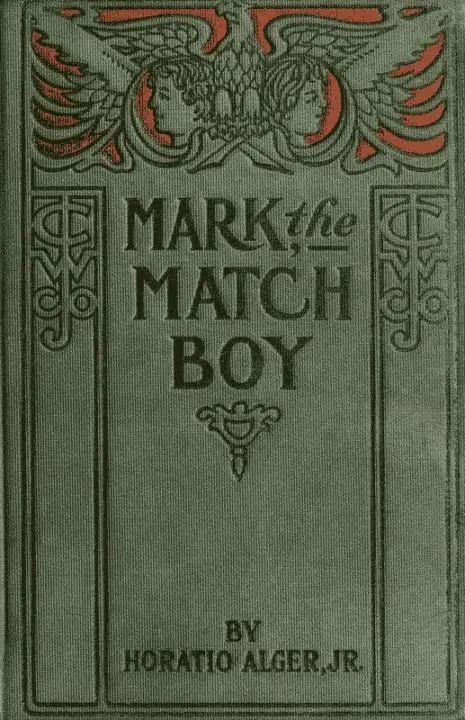
"Mark the Match Boy; or, Richard Hunter's Ward" by Horatio Alger, Jr. is a novel written in the late 19th century. This story follows a young boy named Mark, who sells matches on the streets of New York City while enduring hardships and abuse from his caregiver, Mother Watson. As Mark navigates his struggles, themes of resilience, friendship, and the hope for a better life are prevalent throughout the narrative. At the start of the book, we are introduced to Mark, a thinly-clad boy deeply affected by hunger and the harsh realities of street life. He returns home after a long day of trying to sell matches but is met with hostility and threats from Mother Watson, who only cares about the money he brings in. As he contemplates his situation, Mark begins to consider breaking free from this abusive arrangement. His fate takes a turn when he unexpectedly receives some money while resting on a ferryboat, igniting a spark of independence. This opening sets the stage for Mark's journey toward self-sufficiency as he ponders his future and contemplates the possibility of escaping his current life.
Introduction adapted from the source catalogue; source summaries may be automatically generated.
Free to read · English · 48,243 words · No account needed
MAKE TIME FOR A GOOD BOOK
On by default. Untick to stop anonymous reading totals. Each page counts after 10 seconds in view. How this works.
Anonymous counting is on unless you have switched it off.
"I have to. My governor won't foot the bills, so I have to."
"Still you seem to have plenty of money," persisted Roswell.
"Yes, I look out for that," said Ralph Graham, significantly.
"But I don't see how you manage. I might look out all day, and I wouldn't be any the better off."
"Perhaps you don't go the right way to work," said his companion, taking the cigar from his mouth, and knocking off the ashes.
"Then I wish you'd tell me the right way."
"Why, the fact is," said Ralph, slowly, "I make my employer pay me higher wages than he thinks he does."
"I don't see how you can do that," said Roswell, who didn't yet
understand.
Ralph took the cigar, now nearly smoked out, from his mouth, and threw it on the pavement. He bent towards Roswell, and whispered something in his ear. Roswell started and turned pale.
"But," he said, "that's dishonest."
"Hush!" said Ralph, "don't speak so loud. Oughtn't employers to pay
fair wages,--tell me that?"
"Certainly."
"But if they don't and won't, what then?"
"I don't know."
"Well, I do. We must help ourselves, that is all."
"But," said Roswell, "what would be thought of you if it were found
out?"
"There's plenty of clerks that do it. Bless you, it's expected. I heard a man say once that he expected to lose about so much by his clerks."
"But I think it would be better to pay good wages."
"So do I, only you see they won't do it."
"How much do you--do you make outside of your salary?" asked Roswell.
"From three to five dollars a week."
"I should think they'd find you out."
"I don't let them. I'm pretty careful. Well, what shall we do this evening? There's a pretty good play at Niblo's. Suppose we go there."
"I haven't got money enough," said Roswell.
"Well, I'll pay for both to-night. You can pay another time."
"All right!" said Roswell, though he did not know when he should have money enough to return the favor. They crossed to Broadway, and walked leisurely to Niblo's Garden. The performance lasted till late, and it was after eleven when Roswell Crawford got into bed.
Your reading position is saved on this browser. Take it to another device with a library code. Reading pages adapt to text, rather than matching a printed edition.
William Rounseville Alger & Horatio, Jr. Alger

William Rounseville Alger & Horatio, Jr. Alger

Horatio, Jr. Alger

Horatio, Jr. Alger
BEHIND THE BOOK
This eBook is for the use of anyone anywhere in the United States and most other parts of the world at no cost and with almost no restrictions whatsoever. You may copy it, give it away or re-use it under the terms of the Project Gutenberg License included with this eBook or online at www.gutenberg.org. If you are not located in the United States, you will have to check the laws of the country where you are located before using this eBook. Read the source licence.
The original source file, including credits and licence, is retained by this library. Request an original-format copy at no charge. Please include the book title and Project Gutenberg identifier #53071.
KEEP YOUR CURIOSITY GOING
Coulson Kernahan

Maurice Baring
Frances Wright
Cécile Tormay

Frederic Jesup Stimson

W. H. P. (William Henry Pope) Jarvis