
Life of Edwin Forrest, the American Tragedian. Volume 2 (of 2)
William Rounseville Alger & Horatio, Jr. Alger
THE CLASSIC COLLECTION · 1869
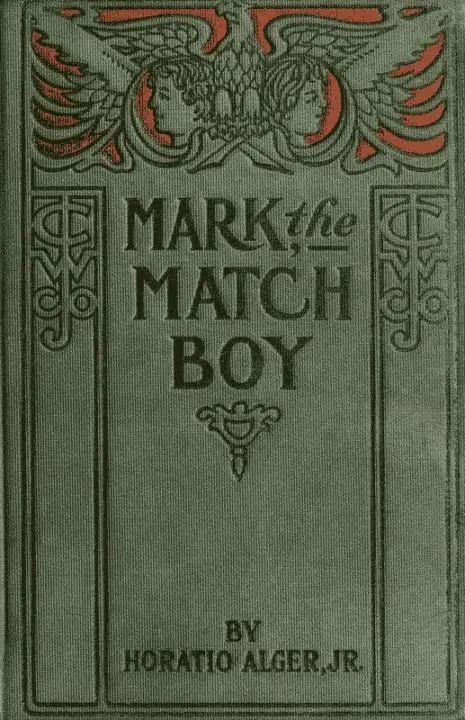
"Mark the Match Boy; or, Richard Hunter's Ward" by Horatio Alger, Jr. is a novel written in the late 19th century. This story follows a young boy named Mark, who sells matches on the streets of New York City while enduring hardships and abuse from his caregiver, Mother Watson. As Mark navigates his struggles, themes of resilience, friendship, and the hope for a better life are prevalent throughout the narrative. At the start of the book, we are introduced to Mark, a thinly-clad boy deeply affected by hunger and the harsh realities of street life. He returns home after a long day of trying to sell matches but is met with hostility and threats from Mother Watson, who only cares about the money he brings in. As he contemplates his situation, Mark begins to consider breaking free from this abusive arrangement. His fate takes a turn when he unexpectedly receives some money while resting on a ferryboat, igniting a spark of independence. This opening sets the stage for Mark's journey toward self-sufficiency as he ponders his future and contemplates the possibility of escaping his current life.
Introduction adapted from the source catalogue; source summaries may be automatically generated.
Free to read · English · 48,243 words · No account needed
MAKE TIME FOR A GOOD BOOK
On by default. Untick to stop anonymous reading totals. Each page counts after 10 seconds in view. How this works.
Anonymous counting is on unless you have switched it off.
They found themselves in a comfortably furnished room. A man of fifty-five, rather stout in build, and with iron-gray hair, rose from his chair before the fire, and looked rather inquiringly. He seemed rather surprised to find that there were two visitors, as well as at the evident youth of both.
"Mr. Hunter?" he said, inquiringly, looking from one to the other.
"That is my name," said Dick, promptly.
"Have I met you before? If so, my memory is at fault."
"No, sir, we have never met."
"I presume you have business with me. Be seated, if you please."
"First," said Dick, "let me introduce my friend Henry Fosdick."
"Fosdick!" repeated Hiram Bates, with a slight tinge of color.
"I think you knew my father," said Fosdick, nervously.
"Your father was a printer,--was he not?" inquired Mr. Bates.
"Yes, sir."
"I do remember him. Do you come from him?"
Fosdick shook his head.
"He has been dead for two years," he said, sadly.
"Dead!" repeated Hiram Bates, as if shocked. "Indeed, I am sorry to
hear it."
He spoke with evident regret, and Henry Fosdick, whose feelings towards his father's debtor had not been very friendly, noticed this, and was softened by it.
"Did he die in poverty, may I ask?" inquired Mr. Bates, after a pause.
"He was poor," said Fosdick; "that is, he had nothing laid up; but his wages were enough to support him and myself comfortably."
"Did he have any other family?"
"No, sir; my mother died six years since, and I had no brothers or
sisters."
"He left no property then?"
"No, sir."
"Then I suppose he was able to make no provision for you?"
"No, sir."
"But you probably had some relatives who came forward and provided for
you?"
"No, sir; I had no relatives in New York."
"What then did you do? Excuse my questions, but I have a motive in
asking."
"My father died suddenly, having fallen from a Brooklyn ferry-boat and drowned. He left nothing, and I knew of nothing better to do than to go into the streets as a boot-black."
"Surely you are not in that business now?" said Mr. Bates, glancing at
Fosdick's neat dress.
"No, sir; I was fortunate enough to find a friend,"--here Fosdick glanced at Dick,--"who helped me along, and encouraged me to apply for a place in a Broadway store. I have been there now for a year and a half."
"What wages do you get? Excuse my curiosity, but your story interests
me."
"Eight dollars a week."
"And do you find you can live comfortably on that?"
"Yes, sir; that is, with the assistance of my friend here."
Your reading position is saved on this browser. Take it to another device with a library code. Reading pages adapt to text, rather than matching a printed edition.
William Rounseville Alger & Horatio, Jr. Alger

William Rounseville Alger & Horatio, Jr. Alger

Horatio, Jr. Alger

Horatio, Jr. Alger
BEHIND THE BOOK
This eBook is for the use of anyone anywhere in the United States and most other parts of the world at no cost and with almost no restrictions whatsoever. You may copy it, give it away or re-use it under the terms of the Project Gutenberg License included with this eBook or online at www.gutenberg.org. If you are not located in the United States, you will have to check the laws of the country where you are located before using this eBook. Read the source licence.
The original source file, including credits and licence, is retained by this library. Request an original-format copy at no charge. Please include the book title and Project Gutenberg identifier #53071.
KEEP YOUR CURIOSITY GOING
Coulson Kernahan

Maurice Baring
Frances Wright
Cécile Tormay

Frederic Jesup Stimson

W. H. P. (William Henry Pope) Jarvis