
Life of Edwin Forrest, the American Tragedian. Volume 2 (of 2)
William Rounseville Alger & Horatio, Jr. Alger
THE CLASSIC COLLECTION · 1869
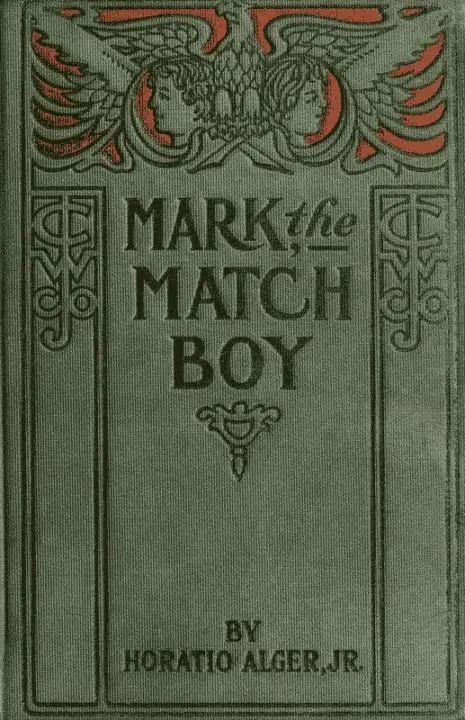
"Mark the Match Boy; or, Richard Hunter's Ward" by Horatio Alger, Jr. is a novel written in the late 19th century. This story follows a young boy named Mark, who sells matches on the streets of New York City while enduring hardships and abuse from his caregiver, Mother Watson. As Mark navigates his struggles, themes of resilience, friendship, and the hope for a better life are prevalent throughout the narrative. At the start of the book, we are introduced to Mark, a thinly-clad boy deeply affected by hunger and the harsh realities of street life. He returns home after a long day of trying to sell matches but is met with hostility and threats from Mother Watson, who only cares about the money he brings in. As he contemplates his situation, Mark begins to consider breaking free from this abusive arrangement. His fate takes a turn when he unexpectedly receives some money while resting on a ferryboat, igniting a spark of independence. This opening sets the stage for Mark's journey toward self-sufficiency as he ponders his future and contemplates the possibility of escaping his current life.
Introduction adapted from the source catalogue; source summaries may be automatically generated.
Free to read · English · 48,243 words · No account needed
MAKE TIME FOR A GOOD BOOK
On by default. Untick to stop anonymous reading totals. Each page counts after 10 seconds in view. How this works.
Anonymous counting is on unless you have switched it off.
At this point a sudden faintness came over Mark, and he sank to the
ground insensible.
A moment before Richard Hunter handed a couple of letters to the office boy,--known to the readers of the earlier volumes in this series as Micky Maguire,--and said, "Michael, I should like to have you carry these at once to the post-office. On the way you may stop at Trescott & Wayne's, and get this bill cashed, if possible."
"All right, Mr. Hunter," said Michael, respectfully.
Richard Hunter and Micky Maguire had been boot-blacks together, and had had more than one contest for the supremacy. They had been sworn enemies, and Micky had done his utmost to injure Richard, but the latter, by his magnanimity, had finally wholly overcome the antipathy of his former foe, and, when opportunity offered, had lifted him to a position in the office where he was himself employed. In return, Micky had become an enthusiastic admirer of Richard, and, so far from taking advantage of their former relations, had voluntarily taken up the habit of addressing him as Mr. Hunter.
Michael went out on his errand, but just outside the door came near stepping upon the prostrate form of the little match boy.
"Get up here!" he said, roughly, supposing at first that Mark had thrown himself down out of laziness and gone to sleep.
Mark didn't answer, and Micky, bending over, saw his fixed expression
and waxen pallor.
"Maybe the little chap's dead," he thought, startled, and, without more ado, took him up in his strong arms and carried him into the counting-room.
"Who have you got there, Michael?" asked Richard Hunter, turning round
in surprise.
"A little match boy that was lyin' just outside the door. He looks as
if he might be dead."
Richard jumped at once from his stool, and, approaching the boy, looked
earnestly in his face.
"He has fainted away," he said, after a pause. "Bring some water,
quick!"
Micky brought a glass of water, which was thrown in the face of Mark. The match boy gave a little shiver, and, opening his eyes, fixed them upon Richard Hunter.
"Where am I?" he asked, vacantly.
"You are with friends," said Richard, gently. "You were found at our door faint. Do you feel sick?"
"I feel weak," said Mark.
"Have you been well lately?"
"No, I've felt tired and weak."
"Are you a match boy?"
"Yes."
"Have you parents living?"
"No," said Mark.
"Poor fellow!" said Richard. "I know how to pity you. I have no parents
either."
"But you have got money," said Mark. "You don't have to live in the
street."
"I was once a street boy like you."
Your reading position is saved on this browser. Take it to another device with a library code. Reading pages adapt to text, rather than matching a printed edition.
William Rounseville Alger & Horatio, Jr. Alger

William Rounseville Alger & Horatio, Jr. Alger

Horatio, Jr. Alger

Horatio, Jr. Alger
BEHIND THE BOOK
This eBook is for the use of anyone anywhere in the United States and most other parts of the world at no cost and with almost no restrictions whatsoever. You may copy it, give it away or re-use it under the terms of the Project Gutenberg License included with this eBook or online at www.gutenberg.org. If you are not located in the United States, you will have to check the laws of the country where you are located before using this eBook. Read the source licence.
The original source file, including credits and licence, is retained by this library. Request an original-format copy at no charge. Please include the book title and Project Gutenberg identifier #53071.
KEEP YOUR CURIOSITY GOING
Coulson Kernahan

Maurice Baring
Frances Wright
Cécile Tormay

Frederic Jesup Stimson

W. H. P. (William Henry Pope) Jarvis