
Life of Edwin Forrest, the American Tragedian. Volume 2 (of 2)
William Rounseville Alger & Horatio, Jr. Alger
THE CLASSIC COLLECTION · 1869
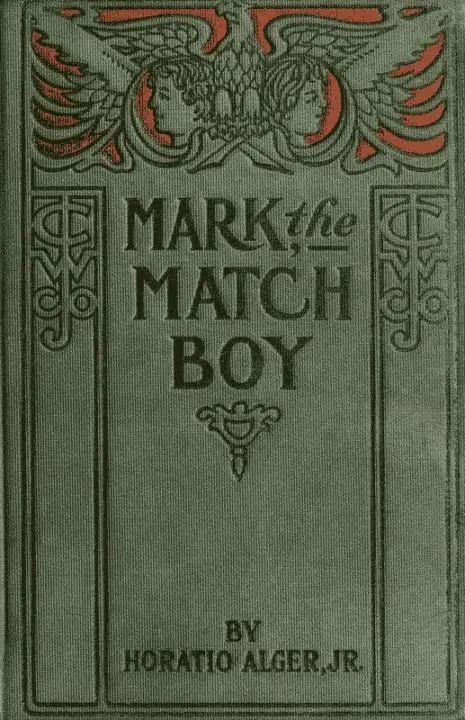
"Mark the Match Boy; or, Richard Hunter's Ward" by Horatio Alger, Jr. is a novel written in the late 19th century. This story follows a young boy named Mark, who sells matches on the streets of New York City while enduring hardships and abuse from his caregiver, Mother Watson. As Mark navigates his struggles, themes of resilience, friendship, and the hope for a better life are prevalent throughout the narrative. At the start of the book, we are introduced to Mark, a thinly-clad boy deeply affected by hunger and the harsh realities of street life. He returns home after a long day of trying to sell matches but is met with hostility and threats from Mother Watson, who only cares about the money he brings in. As he contemplates his situation, Mark begins to consider breaking free from this abusive arrangement. His fate takes a turn when he unexpectedly receives some money while resting on a ferryboat, igniting a spark of independence. This opening sets the stage for Mark's journey toward self-sufficiency as he ponders his future and contemplates the possibility of escaping his current life.
Introduction adapted from the source catalogue; source summaries may be automatically generated.
Free to read · English · 48,243 words · No account needed
MAKE TIME FOR A GOOD BOOK
On by default. Untick to stop anonymous reading totals. Each page counts after 10 seconds in view. How this works.
Anonymous counting is on unless you have switched it off.
"Maybe you don't have to pay a big license," said Ben.
"A license for blackin' boots?" ejaculated the countryman, in surprise.
"In course. I have to deposit five hundred dollars, more or less, in the city treasury, before I can black boots."
"Five--hundred--dollars!" repeated the customer, opening his eyes wide
at the information.
"In course," said Ben. "If I didn't they'd put me in jail for a year."
"And does he pay a license too?" asked the countryman, pointing to
Mark, who had just come up.
"He only has to pay two hundred and fifty dollars," said Ben. "They aint so hard on him as on us."
The young man drew out his wallet reluctantly, and managed to raise twenty-three cents, which he handed to Ben.
"I wouldn't have had my boots blacked, if I'd known the price," he said. "I could have blacked 'em myself at home. They didn't cost but three dollars, and it don't pay to give twenty-five cents to have 'em blacked."
"It'll make 'em last twice as long," said Ben. "My blackin' is the superiorest kind, and keeps boots from wearin' out."
"I havn't got the other two cents," said the young man. "Aint that near
enough?"
"It'll do," said Ben, magnanimously, "seein' you didn't know the price."
The victimized customer walked away, gratified to have saved the two cents, but hardly reconciled to have expended almost quarter of a dollar on a piece of work which he might have done himself before leaving home.
"Well, what luck, Mark?" said Ben. "I took in that chap neat, didn't I?"
"But you didn't tell the truth," said Mark. "You don't have to buy a
license."
"Oh, what's the odds?" said Ben, whose ideas on the subject of truth were far from being strict. "It's all fair in business. Didn't that chap open his eyes when I told him about payin' five hundred dollars?"
"I don't think it's right, Ben," said Mark, seriously.
"Don't you go to preachin', Mark," said Ben, not altogether pleased. "You've been tied to an old woman's apron-string too long,--that's what's the matter with you."
"Mother Watson didn't teach me the truth," said Mark. "She don't care whether I tell it or not except to her. It was my mother that told me I ought always to tell the truth."
"Women don't know anything about business," said Ben. "Nobody in business speaks the truth. Do you see that sign?"
Mark looked across the street, and saw a large placard, setting forth that a stock of books and stationery was selling off at less than cost.
"Do you believe that?" asked Ben.
"Perhaps it's true," said Mark.
Your reading position is saved on this browser. Take it to another device with a library code. Reading pages adapt to text, rather than matching a printed edition.
William Rounseville Alger & Horatio, Jr. Alger

William Rounseville Alger & Horatio, Jr. Alger

Horatio, Jr. Alger

Horatio, Jr. Alger
BEHIND THE BOOK
This eBook is for the use of anyone anywhere in the United States and most other parts of the world at no cost and with almost no restrictions whatsoever. You may copy it, give it away or re-use it under the terms of the Project Gutenberg License included with this eBook or online at www.gutenberg.org. If you are not located in the United States, you will have to check the laws of the country where you are located before using this eBook. Read the source licence.
The original source file, including credits and licence, is retained by this library. Request an original-format copy at no charge. Please include the book title and Project Gutenberg identifier #53071.
KEEP YOUR CURIOSITY GOING
Coulson Kernahan

Maurice Baring
Frances Wright
Cécile Tormay

Frederic Jesup Stimson

W. H. P. (William Henry Pope) Jarvis