
Life of Edwin Forrest, the American Tragedian. Volume 2 (of 2)
William Rounseville Alger & Horatio, Jr. Alger
THE CLASSIC COLLECTION · 1869
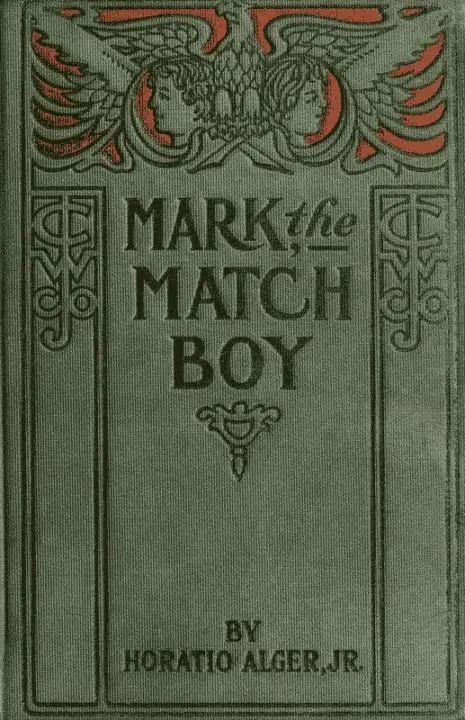
"Mark the Match Boy; or, Richard Hunter's Ward" by Horatio Alger, Jr. is a novel written in the late 19th century. This story follows a young boy named Mark, who sells matches on the streets of New York City while enduring hardships and abuse from his caregiver, Mother Watson. As Mark navigates his struggles, themes of resilience, friendship, and the hope for a better life are prevalent throughout the narrative. At the start of the book, we are introduced to Mark, a thinly-clad boy deeply affected by hunger and the harsh realities of street life. He returns home after a long day of trying to sell matches but is met with hostility and threats from Mother Watson, who only cares about the money he brings in. As he contemplates his situation, Mark begins to consider breaking free from this abusive arrangement. His fate takes a turn when he unexpectedly receives some money while resting on a ferryboat, igniting a spark of independence. This opening sets the stage for Mark's journey toward self-sufficiency as he ponders his future and contemplates the possibility of escaping his current life.
Introduction adapted from the source catalogue; source summaries may be automatically generated.
Free to read · English · 48,243 words · No account needed
MAKE TIME FOR A GOOD BOOK
On by default. Untick to stop anonymous reading totals. Each page counts after 10 seconds in view. How this works.
Anonymous counting is on unless you have switched it off.
"Don't know!" repeated Ben, taking his pipe from his mouth, and spitting. "Where's your matches?"
"I left them at home."
"Then what'd did you come out for in this storm?"
"The woman I live with won't let me come home till I've brought her
twenty-five cents."
"How'd you expect to get it?"
"She wants me to beg."
"That's a good way," said Ben, approvingly; "when you get hold of a soft chap, or a lady, them's the ones to shell out."
"I don't like it," said Mark. "I don't want people to think me a
beggar."
"What's the odds?" said Ben, philosophically. "You're just the chap to
make a good beggar."
"What do you mean by that, Ben?" said Mark, who was far from considering this much of a compliment.
"Why you're a thin, pale little chap, that people will pity easy. Now I aint the right cut for a beggar. I tried it once, but it was no go."
"Why not?" asked Mark, who began to be interested in spite of himself.
"You see," said Ben, again puffing out a volume of smoke, "I look too tough, as if I could take care of myself. People don't pity me. I tried it one night when I was hard up. I hadn't got but six cents, and I wanted to go to the Old Bowery bad. So I went up to a gent as was comin' up Wall Street from the Ferry, and said, 'Won't you give a poor boy a few pennies to save him from starvin'?'"
"'So you're almost starvin', are you, my lad?'" says he.
"'Yes, sir,' says I, as faint as I could.
"'Well, starvin' seems to agree with you,' says he, laughin'. 'You're the healthiest-lookin' beggar I've seen in a good while.'
"I tried it again on another gent, and he told me he guessed I was lazy; that a good stout boy like me ought to work. So I didn't make much beggin', and had to give up goin' to the Old Bowery that night, which I was precious sorry for, for there was a great benefit that evenin'. Been there often?"
"No, I never went."
"Never went to the Old Bowery!" ejaculated Ben, whistling in his amazement. "Where were you raised, I'd like to know? I should think you was a country greeny, I should."
"I never had a chance," said Mark, who began to feel a little ashamed
of the confession.
"Won't your old woman let you go?"
"I never have any money to go."
Your reading position is saved on this browser. Take it to another device with a library code. Reading pages adapt to text, rather than matching a printed edition.
William Rounseville Alger & Horatio, Jr. Alger

William Rounseville Alger & Horatio, Jr. Alger

Horatio, Jr. Alger

Horatio, Jr. Alger
BEHIND THE BOOK
This eBook is for the use of anyone anywhere in the United States and most other parts of the world at no cost and with almost no restrictions whatsoever. You may copy it, give it away or re-use it under the terms of the Project Gutenberg License included with this eBook or online at www.gutenberg.org. If you are not located in the United States, you will have to check the laws of the country where you are located before using this eBook. Read the source licence.
The original source file, including credits and licence, is retained by this library. Request an original-format copy at no charge. Please include the book title and Project Gutenberg identifier #53071.
KEEP YOUR CURIOSITY GOING
Coulson Kernahan

Maurice Baring
Frances Wright
Cécile Tormay

Frederic Jesup Stimson

W. H. P. (William Henry Pope) Jarvis