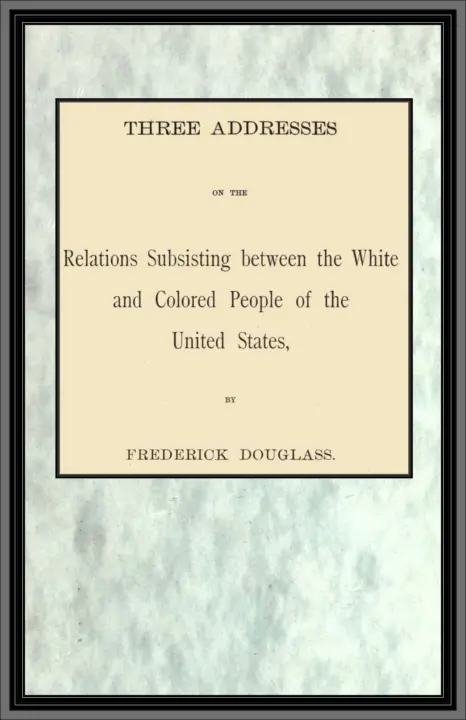
Three addresses on the relations subsisting between the white and colored people of the United States
Frederick Douglass
THE CLASSIC COLLECTION · 1881
"Life and Times of Frederick Douglass: His Early Life as a Slave, His Escape..." by Frederick Douglass is an autobiography published in 1881 and revised in 1892. This third and final autobiography reveals details about Douglass's enslavement and escape that were too dangerous to share earlier. It chronicles his entire life, from childhood memories with his grandparents through his experiences during and after the Civil War, including encounters with Presidents Lincoln and Garfield, and his service as U.S. Marshall of the District of Columbia.
Introduction adapted from the source catalogue; source summaries may be automatically generated.
Free to read · English · 192,936 words · No account needed
MAKE TIME FOR A GOOD BOOK
On by default. Untick to stop anonymous reading totals. Each page counts after 10 seconds in view. How this works.
Anonymous counting is on unless you have switched it off.
Up to the time of the brutal treatment of my Aunt Esther, already narrated, and the shocking plight in which I had seen my cousin from Tuckahoe, my attention had not been especially directed to the grosser and more revolting features of slavery. I had, of course, heard of whippings and savage mutilations of slaves by brutal overseers, but happily for me I had always been out of the way of such occurrences. My play time was spent outside of the corn and tobacco fields, where the overseers and slaves were brought together and in conflict. But after the case of my Aunt Esther I saw others of the same disgusting and shocking nature. The one of these which agitated and distressed me most was the whipping of a woman, not belonging to my old master, but to Col. Lloyd. The charge against her was very common and very indefinite, namely, “impudence.” This crime could be committed by a slave in a hundred different ways, and depended much upon the temper and caprice of the overseer as to whether it was committed at all. He could create the offense whenever it pleased him. A look, a word, a gesture, accidental or intentional, never failed to be taken as impudence when he was in the right mood for such an offense. In this case there were all the necessary conditions for the commission of the crime charged. The offender was nearly white, to begin with; she was the wife of a favorite hand on board of Mr. Lloyd’s sloop and was besides the mother of five sprightly children. Vigorous and spirited woman that she was, a wife and a mother, with a predominating share of the blood of the master running in her veins. Nellie (for that was her name) had all the qualities essential to impudence to a slave overseer. My attention was called to the scene of the castigation by the loud screams and curses that proceeded from the direction of it. When I came near the parties engaged in the struggle, the overseer had hold of Nelly, endeavoring with his whole strength to drag her to a tree against her resistance. Both his and her faces were bleeding, for the woman was doing her best. Three of her children were present, and though quite small, (from seven to ten years old I should think,) they gallantly took the side of their mother against the overseer, and pelted him well with stones and epithets. Amid the screams of the children “Let my mammy go! Let my mammy go!” the hoarse voice of the maddened overseer was heard in terrible oaths that he would teach her how to give a white man “impudence.” The blood on his face and on hers attested her skill in the use of her nails, and his dogged determination to conquer. His purpose was to tie her up to a tree and give her, in slaveholding parlance, a “genteel flogging,” and he evidently had not expected the stern and protracted resistance he was meeting, or the strength and skill needed to its execution. There were times when she seemed likely to get the better of the brute, but he finally overpowered her, and succeeded in getting her arms firmly tied to the tree towards which he had been dragging her. The victim was now at the mercy of his merciless lash. What followed I need not here describe. The cries of the now helpless woman, while undergoing the terrible infliction, were mingled with the hoarse curses of the overseer and the wild cries of her distracted children. When the poor woman was untied, her back was covered with blood. She was whipped, terribly whipped, but she was not subdued, and continued to denounce the overseer, and pour upon him every vile epithet she could think of. Such floggings are seldom repeated by overseers on the same persons. They prefer to whip those who were the most easily whipped. The doctrine that submission to violence is the best cure for violence did not hold good as between slaves and overseers. He was whipped oftener who was whipped easiest. That slave who had the courage to stand up for himself against the overseer, although he might have many hard stripes at first, became while legally a slave virtually a freeman. “You can shoot me,” said a slave to Rigby Hopkins, “but you can’t whip me,” and the result was he was neither whipped nor shot. I do not know that Mr. Sevier ever attempted to whip Nelly again. He probably never did, for not long after he was taken sick and died. It was commonly said that his death-bed was a wretched one, and that, the ruling passion being strong in death, he died flourishing the slave whip and with horrid oaths upon his lips. This death-bed scene may only be the imagining of the slaves. One thing is certain, that when he was in health his profanity was enough to chill the blood of an ordinary man. Nature, or habit, had given to his face an expression of uncommon savageness. Tobacco and rage had ground his teeth short, and nearly every sentence that he uttered was commenced or completed with an oath. Hated for his cruelty, despised for his cowardice, he went to his grave lamented by nobody on the place outside of his own house, if, indeed, he was even lamented there.
Your reading position is saved on this browser. Take it to another device with a library code. Reading pages adapt to text, rather than matching a printed edition.
Frederick Douglass
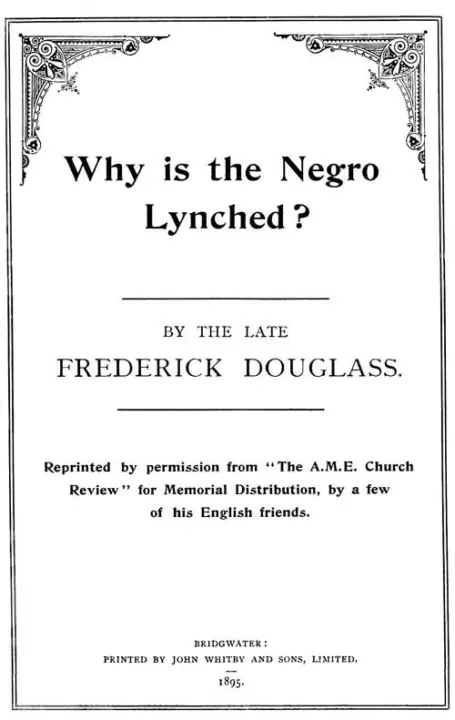
Frederick Douglass
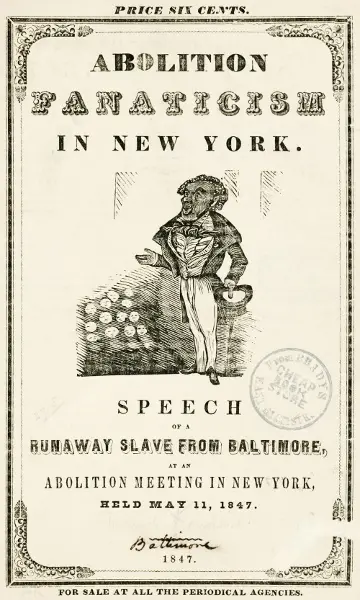
Frederick Douglass
Frederick Douglass
BEHIND THE BOOK
This eBook is for the use of anyone anywhere in the United States and most other parts of the world at no cost and with almost no restrictions whatsoever. You may copy it, give it away or re-use it under the terms of the Project Gutenberg License included with this eBook or online at www.gutenberg.org. If you are not located in the United States, you will have to check the laws of the country where you are located before using this eBook. Read the source licence.
The original source file, including credits and licence, is retained by this library. Request an original-format copy at no charge. Please include the book title and Project Gutenberg identifier #71893.
KEEP YOUR CURIOSITY GOING
Cécile Tormay

Moritz Busch
John L. Ransom
Frances Wright
Cécile Tormay

Mabel Potter Daggett