
Three addresses on the relations subsisting between the white and colored people of the United States
Frederick Douglass
THE CLASSIC COLLECTION · 1881
"Life and Times of Frederick Douglass: His Early Life as a Slave, His Escape..." by Frederick Douglass is an autobiography published in 1881 and revised in 1892. This third and final autobiography reveals details about Douglass's enslavement and escape that were too dangerous to share earlier. It chronicles his entire life, from childhood memories with his grandparents through his experiences during and after the Civil War, including encounters with Presidents Lincoln and Garfield, and his service as U.S. Marshall of the District of Columbia.
Introduction adapted from the source catalogue; source summaries may be automatically generated.
Free to read · English · 192,936 words · No account needed
MAKE TIME FOR A GOOD BOOK
On by default. Untick to stop anonymous reading totals. Each page counts after 10 seconds in view. How this works.
Anonymous counting is on unless you have switched it off.
Col. Lloyd’s plantation--Aunt Katy--Her cruelty and ill-nature-- Capt. Anthony’s partiality to Aunt Katy--Allowance of food-- Author’s hunger--Unexpected rescue by his mother--The reproof of Aunt Katy--Sleep--A slave-mother’s love--Author’s inheritance-- His mother’s acquirements--Her death.
Once established on the home plantation of Col. Lloyd--I was with the children there, left to the tender mercies of Aunt Katy, a slave woman who was to my master what he was to Col. Lloyd. Disposing of us in classes or sizes, he left to Aunt Katy all the minor details concerning our management. She was a woman who never allowed herself to act greatly within the limits of delegated power, no matter how broad that authority might be. Ambitious of old master’s favor, ill-tempered and cruel by nature, she found in her present position an ample field for the exercise of her ill-omened qualities. She had a strong hold upon old master, for she was a first-rate cook, and very industrious. She was therefore greatly favored by him--and as one mark of his favor she was the only mother who was permitted to retain her children around her, and even to these, her own children, she was often fiendish in her brutality. Cruel, however, as she sometimes was to her own children, she was not destitute of maternal feeling, and in her instinct to satisfy their demands for food, she was often guilty of starving me and the other children. Want of food was my chief trouble during my first summer here. Captain Anthony, instead of allowing a given quantity of food to each slave, committed the allowance for all to Aunt Katy, to be divided by her, after cooking, amongst us. The allowance consisted of coarse corn meal, not very abundant, and which by passing through Aunt Katy’s hands, became more slender still for some of us. I have often been so pinched with hunger, as to dispute with old “Nep,” the dog, for the crumbs which fell from the kitchen table. Many times have I followed with eager step, the waiting-girl when she shook the table-cloth, to get the crumbs and small bones flung out for the dogs and cats. It was a great thing to have the privilege of dipping a piece of bread into the water in which meat had been boiled--and the skin taken from the rusty bacon was a positive luxury. With this description of the domestic arrangements of my new home, I may here recount a circumstance which is deeply impressed on my memory, as affording a bright gleam of a slave-mother’s love, and the earnestness of a mother’s care. I had offended Aunt Katy. I do not remember in what way, for my offences were numerous in that quarter, greatly depending upon her moods as to their heinousness, and she had adopted her usual mode of punishing me: namely, making me go all day without food. For the first hour or two after dinner time, I succeeded pretty well in keeping up my spirits; but as the day wore away, I found it quite impossible to do so any longer. Sundown came, but no bread; and in its stead came the threat from Aunt Katy, with a scowl well suited to its terrible import, that she would starve the life out of me. Brandishing her knife, she chopped off the heavy slices of bread for the other children, and put the loaf away, muttering all the while her savage designs upon myself. Against this disappointment, for I was expecting that her heart would relent at last, I made an extra effort to maintain my dignity, but when I saw the other children around me with satisfied faces, I could stand it no longer. I went out behind the kitchen wall and cried like a fine fellow. When wearied with this, I returned to the kitchen, sat by the fire and brooded over my hard lot. I was too hungry to sleep. While I sat in the corner, I caught sight of an ear of Indian corn upon an upper shelf. I watched my chance and got it; and shelling off a few grains, I put it back again. These grains I quickly put into the hot ashes to roast. I did this at the risk of getting a brutal thumping, for Aunt Katy could beat as well as starve me. My corn was not long in roasting, and I eagerly pulled it from the ashes, and placed it upon a stool in a clever little pile. I began to help myself, when who but my own dear mother should come in. The scene which followed is beyond my power to describe. The friendless and hungry boy, in his extremest need, found himself in the strong protecting arms of his mother. I have before spoken of my mother’s dignified and impressive manner. I shall never forget the indescribable expression of her countenance when I told her that Aunt Katy had said she would starve the life out of me. There was deep and tender pity in her glance at me, and a fiery indignation at Aunt Katy at the same moment, and while she took the corn from me, and gave in its stead a large ginger cake, she read Aunt Katy a lecture which was never forgotten. That night I learned as I had never learned before, that I was not only a child, but somebody’s child. I was grander upon my mother’s knee than a king upon his throne. But my triumph was short. I dropped off to sleep, and waked in the morning to find my mother gone and myself at the mercy again of the virago in my master’s kitchen, whose fiery wrath was my constant dread.
Your reading position is saved on this browser. Take it to another device with a library code. Reading pages adapt to text, rather than matching a printed edition.
Frederick Douglass
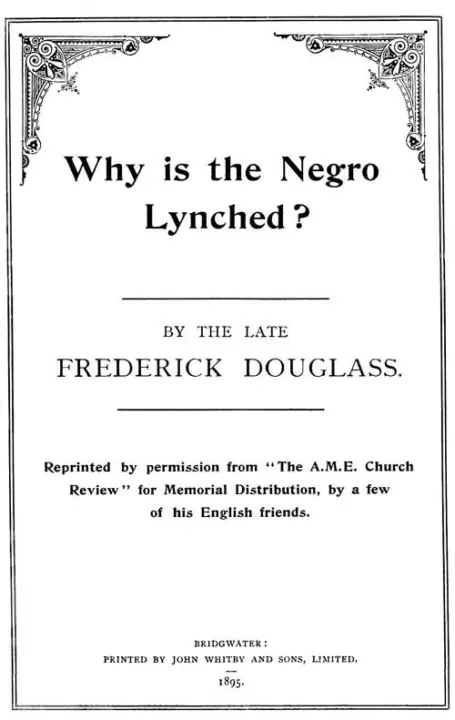
Frederick Douglass
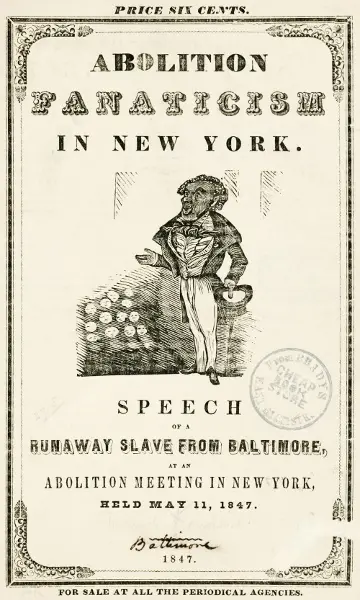
Frederick Douglass
Frederick Douglass
BEHIND THE BOOK
This eBook is for the use of anyone anywhere in the United States and most other parts of the world at no cost and with almost no restrictions whatsoever. You may copy it, give it away or re-use it under the terms of the Project Gutenberg License included with this eBook or online at www.gutenberg.org. If you are not located in the United States, you will have to check the laws of the country where you are located before using this eBook. Read the source licence.
The original source file, including credits and licence, is retained by this library. Request an original-format copy at no charge. Please include the book title and Project Gutenberg identifier #71893.
KEEP YOUR CURIOSITY GOING
Cécile Tormay

Moritz Busch
John L. Ransom
Frances Wright
Cécile Tormay

Mabel Potter Daggett