THE CLASSIC COLLECTION✦My diaries, being a personal narrative of events 1888-1914, Part 2 (1900-1914)CLASSIC FREE BOOKS
My diaries, being a personal narrative of events 1888-1914, Part 2 (1900-1914)
Wilfrid Scawen Blunt
THE CLASSIC COLLECTION · 1884
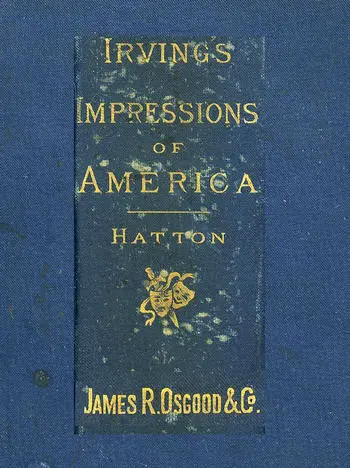
"Henry Irving's Impressions of America" by Joseph Hatton is a historical account written in the late 19th century. The book chronicles the experiences and reflections of the renowned English actor Henry Irving during his tour of America, offering insights into both the theatrical world and cultural exchanges between England and America. The text likely explores themes of admiration, cultural differences, and the complexity of public perception surrounding an artist touring in a foreign land. The opening of the text introduces us to Henry Irving's anticipation of his American tour, highlighting his confidence and optimism about being received warmly by American audiences. It captures conversations about the theatrical life and speculative expectations of Irving's performance style in comparison to American tastes, setting the stage for the complexities of his experience. The narrative showcases Irving's interactions with fellow actors and friends, who offer their opinions on how the audiences might respond to his artistry, creating an atmosphere of curiosity and apprehension about the reception he would face upon arrival. Hatton's tone suggests a blend of admiration for Irving and commentary on the cultural nuances that may influence the tour's success.
Introduction adapted from the source catalogue; source summaries may be automatically generated.
Free to read · English · 134,863 words · No account needed
MAKE TIME FOR A GOOD BOOK
On by default. Untick to stop anonymous reading totals. Each page counts after 10 seconds in view. How this works.
Anonymous counting is on unless you have switched it off.
“My Lord Chief Justice, my lords and gentlemen,—I cannot conceive a greater honor entering into the life of any man than the honor you have paid me by assembling here to-night. To look around this room and scan the faces of my distinguished hosts would stir to its depths a colder nature than mine. It is not in my power, my lords and gentlemen, to thank you for the compliment you have to-night paid me.
“‘The friends thou hast, and their adoption tried, Grapple them to thy soul with hooks of steel.’
“Never before have I so strongly felt the magic of those words; but you will remember it is also said, in the same sentence, ‘Give thy thoughts no tongue.’ (Laughter.) And gladly, had it been possible, would I have obeyed that wise injunction to-night. (Renewed laughter.) The actor is profoundly influenced by precedent, and I cannot forget that many of my predecessors have been nerved by farewell banquets for the honor which awaited them on the other side of the Atlantic; but this occasion I regard as much more than a compliment to myself,—I regard it as a tribute to the art which I am proud to serve—(Cheers),—and I believe that feeling will be shared by the profession to which you have assembled to do honor. (Cheers.) The time has long gone by when there was any need to apologize for the actor’s calling. (Hear! Hear!) The world can no more exist without the drama than it can without its sister art,—music. The stage gives the readiest response to the demand of human nature to be transported out of itself into the realms of the ideal,—not that all our ideas on the stage are realized; none but the artist knows how immeasurably he may fall short of his aim or his conception; but to have an ideal in art, and to strive through one’s life to embody it, may be a passion to the actor, as it may be to the poet. (Cheers.) Your lordship has spoken most eloquently of my career. Possessed of a generous mind and a highly judicial faculty, your lordship has been to-night, I fear, more generous than judicial. But, if I have in any way deserved commendation, I am proud that it is as an actor that I have won it. (Cheers.) As the director of a theatre my experience has been short, but as an actor I have been before the London public for seventeen years; and on one thing I am sure you will all agree,—that no actor or manager has ever received from that public more generous and ungrudging encouragement and support. (Cheers.) Concerning our visit to America I need hardly say that I am looking forward to it with no common pleasure. It has often been an ambition with English actors to gain the good-will of the English-speaking race,—a good-will which is right heartily reciprocated towards our American fellow-workers, when they gratify us by sojourning here. (Cheers.) Your God-speed would alone assure me a hearty welcome in any land; but I am not going amongst strangers,—I am going amongst friends (Cheers),—and when I, for the first time, touch American ground, I shall receive many a grip of the hand from men whose friendship I am proud to possess. (Cheers.) Concerning our expedition the American people will no doubt exercise an independent judgment,—a prejudice of theirs and a habit of long-standing,—(Laughter),—as your lordship has reminded us, by the fact that to-day is the fourth of July,—an anniversary rapidly becoming an English institution. Your lordship is doubtless aware, as to-night has so happily proved, that the stage has reckoned amongst its stanchest supporters many great and distinguished lawyers. There are many lawyers, I am told, in America,—(Laughter),—and as I am sure that they all deserve to be judges, I am in hopes that they will materially help me to gain a favorable verdict from the American people. (Cheers and laughter.) I have given but poor expression to my sense of the honor you have conferred upon me, and upon the comrades associated with me in this our enterprise,—an enterprise which, I hope, will favorably show the method and discipline of a company of English actors; on their behalf I thank you, and I also thank you on behalf of the lady who has so adorned the Lyceum stage,—(Cheers),—and to whose rare gifts your lordship has paid so just and gracious a tribute. (Cheers.) The climax of the favor extended to me by my countrymen has been reached to-night. You have set upon me a burden of responsibility,—a burden which I gladly and proudly bear. The memory of to-night will be to me a sacred thing,—a memory which will, throughout my life, be ever treasured; a memory which will stimulate me to further endeavor, and encourage me to loftier aim. (Loud and continued cheers.)
Your reading position is saved on this browser. Take it to another device with a library code. Reading pages adapt to text, rather than matching a printed edition.
BEHIND THE BOOK
This eBook is for the use of anyone anywhere in the United States and most other parts of the world at no cost and with almost no restrictions whatsoever. You may copy it, give it away or re-use it under the terms of the Project Gutenberg License included with this eBook or online at www.gutenberg.org. If you are not located in the United States, you will have to check the laws of the country where you are located before using this eBook. Read the source licence.
The original source file, including credits and licence, is retained by this library. Request an original-format copy at no charge. Please include the book title and Project Gutenberg identifier #52357.
KEEP YOUR CURIOSITY GOING
Wilfrid Scawen Blunt
Wilfrid Scawen Blunt

E. W. (Edgar Watson) Howe
Cécile Tormay

Moritz Busch
John L. Ransom