THE CLASSIC COLLECTION✦My diaries, being a personal narrative of events 1888-1914, Part 2 (1900-1914)CLASSIC FREE BOOKS
My diaries, being a personal narrative of events 1888-1914, Part 2 (1900-1914)
Wilfrid Scawen Blunt
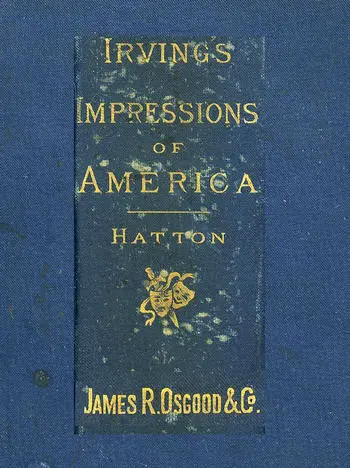
THE CLASSIC COLLECTION · 1884
"Henry Irving's Impressions of America" by Joseph Hatton is a historical account written in the late 19th century. The book chronicles the experiences and reflections of the renowned English actor Henry Irving during his tour of America, offering insights into both the theatrical world and cultural exchanges between England and America. The text likely explores themes of admiration, cultural differences, and the complexity of public perception surrounding an artist touring in a foreign land. The opening of the text introduces us to Henry Irving's anticipation of his American tour, highlighting his confidence and optimism about being received warmly by American audiences. It captures conversations about the theatrical life and speculative expectations of Irving's performance style in comparison to American tastes, setting the stage for the complexities of his experience. The narrative showcases Irving's interactions with fellow actors and friends, who offer their opinions on how the audiences might respond to his artistry, creating an atmosphere of curiosity and apprehension about the reception he would face upon arrival. Hatton's tone suggests a blend of admiration for Irving and commentary on the cultural nuances that may influence the tour's success.
Introduction adapted from the source catalogue; source summaries may be automatically generated.
Free to read · English · 134,863 words · No account needed
MAKE TIME FOR A GOOD BOOK
On by default. Untick to stop anonymous reading totals. Each page counts after 10 seconds in view. How this works.
Anonymous counting is on unless you have switched it off.
A REFLECTIVE writer, with the power to vividly recall a past age and contrast it with the present, might find ample inspiration in the rooms to which Mr. Irving presently invites us. It is Saturday night. On this last day in every acting week it is his habit to sup at the theatre, and, in spite of his two performances, he finds strength enough to entertain a few guests, sometimes a snug party of three, sometimes a lively company of eight or ten. We descend a carpeted staircase, cross the stage upon the remains of the snow scene of the “Corsican Brothers,” ascend a winding stair, pass through an armory packed with such a variety of weapons as to suggest the Tower of London, and are then ushered into a spacious wainscoted apartment, with a full set of polished ancient armor in each corner of it, an antique fireplace with the example of an old master over the mantel, a high-backed settee in an alcove opposite the blind windows (the sills of which are decorated with ancient bottles and jugs), and in the centre of the room an old oak dining-table, furnished for supper with white cloth, cut glass, and silver, among which shine the familiar beet-root and tomato.
“This was the old Beefsteak Club room,” says our host; “beyond there is the kitchen; the members dined here. The apartments were lumber-rooms until lately.”
Classic lumber-rooms truly! In the history of the clubs no association is more famous than the Sublime Society of Beefsteaks. The late William Jerdan was the first to attempt anything like a concise sketch of the club, and he wrote his reminiscences thereof for me and “The Gentleman’s Magazine” a dozen years ago, in the popular modern days of that periodical. Jerdan gave me an account of the club in the days when he visited it. “The President,” he said,—“an absolute despot during his reign,—sat at the head of the table adorned with ribbon and badge, and with the insignia of a silver gridiron on his breast; his head, when he was oracular, was crowned with a feathery hat, said to have been worn by Garrick in some gay part on the stage. He looked every inch a king. At the table on this occasion were seated the Bishop, Samuel Arnold, the patriotic originator of English opera, and strenuous encourager of native musical talent. He wore a mitre, said to have belonged to Cardinal Gregorio; but be that as it might, it became him well as he set it on his head to pronounce the grace before meat, which he intoned as reverently as if he had been in presence of the Archbishop of Canterbury instead of a bevy of Steakers. Near him was John Richards, the Recorder, whose office in passing sentence on culprits was discharged with piquancy and effect. Captain Morris, the Laureate, occupied a distinguished seat; so also did Dick Wilson, the Secretary, a bit of a butt to the jokers, who were wont to extort from him some account of a Continental trip, where he prided himself on having ordered a ‘boulevard’ for his dinner, and un paysan (for faisan) to be roasted; and last of all I can recall to mind, at the bottom of the plenteous board sat the all-important ‘Boots,’ the youngest member of the august assembly. These associated as a sort of staff with a score of other gentlemen, all men of the world, men of intellect and intelligence, well educated, and of celebrity in various lines of life—noblemen, lawyers, physicians and surgeons, authors, artists, newspaper editors, actors,—it is hardly possible to conceive any combination of various talent to be more efficient for the object sought than the Beefsteaks. The accommodation for their meetings was built, expressly for that end, behind the scenes of the Lyceum Theatre, by Mr. Arnold; and, among other features, was a room with no daylight to intrude, and this was the dining-room, with the old gridiron on the ceiling, over the centre of the table. The cookery on which the good cheer of the company depended was carried on in what may be called the kitchen, in full view of the chairman, and served through the opposite wall, namely, a huge gridiron with bars as wide apart as the ‘chess’ of small windows, handed hot-and-hot to the expectant hungerers. There were choice salads (mostly of beet root), porter, and port. The plates were never overloaded, but small cuts sufficed till almost satiated appetite perhaps called for one more from the third cut in the rump itself, which His Grace of Norfolk, after many slices, prized as the grand essence of bullock!”
Your reading position is saved on this browser. Take it to another device with a library code. Reading pages adapt to text, rather than matching a printed edition.
BEHIND THE BOOK
This eBook is for the use of anyone anywhere in the United States and most other parts of the world at no cost and with almost no restrictions whatsoever. You may copy it, give it away or re-use it under the terms of the Project Gutenberg License included with this eBook or online at www.gutenberg.org. If you are not located in the United States, you will have to check the laws of the country where you are located before using this eBook. Read the source licence.
The original source file, including credits and licence, is retained by this library. Request an original-format copy at no charge. Please include the book title and Project Gutenberg identifier #52357.
KEEP YOUR CURIOSITY GOING
Wilfrid Scawen Blunt
Wilfrid Scawen Blunt

E. W. (Edgar Watson) Howe
Cécile Tormay

Moritz Busch
John L. Ransom