THE CLASSIC COLLECTION✦My diaries, being a personal narrative of events 1888-1914, Part 2 (1900-1914)CLASSIC FREE BOOKS
My diaries, being a personal narrative of events 1888-1914, Part 2 (1900-1914)
Wilfrid Scawen Blunt
THE CLASSIC COLLECTION · 1884
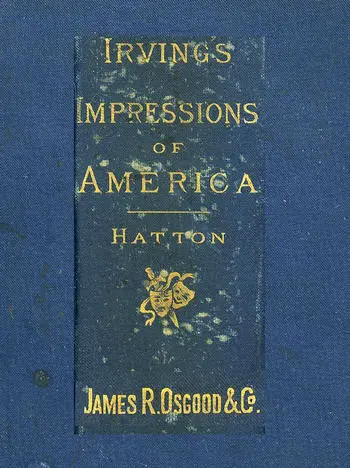
"Henry Irving's Impressions of America" by Joseph Hatton is a historical account written in the late 19th century. The book chronicles the experiences and reflections of the renowned English actor Henry Irving during his tour of America, offering insights into both the theatrical world and cultural exchanges between England and America. The text likely explores themes of admiration, cultural differences, and the complexity of public perception surrounding an artist touring in a foreign land. The opening of the text introduces us to Henry Irving's anticipation of his American tour, highlighting his confidence and optimism about being received warmly by American audiences. It captures conversations about the theatrical life and speculative expectations of Irving's performance style in comparison to American tastes, setting the stage for the complexities of his experience. The narrative showcases Irving's interactions with fellow actors and friends, who offer their opinions on how the audiences might respond to his artistry, creating an atmosphere of curiosity and apprehension about the reception he would face upon arrival. Hatton's tone suggests a blend of admiration for Irving and commentary on the cultural nuances that may influence the tour's success.
Introduction adapted from the source catalogue; source summaries may be automatically generated.
Free to read · English · 134,863 words · No account needed
MAKE TIME FOR A GOOD BOOK
On by default. Untick to stop anonymous reading totals. Each page counts after 10 seconds in view. How this works.
Anonymous counting is on unless you have switched it off.
WHEN Mr. Irving’s art is discussed, when his Hamlet or his Mathias, his Shylock or his Dei Franchi, are discussed, he should be regarded from a broader stand-point than that of the mere actor. He is entitled to be looked at as not only the central figure of the play, but as the motive power of the whole entertainment,—the master who has set the story and grouped it, the controlling genius of the moving picture, the source of the inspiration of the painter, the musician, the costumer, and the machinist, whose combined efforts go to the realization of the actor-manager’s conception and plans. It is acknowledged on all hands that Mr. Irving has done more for dramatic art all round than any actor of our time; and it is open to serious question whether any artist of any time has done as much. Not alone on the stage, but in front of it, at the very entrance of his theatre, the dignified influence of his management is felt. Every department has for its head a man of experience and tact, and every person about the place, from the humblest messenger to the highest officer and actor, seems to carry about with him a certain pride of association with the management.
Mr. Irving’s dressing-room at the theatre is a thorough business-like apartment, with at the same time evidences of the taste which obtains at his chambers. It is as unpretentious and yet in its way as remarkable as the man. See him sitting there at the dressing-table, where he is model to himself, where he converts himself into the character he is sustaining. His own face is his canvas, his own person, for the time being, the lay figure which he adorns. It is a large square table in the corner of the room. In the centre is a small old-fashioned mirror, which is practically the easel upon which he works; for therein is reflected the face which has to depict the passion and fear of Mathias, the cupidity of Richard, the martyrdom of Charles, the grim viciousness of Dubosc, the implacable justice of the avenging Dei Franchi, and the touching melancholy of Hamlet. As a mere matter of “make-up,” his realizations of the historical pictures of Charles the First and Philip of Spain are the highest kind of art. They belong to Vandyck and Velasquez, not only in their imitation of the great masters, but in the sort of inspiration for character and color which moved those famous painters. See him sitting, I say, the actor-artist at his easel. A tray on the right-hand side of his mirror may be called his palette; it contains an assortment of colors, paint-pots, powders, and brushes; but in his hand, instead of the maulstick, is the familiar hare’s-foot,—the actor’s “best friend” from the earliest days of rouge and burned cork. To the left of the mirror lie letters opened and unopened, missives just brought by the post, a jewel-box, and various “properties” in the way of chains, lockets, or buckles that belong to the part he is playing. He is talking to his stage-manager, or to some intimate friend, as he continues his work. You can hear the action of the drama that is going on,—a distant cheer, the clash of swords, a merry laugh, or a passing chorus. The “call-boy” of the theatre looks in at intervals to report the progress of the piece up to the point where it is necessary the leading artist should appear upon the stage. Then, as if he is simply going to see a friend who is waiting for him, Irving leaves his dressing-room, and you are alone. There is no “pulling himself together,” or “bracing up,” or putting on “tragic airs” as he goes. It is a pleasant “Good-night,” or “I shall see you again,” that takes him out of his dressing-room, and you can tell when he is before the audience by the loud cheers that come rushing up the staircases from the stage. While he is away, you look around the room. You find that the few pictures which decorate the walls are theatrical portraits. Here is an etching of Garrick’s head; there a water-color of Ellen Terry; here a study of Macready in Virginius; there a study in oil of Edmund Kean, by Clint, side by side with a portrait of George Frederic Cooke, by Liversiege. Interspersed among these things are framed play-bills of a past age and interesting autograph letters. Near the dressing-table is a tall looking-glass, in front of it an easy-chair, over which are lying a collection of new draperies and costumes recently submitted for the actor-manager’s approval. The room is warm with the gas that illuminates it; the atmosphere delightful to the fancy that finds a special fascination behind the foot-lights.
Your reading position is saved on this browser. Take it to another device with a library code. Reading pages adapt to text, rather than matching a printed edition.
BEHIND THE BOOK
This eBook is for the use of anyone anywhere in the United States and most other parts of the world at no cost and with almost no restrictions whatsoever. You may copy it, give it away or re-use it under the terms of the Project Gutenberg License included with this eBook or online at www.gutenberg.org. If you are not located in the United States, you will have to check the laws of the country where you are located before using this eBook. Read the source licence.
The original source file, including credits and licence, is retained by this library. Request an original-format copy at no charge. Please include the book title and Project Gutenberg identifier #52357.
KEEP YOUR CURIOSITY GOING
Wilfrid Scawen Blunt
Wilfrid Scawen Blunt

E. W. (Edgar Watson) Howe
Cécile Tormay

Moritz Busch
John L. Ransom