THE CLASSIC COLLECTION✦My diaries, being a personal narrative of events 1888-1914, Part 2 (1900-1914)CLASSIC FREE BOOKS
My diaries, being a personal narrative of events 1888-1914, Part 2 (1900-1914)
Wilfrid Scawen Blunt
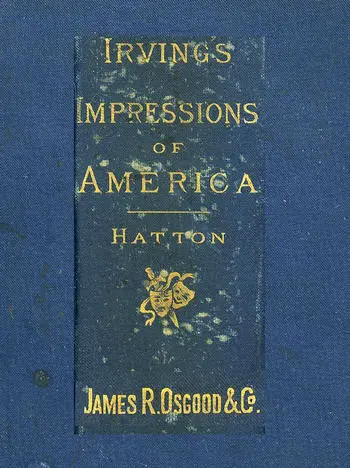
THE CLASSIC COLLECTION · 1884
"Henry Irving's Impressions of America" by Joseph Hatton is a historical account written in the late 19th century. The book chronicles the experiences and reflections of the renowned English actor Henry Irving during his tour of America, offering insights into both the theatrical world and cultural exchanges between England and America. The text likely explores themes of admiration, cultural differences, and the complexity of public perception surrounding an artist touring in a foreign land. The opening of the text introduces us to Henry Irving's anticipation of his American tour, highlighting his confidence and optimism about being received warmly by American audiences. It captures conversations about the theatrical life and speculative expectations of Irving's performance style in comparison to American tastes, setting the stage for the complexities of his experience. The narrative showcases Irving's interactions with fellow actors and friends, who offer their opinions on how the audiences might respond to his artistry, creating an atmosphere of curiosity and apprehension about the reception he would face upon arrival. Hatton's tone suggests a blend of admiration for Irving and commentary on the cultural nuances that may influence the tour's success.
Introduction adapted from the source catalogue; source summaries may be automatically generated.
Free to read · English · 134,863 words · No account needed
MAKE TIME FOR A GOOD BOOK
On by default. Untick to stop anonymous reading totals. Each page counts after 10 seconds in view. How this works.
Anonymous counting is on unless you have switched it off.
“SHE is not quite pretty,” says a New York reporter, turning to me during his contemplation of Miss Terry, who is very picturesque as she sits by the taffrail at the stern; “but she is handsome, and she is distinguished. I think we would like to ask her a few questions; will you introduce us?”
I do the honors of this presentation. Miss Terry is too much under the influence of the wonderful scene that meets her gaze to receive the reporters with calmness.
“And this is New York!” she exclaims. “What a surprising place! And, oh, what a river! So different to the Thames! And to think that I am in New York! It does not seem possible. I cannot realize it.”
“If you had a message to send home to your friends, Miss Terry, what would it be?” asks Reporter No. 1, a more than usually bashful young man.
The question is a trifle unfortunate.
“Tell them I never loved home so well as now,” she answers, in her
frank, impulsive way.
She turns her head away to hide her tears, and Reporter No. 2
remonstrates with his companion.
“I wouldn’t have said it for anything,” says No. 1. “I was thinking how I would add a few words for her to my London cable,—that’s a fact.”
“It is very foolish of me, pray excuse me,” says the lady; “it is all so new and strange. I know my eyes are red, and this is not the sort of face to go into New York with, is it?”
“I think New York will be quite satisfied, Miss Terry,” says a third reporter; “but don’t let us distress you.”
“Oh, no, I am quite myself now. You want to ask me some questions?”
“Not if you object.”
“I don’t object; only you see one has been looking forward to this day a long time, and seeing land again and houses, and so many ships, and New York itself, may well excite a stranger.”
“Yes, indeed, that is so,” remarks No. 1, upon whom she turns quickly, the “Liberty” scarf at her neck flying in the wind, and her earnest eyes flashing.
“Have you ever felt what it is to be a stranger just entering a strange land? If not you can hardly realize my sensations. Not that I have any fears about my reception. No, it is not that; the Americans on the ship were so kind to me, and you are so very considerate, that I am sure everybody ashore will be friendly.”
“Do you know Miss Anderson?”
“Yes. She is a beautiful woman. I have not seen her upon the stage; but
I have met her.”
Your reading position is saved on this browser. Take it to another device with a library code. Reading pages adapt to text, rather than matching a printed edition.
BEHIND THE BOOK
This eBook is for the use of anyone anywhere in the United States and most other parts of the world at no cost and with almost no restrictions whatsoever. You may copy it, give it away or re-use it under the terms of the Project Gutenberg License included with this eBook or online at www.gutenberg.org. If you are not located in the United States, you will have to check the laws of the country where you are located before using this eBook. Read the source licence.
The original source file, including credits and licence, is retained by this library. Request an original-format copy at no charge. Please include the book title and Project Gutenberg identifier #52357.
KEEP YOUR CURIOSITY GOING
Wilfrid Scawen Blunt
Wilfrid Scawen Blunt

E. W. (Edgar Watson) Howe
Cécile Tormay

Moritz Busch
John L. Ransom