THE CLASSIC COLLECTION✦My diaries, being a personal narrative of events 1888-1914, Part 2 (1900-1914)CLASSIC FREE BOOKS
My diaries, being a personal narrative of events 1888-1914, Part 2 (1900-1914)
Wilfrid Scawen Blunt
THE CLASSIC COLLECTION · 1884
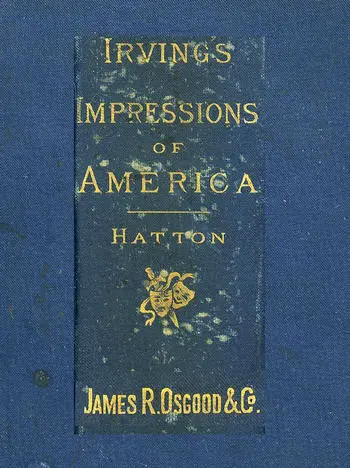
"Henry Irving's Impressions of America" by Joseph Hatton is a historical account written in the late 19th century. The book chronicles the experiences and reflections of the renowned English actor Henry Irving during his tour of America, offering insights into both the theatrical world and cultural exchanges between England and America. The text likely explores themes of admiration, cultural differences, and the complexity of public perception surrounding an artist touring in a foreign land. The opening of the text introduces us to Henry Irving's anticipation of his American tour, highlighting his confidence and optimism about being received warmly by American audiences. It captures conversations about the theatrical life and speculative expectations of Irving's performance style in comparison to American tastes, setting the stage for the complexities of his experience. The narrative showcases Irving's interactions with fellow actors and friends, who offer their opinions on how the audiences might respond to his artistry, creating an atmosphere of curiosity and apprehension about the reception he would face upon arrival. Hatton's tone suggests a blend of admiration for Irving and commentary on the cultural nuances that may influence the tour's success.
Introduction adapted from the source catalogue; source summaries may be automatically generated.
Free to read · English · 134,863 words · No account needed
MAKE TIME FOR A GOOD BOOK
On by default. Untick to stop anonymous reading totals. Each page counts after 10 seconds in view. How this works.
Anonymous counting is on unless you have switched it off.
“A TRANSFORMATION scene, indeed!” said Irving. “Yesterday, autumn winds, bright streets, a rattle of traffic—to-day, snow and sleigh-bells—yesterday, wheels—to-day, runners, as they call the enormous skating-irons upon which they appear to have placed every vehicle in the city. I have just returned from rehearsal, and find everybody sleighing. The omnibuses are sleighs—the grocer’s cart is a sleigh—the express-wagons are sleighs; it is a city of sleighs! The snow began to fall in earnest yesterday. Last night it must have been a foot deep. It would have ruined the business at a London theatre. Here it made no difference. We had a splendid house.”
“As I walked to my hotel at midnight,” I replied, “snow-ploughs were in the streets clearing the roads and scouring the car-tracks. Boston tackles the snow in earnest. The trees on the Common were a marvel of beauty. They looked like an orchard of the Hesperides, all in blossom, and the electric lamps added to the fairy-like beauty of the scene.”
“A lovely city. Shall we take a sleigh-ride?”
“‘Why, certainly,’ as they say in ‘The Colonel,’ but rarely in America.”
Irving rings for his colored attendant. He has discovered that his surname is Brooks, and takes a curious pleasure in addressing him as Brooks, sometimes as “Brooks, of Sheffield!”
“Order me a sleigh, Brooks!”
“Yes, sah,” says Brooks, grinning.
“Two horses, Brooks!”
“Yes, sah,” says the attendant, preparing to go, not hurriedly, for who ever saw a colored gentleman (they are all colored gentlemen) in a hurry?
“And take my rugs down!”
“Yes, sah,” he says, marching slowly into the next room for the rugs.
“And, Brooks—”
“Yes, sah.”
“Would you like to go to the theatre one night?”
“Berry much, sah—yes, sah.”
“What play would you like to see?”
“Hamlet, sah!”
“Hamlet! Very good. Is there a Mrs. Brooks?”
“‘Deed there is, sah,” answers the darkey, grinning from ear to ear.
“And some little Brookses—of Sheffield?”
“Yes, sah; not ob Sheffield, ob Boston.”
“That’s all right. Mr. Stoker shall give all of you seats. See if he is
in the hotel.”
“Yes, sah.”
As he stalks to the door Stoker comes bounding in (Stoker is always on the run), to the discomfiture of Brooks and his load of rugs.
Brooks picks himself up with dignity. Stoker assures his chief that there is not a seat in the house for anybody.
“Then buy some for Brooks,” says Irving.
“Where?” asks Stoker, in amazement.
“Anywhere,” says Irving, adding, with a significant glance at me,—“from the speculators.”
“Oh, very well, if you wish it,” says Stoker.
“And, Brooks”—
“Yes, sah.”
“Anybody else in the hotel like to go?”
Your reading position is saved on this browser. Take it to another device with a library code. Reading pages adapt to text, rather than matching a printed edition.
BEHIND THE BOOK
This eBook is for the use of anyone anywhere in the United States and most other parts of the world at no cost and with almost no restrictions whatsoever. You may copy it, give it away or re-use it under the terms of the Project Gutenberg License included with this eBook or online at www.gutenberg.org. If you are not located in the United States, you will have to check the laws of the country where you are located before using this eBook. Read the source licence.
The original source file, including credits and licence, is retained by this library. Request an original-format copy at no charge. Please include the book title and Project Gutenberg identifier #52357.
KEEP YOUR CURIOSITY GOING
Wilfrid Scawen Blunt
Wilfrid Scawen Blunt

E. W. (Edgar Watson) Howe
Cécile Tormay

Moritz Busch
John L. Ransom