THE CLASSIC COLLECTION✦My diaries, being a personal narrative of events 1888-1914, Part 2 (1900-1914)CLASSIC FREE BOOKS
My diaries, being a personal narrative of events 1888-1914, Part 2 (1900-1914)
Wilfrid Scawen Blunt
THE CLASSIC COLLECTION · 1884
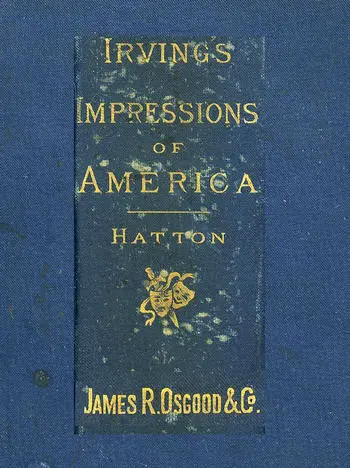
"Henry Irving's Impressions of America" by Joseph Hatton is a historical account written in the late 19th century. The book chronicles the experiences and reflections of the renowned English actor Henry Irving during his tour of America, offering insights into both the theatrical world and cultural exchanges between England and America. The text likely explores themes of admiration, cultural differences, and the complexity of public perception surrounding an artist touring in a foreign land. The opening of the text introduces us to Henry Irving's anticipation of his American tour, highlighting his confidence and optimism about being received warmly by American audiences. It captures conversations about the theatrical life and speculative expectations of Irving's performance style in comparison to American tastes, setting the stage for the complexities of his experience. The narrative showcases Irving's interactions with fellow actors and friends, who offer their opinions on how the audiences might respond to his artistry, creating an atmosphere of curiosity and apprehension about the reception he would face upon arrival. Hatton's tone suggests a blend of admiration for Irving and commentary on the cultural nuances that may influence the tour's success.
Introduction adapted from the source catalogue; source summaries may be automatically generated.
Free to read · English · 134,863 words · No account needed
MAKE TIME FOR A GOOD BOOK
On by default. Untick to stop anonymous reading totals. Each page counts after 10 seconds in view. How this works.
Anonymous counting is on unless you have switched it off.
(The stone tablet falls upon a finger-bowl with a crash, and the club votes that the Chronicles be printed at the Prophets expense.)
SPURIUS LARTIUS.—But who is this man, that arises with flashing eye and curling lip? Mayhap he is a Kelt.
MARCENAS.—He is a Kelt, from Keltville, and a poet to boot.
The Poet arises and reads
Sweet rose! In thee the summer bides;
Thy deep, red breast a secret hides,
Which none may know but only she
Whose eyes are stars lit up for me.
Red rose! Unto her sweetly speak,
And glow against her burning cheek;
Ah! breathe this in her shell-like ear,—
“Thou makest it summer all the year.”
SPURIUS LARTIUS.—I should imagine the rose to be a waiter, from the instruction to “breathe in her shell-like ear.”
POET.—A moment. There is a third stanza to this poem, written on receiving the florist’s bill:—
Great Scott! List to my heart’s dull thud!
Thou hast a dollar cost a bud.
She is now my rival’s bride;
Again I’ll wear that ulster tried.
The PRESIDENT.—And now the gentleman at the end of the long table will tell one of his inimitable anecdotes.
THE GENTLEMAN AT THE END OF THE LONG TABLE.—Trade is so dull now that the anecdote market is overstocked. The bon-mot and jest mills are rolling up their products; but middlemen are cautious, and consumers wary. The stock of last year’s “chestnuts”[30] is being worked off; and I have one, a little shop-worn, which I have dusted for the occasion:—
The Fable of the Inquisitive old Broker and the Queer Bundle.
An inquisitive old broker noticed a queer bundle upon the lap of a man sitting opposite him in the horse-car. He looked at the bundle, in wonder as to what it might contain, for some minutes; finally, overmastered by curiosity, he inquired:—
“Excuse me, sir; but would you mind telling me what is in that
extraordinary bundle?”
“Certainly; a mongoose,” replied the man, who was reading “Don’t,” and learning how to be a real, true gentleman.
“Ah, indeed!” ejaculated the broker, with unslacked curiosity.... “But what is a mongoose, pray?”
“Something to kill snakes with.”
“But why do you wish to kill snakes with a mongoose?” asked the broker.
“My brother has the delirum tremens and sees snakes all the time. I am going to fix ‘em.”
“But, my dear sir, the snakes which your brother sees in his delirium are not real snakes, but the figments of his diseased imagination,—not real snakes, sir!”
Your reading position is saved on this browser. Take it to another device with a library code. Reading pages adapt to text, rather than matching a printed edition.
BEHIND THE BOOK
This eBook is for the use of anyone anywhere in the United States and most other parts of the world at no cost and with almost no restrictions whatsoever. You may copy it, give it away or re-use it under the terms of the Project Gutenberg License included with this eBook or online at www.gutenberg.org. If you are not located in the United States, you will have to check the laws of the country where you are located before using this eBook. Read the source licence.
The original source file, including credits and licence, is retained by this library. Request an original-format copy at no charge. Please include the book title and Project Gutenberg identifier #52357.
KEEP YOUR CURIOSITY GOING
Wilfrid Scawen Blunt
Wilfrid Scawen Blunt

E. W. (Edgar Watson) Howe
Cécile Tormay

Moritz Busch
John L. Ransom