THE CLASSIC COLLECTION✦My diaries, being a personal narrative of events 1888-1914, Part 2 (1900-1914)CLASSIC FREE BOOKS
My diaries, being a personal narrative of events 1888-1914, Part 2 (1900-1914)
Wilfrid Scawen Blunt
THE CLASSIC COLLECTION · 1884
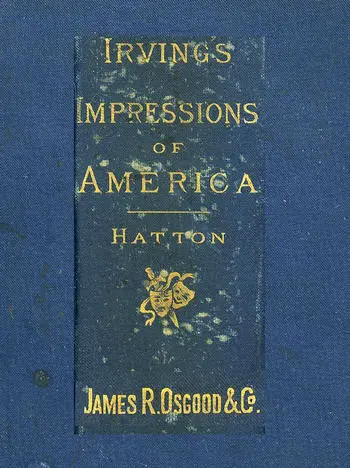
"Henry Irving's Impressions of America" by Joseph Hatton is a historical account written in the late 19th century. The book chronicles the experiences and reflections of the renowned English actor Henry Irving during his tour of America, offering insights into both the theatrical world and cultural exchanges between England and America. The text likely explores themes of admiration, cultural differences, and the complexity of public perception surrounding an artist touring in a foreign land. The opening of the text introduces us to Henry Irving's anticipation of his American tour, highlighting his confidence and optimism about being received warmly by American audiences. It captures conversations about the theatrical life and speculative expectations of Irving's performance style in comparison to American tastes, setting the stage for the complexities of his experience. The narrative showcases Irving's interactions with fellow actors and friends, who offer their opinions on how the audiences might respond to his artistry, creating an atmosphere of curiosity and apprehension about the reception he would face upon arrival. Hatton's tone suggests a blend of admiration for Irving and commentary on the cultural nuances that may influence the tour's success.
Introduction adapted from the source catalogue; source summaries may be automatically generated.
Free to read · English · 134,863 words · No account needed
MAKE TIME FOR A GOOD BOOK
On by default. Untick to stop anonymous reading totals. Each page counts after 10 seconds in view. How this works.
Anonymous counting is on unless you have switched it off.
[33] A very large delegation of the members of the Hamilton Club received Mr. Henry Irving in the rooms of the club last night, after the close of the performance at Haverly’s. The honors of the club were done by its President, Mr. Samuel McLean, and Mr. Irving was introduced by him to the members present. Among those who attended to do honor to the great actor were the Rev. Dr. Putman, the Rev. C. Cuthbert Hall, the Rev. Harry Lacy, Judge Van Cott, Henry E. Pierrepont, H. E. Sanger, S. B. Duryea, Dr. Kissam, Howard Van Sinderen, J. S. T. Stranahan, Gordon L. Ford, Professor West, Alfred C. Barnes, Dr. McCorkle, E. A. Packard, Amos Robbins, J. Spencer Turner, Alex. Cameron, Edward Barr, Colonel Partridge, John Notman, J. S. Noyes, H. E. Ide, Clinton Tucker, Ernest Jackson, Raymond Jenkins, F. Abbott Ingalls, W. T. Lawrence, Frank Hines, Arnold Hastings, Gus. Recknagel, A. Van Sinderen, Joseph Youmans, H. E. Dodge, Dr. Burge, Robert Ogden, Leander Waterbury, Wm. Sanger, Dr. Colton, John King, H. D. Atwater, and John Foord. The reception was arranged for at twenty-four hours’ notice, Mr. Irving’s ability to attend not being known to most of the members of the club before yesterday morning. Mr. Irving, who was accompanied by his stage-manager, Mr. Loveday, and by Mr. Joseph Hatton, expressed himself as extremely gratified by the cordiality of his reception.—Brooklyn Union, Jan. 4, 1884.
[34] A reception was given to Mr. Henry Irving, the distinguished English actor, by Dr. Wm. H. Crim, at his residence, 185 W. Fayette street, last evening. At the close of the performance at the Academy, Mr. Irving, accompanied by his stage-manager, H. J. Loveday; acting manager, Bram Stoker; J. H. Copleston, and James H. Plaser, representing Manager Abbey, of New York, and Mr. Joseph Hatton, the English author, drove to Dr. Crim’s residence, where they were received by the host, and presented to a number of journalists, representing the city press, and other gentlemen. Among those present were Messrs. John W. McCoy, Wm. T. Croasdale, John V. Hood, Innes Randolph, Harry J. Ford, Henry D. Beall, C. M. Fairbanks, E. N. Vallandigham, Frederick L. Holmes, Prof. Charles G. Edwards, Samuel W. Fort, Manager of the Academy; Harry P. Wilson, Harry F. Powell, Harry J. Conway, Charles F. Meany, John W. Albaugh, of Holliday-street Theatre; Chas. Reynolds and W. I. Cook. The affair was wholly informal, but was apparently all the more agreeable on that account. Mr. Irving, upon being presented, expressed his gratification at meeting the representatives of the Baltimore press, and during the evening manifested the utmost cordiality of manner. He is a delightful conversationalist, and for a couple of hours entertained groups of attentive listeners. His impressions of Baltimore, as far as he had seen, were very favorable, and he was much pleased with the audiences that had greeted him during the week at the Academy. Speaking of the Academy, he remarked that its acoustic properties—a rare quality in a theatre of that size—were among the very best he had ever known. About midnight the visitors repaired to the dining-room, where a tempting repast, with choice wines, was enjoyed. Adjourning thence to the library, the guests indulged in a fragrant Havana, and another hour slipped by almost unconsciously in pleasant social intercourse. During the evening Mr. Irving appeared much interested in the rare collection of antiques, art-works, bric-à-brac, and articles of virtu that adorn the parlor and library of the genial host, and in the collection of which he has spent much time and labor.—The Day (Baltimore), Dec. 28, 1883.
Your reading position is saved on this browser. Take it to another device with a library code. Reading pages adapt to text, rather than matching a printed edition.
BEHIND THE BOOK
This eBook is for the use of anyone anywhere in the United States and most other parts of the world at no cost and with almost no restrictions whatsoever. You may copy it, give it away or re-use it under the terms of the Project Gutenberg License included with this eBook or online at www.gutenberg.org. If you are not located in the United States, you will have to check the laws of the country where you are located before using this eBook. Read the source licence.
The original source file, including credits and licence, is retained by this library. Request an original-format copy at no charge. Please include the book title and Project Gutenberg identifier #52357.
KEEP YOUR CURIOSITY GOING
Wilfrid Scawen Blunt
Wilfrid Scawen Blunt

E. W. (Edgar Watson) Howe
Cécile Tormay

Moritz Busch
John L. Ransom