THE CLASSIC COLLECTION✦My diaries, being a personal narrative of events 1888-1914, Part 2 (1900-1914)CLASSIC FREE BOOKS
My diaries, being a personal narrative of events 1888-1914, Part 2 (1900-1914)
Wilfrid Scawen Blunt
THE CLASSIC COLLECTION · 1884
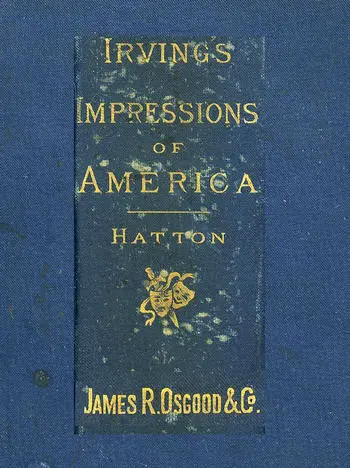
"Henry Irving's Impressions of America" by Joseph Hatton is a historical account written in the late 19th century. The book chronicles the experiences and reflections of the renowned English actor Henry Irving during his tour of America, offering insights into both the theatrical world and cultural exchanges between England and America. The text likely explores themes of admiration, cultural differences, and the complexity of public perception surrounding an artist touring in a foreign land. The opening of the text introduces us to Henry Irving's anticipation of his American tour, highlighting his confidence and optimism about being received warmly by American audiences. It captures conversations about the theatrical life and speculative expectations of Irving's performance style in comparison to American tastes, setting the stage for the complexities of his experience. The narrative showcases Irving's interactions with fellow actors and friends, who offer their opinions on how the audiences might respond to his artistry, creating an atmosphere of curiosity and apprehension about the reception he would face upon arrival. Hatton's tone suggests a blend of admiration for Irving and commentary on the cultural nuances that may influence the tour's success.
Introduction adapted from the source catalogue; source summaries may be automatically generated.
Free to read · English · 134,863 words · No account needed
MAKE TIME FOR A GOOD BOOK
On by default. Untick to stop anonymous reading totals. Each page counts after 10 seconds in view. How this works.
Anonymous counting is on unless you have switched it off.
[29] LADIES’ NIGHT AT THE PAPYRUS.—The Ladies’ Night entertainment of the Papyrus Club, which has come to be accepted as one of the annual features of that organization, took place at the Revere House last night, and the occasion proved to be one of exceptional interest and brilliancy. The Papyrus includes in its membership a large number of clever men, and, with their guests who assembled last evening to partake of the club’s hospitality, the company made up a most delightful and distinguished gathering. The after-dinner exercises, which were not permitted to be reported in full, were of a most entertaining character; the speeches of the distinguished gentlemen guests, and the contributions in prose and verse by some of the members of the club, being very bright and enjoyable. The members and their guests assembled in the hotel parlors at six o’clock, where they were received by the president of the club, Mr. George F. Babbitt, assisted by Miss Fay. Music was furnished by the Germania Orchestra, and, after an hour spent in introductory ceremonies, the members and their guests, numbering altogether one hundred and twenty ladies and gentlemen, proceeded to the dining-hall and sat down to the dinner-table, which was arranged in horseshoe form. The tables were artistically decorated with flowers, and at each plate was placed a dinner-card, bearing the name of each guest, and a menu of an exceedingly artistic design, the front cover bearing a photograph of the club paraphernalia, very cleverly grouped, and bearing the inscription: “Papyrus, Ladies’ Night. December 15th, MDCCCLXXXIII.” President Babbitt sat in the centre, with Miss Fay at his right and Miss Ellen Terry at his left. On either side of the president were seated Miss Alcott, Mr. Joseph Hatton, Dr. Burnett and Mrs. Frances Hodgson Burnett, Gen. Francis A. Walker and Mrs. Walker, Mr. Henry Cabot Lodge, Captain Story, U.S.A.; Mr. Guy Carleton, of New York, editor of “Life,” and Mr. J. A. Mitchell, assistant editor; Rev. and Mrs. Brooke Hereford, Dr. John G. Blake and Mrs. Blake, Mr. W. H. Rideing and Mrs. John Lillie, the author of “Prudence,” and Rev. and Mrs. H. B. Carpenter. Among the other members and guests present were Miss Nora Perry and Miss Noble, the author of “A Reverend Idol”; Mr. and Mrs. Robert Grant, Mr. F. J. Stimson, the author of “Guerndale,” and Mrs. Stimson; Dr. Harold Williams, the author of “Mr. and Mrs. Morton”; Mr. Arthur Rotch and Mrs. Van Renssellaer, Mr. and Mrs. W. F. Apthorp, Mr. A. H. Dodd, Mrs. Dodd, and Miss Dodd; Mr. Henry M. Rogers and Mr. George Abbot James; Miss Gage, Mr. and Mrs. Howard M. Ticknor, and Mrs. S. A. Bigelow; Mrs. C. H. Washburne, Mr. George Snell, Mrs. Bacon, and Mrs. Charles Whitmore; Mr. Alexander Young, Mr. George Roberts, Mr. John T. Wheelwright, Mr. L. S. Ipsen, Mr. Alexander Browne and Miss Edmundson, Mr. Frank Hill Smith, and Mrs. Henry Fay; Mr. Arlo Bates, Dr. and Mrs. James Chadwick, Colonel Theodore A. Dodge, and Mrs. Crowninshield; Mr. and Mrs. F. P. Vinton, Mr Francis Peabody, Jr.; Mr. Russell Sullivan, Mr. and Mrs. Charles Albert Prince, Miss Minot, Mr. and Mrs. Gordon Prince, Mr. and Mrs. F. V. Parker, Mr. and Mrs. E. L. Osgood, Mr. and Mrs. George M. Towle, Mr. H. G. Pickering, Mr. and Mrs. W. H. Sayward, and Mrs. R. G. Shaw; Mr. T. O. Langerfelt, Mr. and Mrs. Arthur Foote, Mr. Sigourney Butler, Miss Butler, and Miss Shimmin; Mr. and Mrs. R. G. Fitch, Mr. and Mrs. George B. Goodwin, Mr. W. B. Clarke, Mr. and Mrs. C. A. Campbell, Mr. G. W. Chadwick, Mr. Preston, Mr. and Mrs. F. E. Wright, Mrs. G. A. Gibson, Mr. and Mrs. L. L. Scaife, and Mr. and Mrs. J. E. Woods. At the conclusion of the dinner the president proposed the health of the assembled company in the loving-cup, in accordance with a time-honored custom of the Papyrus, the cup passing from guest to guest until it had made the rounds of the tables. Many of the gentlemen were merrily cheered as they rose to drink from the cup, as were many of the distinguished ladies, who, without rising, simply touched the cup to their lips. After this interesting ceremony had been gone through with, the president welcomed the company in a brief speech, concluding with a toast to the lady guests, which was drunk standing by the gentlemen present. Rev. H. Bernard Carpenter was called upon to respond to the toast, which he did in a neat speech, in which pleasant allusions were made to the distinguished ladies of the company and their work. He was followed by Mr. John T. Wheelwright, the secretary of the club, who gave a very bright burlesque report of the proceedings of the monthly Papyrus meetings. It was made up of clever imitations of the poetic and prose contributions of the more active members of the Papyrus, and its numerous hits were received with shouts of laughter. Mr. T. R. Sullivan then read a charming bit of prose; and then came a bright and humorous contribution from Mr. Robert Grant, who described, in a very funny way, his experiences as a member of the committee on ladies’ night some years ago. It abounded in witty allusions to the antics of some of the members of the club, and, although the names of the characters who figured in the sketch were assumed for the occasion, the references to the members of the club were readily recognized. Mr. Howard M. Ticknor was then introduced, and read a poem addressed to Miss Terry, concluding with a toast in honor of the distinguished lady, the mention of whose name elicited enthusiastic applause. Mr. Joseph Hatton responded handsomely for Miss Terry, thanking the company for their very cordial welcome, and the Papyrus for their elegant hospitality. Mr. Arlo Bates read some very pretty songs, and Mr. Guy Carleton responded to a toast in honor of “Life,” the clever New York paper. Mr. W. H Sayward gave one of his excellent imitations, and the entertainment concluded with the performance of “a burlesque operatic monodrama,” entitled “Titi.” The sole dramatis persona, Titi, was assumed by Mr. Wm. F. Apthorp, who sang and recited the monodrama in costume, being accompanied on the piano by Mr. Arthur Foote. The performance of this bright musical composition occupied nearly half an hour, and it was acted and sung by Mr. Apthorp with exquisite chic and drollery, serving as a fitting finale to the very pleasant after-dinner entertainment. The company arose from the tables at about half-past ten o’clock, and soon after separated, many of the gentlemen going to the St. Botolph Club reception to Mr. Irving, which was appointed for eleven o’clock.—Boston Saturday Evening Gazette.
Your reading position is saved on this browser. Take it to another device with a library code. Reading pages adapt to text, rather than matching a printed edition.
BEHIND THE BOOK
This eBook is for the use of anyone anywhere in the United States and most other parts of the world at no cost and with almost no restrictions whatsoever. You may copy it, give it away or re-use it under the terms of the Project Gutenberg License included with this eBook or online at www.gutenberg.org. If you are not located in the United States, you will have to check the laws of the country where you are located before using this eBook. Read the source licence.
The original source file, including credits and licence, is retained by this library. Request an original-format copy at no charge. Please include the book title and Project Gutenberg identifier #52357.
KEEP YOUR CURIOSITY GOING
Wilfrid Scawen Blunt
Wilfrid Scawen Blunt

E. W. (Edgar Watson) Howe
Cécile Tormay

Moritz Busch
John L. Ransom