THE CLASSIC COLLECTION✦My diaries, being a personal narrative of events 1888-1914, Part 2 (1900-1914)CLASSIC FREE BOOKS
My diaries, being a personal narrative of events 1888-1914, Part 2 (1900-1914)
Wilfrid Scawen Blunt
THE CLASSIC COLLECTION · 1884
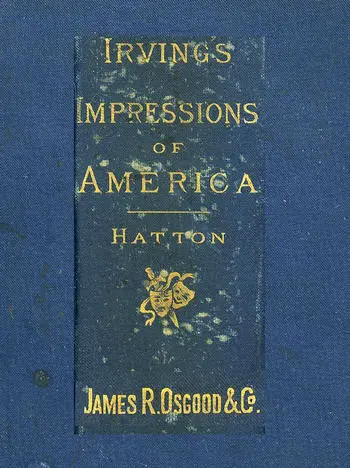
"Henry Irving's Impressions of America" by Joseph Hatton is a historical account written in the late 19th century. The book chronicles the experiences and reflections of the renowned English actor Henry Irving during his tour of America, offering insights into both the theatrical world and cultural exchanges between England and America. The text likely explores themes of admiration, cultural differences, and the complexity of public perception surrounding an artist touring in a foreign land. The opening of the text introduces us to Henry Irving's anticipation of his American tour, highlighting his confidence and optimism about being received warmly by American audiences. It captures conversations about the theatrical life and speculative expectations of Irving's performance style in comparison to American tastes, setting the stage for the complexities of his experience. The narrative showcases Irving's interactions with fellow actors and friends, who offer their opinions on how the audiences might respond to his artistry, creating an atmosphere of curiosity and apprehension about the reception he would face upon arrival. Hatton's tone suggests a blend of admiration for Irving and commentary on the cultural nuances that may influence the tour's success.
Introduction adapted from the source catalogue; source summaries may be automatically generated.
Free to read · English · 134,863 words · No account needed
MAKE TIME FOR A GOOD BOOK
On by default. Untick to stop anonymous reading totals. Each page counts after 10 seconds in view. How this works.
Anonymous counting is on unless you have switched it off.
The Chief Justice spoke in eloquent terms of Lord Coleridge, whom the American bar and bench had been proud to honor, and who, in his private and public life, realized the highest ideal of the American people. “It is our desire,” he said, “the sincerest wish of America, to like the English people. We are always afraid that our visitors from the old country will not let us like them. When they do, and we can honestly respond, we are glad.” Presently, alluding to Irving, he said, “We have watched your career over a long period of time, through the New York papers. We were prepared to be interested in you, and to bid you welcome. No people are more moved than ours to exercise their free and unbiased judgment. We have done so in your case, and are proud to acknowledge the greatness of the work you have done; to welcome you and to take your hand, not only for what you have achieved in England, but for what you have done for us in America.”
Ex-Mayor Oakey Hall, in the course of some remarks supplementary of the speech of the Lord Chief Justice, said, “A morning cable despatch informs me that the Millais portrait of our guest was yesterday added to the walls of the Garrick Club, in completion of its gallery of David Garrick’s legitimate successors. But on the walls of our memories to-night has been hung the original,—impressive features, poetic eyes and hair, and a face so bright that it this moment reflects our looks of personal affection. I have had the personal felicity, thrice within the past fortnight, of seeing our guest in the serenity of private life. Friends knowing this have said to me, ‘How did you like Henry Irving on the stage?’ And I have answered, ‘I have not yet seen Mr. Irving act.’ True, I had seen on the stage of the Star Theatre, Mathias, and Charles the First, and Louis the Eleventh, and Shylock, and Duboscq and Lesergne, and against these characters I had seen printed on the bills of the play the name of Henry Irving; but never had it otherwise occurred to me, as an auditor, that the guest now before us,—original of the Millais picture,—and whom I saw at the banquets of the Lotos and Manhattan clubs, was representing these characters. On the contrary, I cannot connect Henry Irving, the gentleman of private life, with the actor. If you say he is the same, I must believe you. Indeed, I am now conscious of having lived in the seventeenth century, and of having beheld the veritable Charles as a man caressing his children and his Henrietta Maria,—a wife rather than a queen,—on the banks of the Thames, at Hampton Court, or as Majesty rebuking Oliver Cromwell. Nay, I have stood with Charles himself in the Whitehall Chamber of Death, and with my own streaming eyes I have witnessed his touching farewell of home and earth. I have forgotten the merchants of New York in the boxes, and I have really seen Shakespeare’s Merchant of Venice. I have seen the dreaming victim of remorse. I have lived in the war-rent realms of France, while Louis the Eleventh infected his court with his own moral leprosy. I have known in ‘The Lyons Mail,’ the self-respecting and shrinking merchant, and I have known his double, the besotted brute of a murderer. They are all realities to me at this moment. If you again tell me one man personated all these, and that this one man was the original yonder of the Millais portrait, I must believe you, for your honor’s sake. During an active career of a quarter century I never had seen an approach to such a surrender of personal identity in an actor, nor such a surrender of the peculiarities of one representation when the actor grasped another. How all this contradicts a lively writer in the current (November) number of Clement Scott’s ‘Theatre,’ who declares that every great success of the stage is due to a correspondence of the natural peculiarities of an actor with the fictional peculiarities of the character portrayed! Is yonder gentleman a victim to remorse? Is he a Shylock? Is he a Duboscq? Has he the soul of a Charles? Least of all, has he one peculiarity of Louis? No. Then these great successes are won—if yonder guest be the actor—by a destruction of personal peculiarities and by portraying his own precise opposites, in his human nature. You have all seen these recently enacted characters. You now—some of you for the first time—behold the man Henry Irving, and hear him converse. To you as a jury, then, I appeal. Am I not right? Is not my experience yours?” (Aye!—Yes!—Yes!—and great applause.)
Your reading position is saved on this browser. Take it to another device with a library code. Reading pages adapt to text, rather than matching a printed edition.
BEHIND THE BOOK
This eBook is for the use of anyone anywhere in the United States and most other parts of the world at no cost and with almost no restrictions whatsoever. You may copy it, give it away or re-use it under the terms of the Project Gutenberg License included with this eBook or online at www.gutenberg.org. If you are not located in the United States, you will have to check the laws of the country where you are located before using this eBook. Read the source licence.
The original source file, including credits and licence, is retained by this library. Request an original-format copy at no charge. Please include the book title and Project Gutenberg identifier #52357.
KEEP YOUR CURIOSITY GOING
Wilfrid Scawen Blunt
Wilfrid Scawen Blunt

E. W. (Edgar Watson) Howe
Cécile Tormay

Moritz Busch
John L. Ransom